


No products in the cart.
Industry News
Wholesale Hanging Flower Baskets: Planning Your Season Before You Order
23
Aug
Aug
Most problems with hanging basket ranges are not quality problems. They are timing problems. The stock arrives three weeks after the spring rush has peaked, or the best selling size sells out in April while two pallets of the wrong colour sit in the warehouse until autumn.
Handwoven goods amplify this, because you cannot simply reorder. There is no warehouse of finished units waiting to be picked, and a factory cannot compress eight weeks of weaving into two because your sell through beat forecast. Buyers who treat wholesale hanging flower baskets as a planning exercise rather than a purchasing one consistently end the season with cleaner stock and better margin.
Understanding the Demand Curve for Wholesale Hanging Flower Baskets
Demand for wholesale hanging flower baskets follows a sharply seasonal pattern across most Western markets, and understanding the shape of that curve is what should dictate your entire production and shipping calendar, not intuition or last year’s total sales figure.
The Dominant Spring Peak
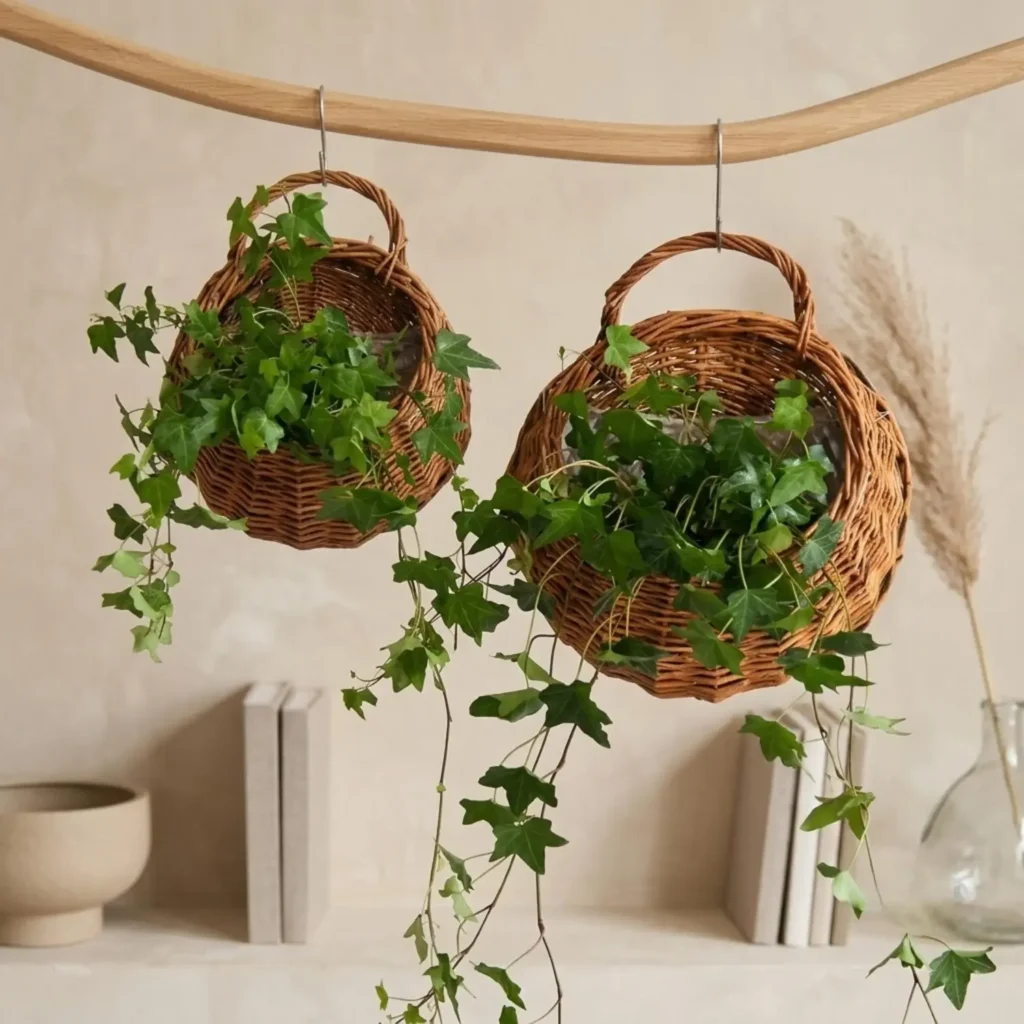
The clearest signal in the data is the spring surge. In the Northern Hemisphere, serious buying of hanging flower baskets begins the moment frost risk passes, typically landing somewhere between late March and early June depending on latitude, with southern regions moving first and northern regions following a few weeks later. Mother’s Day falls squarely inside this window across both the United States and much of Europe, and it reliably lifts wholesale orders for planted, gift-ready hanging baskets in particular. The scale of this peak is hard to overstate: it routinely accounts for more than half of a garden retailer’s total annual volume of hanging basket purchases, which makes it by far the most important period for wholesale buyers to plan stock and lead times around.
The Dominant Spring Peak
The Autumn and Indoor Lift
A second, much gentler lift arrives in early autumn, as retail customers refresh porches and entryways ahead of the cooler months; wholesale volumes here are considerably lower than the spring rush, but margins tend to hold up better since the end buyer is decorating rather than bargain hunting, giving retailers and their wholesale suppliers more room to protect pricing. Indoor hanging planters, often sourced as a companion line, follow a completely different logic: instead of spiking around a season, they sell steadily year-round with only a modest fourth-quarter bump tied to holiday gift-giving rather than weather, so a wholesale range carrying both outdoor and indoor products is effectively running two separate businesses on two separate calendars, and forecasting them together only blurs both signals rather than clarifying either.
The Southern Hemisphere Adjustment
For Southern Hemisphere buyers, the outdoor hanging flower basket calendar simply needs to be inverted, since their spring peak lands roughly six months out of phase with the Northern Hemisphere. This mismatch isn’t only a planning detail, it occasionally creates a useful opportunity for suppliers: production runs for Southern Hemisphere wholesale orders can be scheduled into the supplier’s quieter months, smoothing out factory workload instead of leaving capacity idle during the Northern Hemisphere off-season.
Working the Calendar Backwards
Start from the date you want product on the shelf and count back honestly. Sea freight from Vietnam runs roughly four to six weeks to European and North American ports, and that figure excludes port congestion, customs delays, and inland transport to your distribution centre. Production for handwoven baskets typically takes forty five to seventy five days, longer if your order includes several sizes or finishes. Sampling and approval, if you are developing anything new rather than reordering an existing specification, adds three to six weeks before production can even begin.
Add those together and a March shelf date means confirming your purchase order in the previous September or October, and beginning sampling in August. Buyers who start the conversation in January are not sourcing for spring; they are sourcing for autumn and do not yet realise it. One further complication deserves a place in every calendar. Vietnamese workshops close for Tết, the Lunar New Year, and the surrounding period runs at reduced capacity for several weeks in total. The date shifts annually between late January and mid February. Any production window that straddles it needs genuine slack built in, not optimism.
Building an Assortment That Sells Through
The instinct to order the single best looking basket in large quantity is understandable and usually wrong. Hanging baskets sell as ranges, because customers buy in multiples to create groupings, and because different customers want different things at different prices. A workable structure spans three tiers. At entry level, a simple water hyacinth or willow basket in a mid size gives price sensitive customers a route in and gives you an advertisable opening price. In the middle, where most of your volume should sit, a well made basket in a considered finish with a proper moulded liner carries the range. At the top, a cane or tightly woven premium piece in a larger format anchors the display and makes the middle tier look like sensible value.
Size Laddering Across the Range
Size laddering matters just as much. Offering the same design in three diameters lets one customer buy three baskets instead of one, and it costs a factory almost nothing to produce, since handwoven manufacturing has no tooling to amortise across sizes. Colour is where most buyers overreach. Natural finish sells everywhere and forgives forecasting errors, because it never dates. Whitewash and black wash both perform reliably in contemporary interiors. Beyond those three, each additional finish fragments your order across more stock keeping units, raises your effective minimum order quantity, and increases the chance of ending the season with an unsellable remainder. Two or three finishes executed well beats six executed thinly.
Retailers who also carry a broader flower basket wholesale selection can lean on those pieces to fill out a display without committing to extra hanging basket variants, which keeps the risk concentrated in the lines you know will move.
Forecasting When You Cannot Reorder
The hard constraint in this category is that midseason replenishment is effectively impossible. Whatever you ordered in October is what you have in May. This changes the arithmetic of forecasting. Ordering slightly deep on your two or three proven bestsellers costs you carrying charges on any leftovers, which is a modest and predictable loss. Ordering short costs you the entire margin on every unit you could have sold during your highest traffic weeks of the year, which is a far larger and completely invisible loss. Given the asymmetry, lean long on proven lines and short on anything experimental.
Historical data is your best guide where you have it. Where you do not, one useful discipline is to treat your first season in a new design as a test rather than a bet, ordering the factory minimum and accepting that the real order comes the following year with actual sell through data behind it. Consider splitting shipments where volume justifies it. Bringing seventy percent of your order early and holding the remainder for a later sailing gives you a modest hedge and eases warehouse pressure during your busiest weeks.
Merchandising the Category
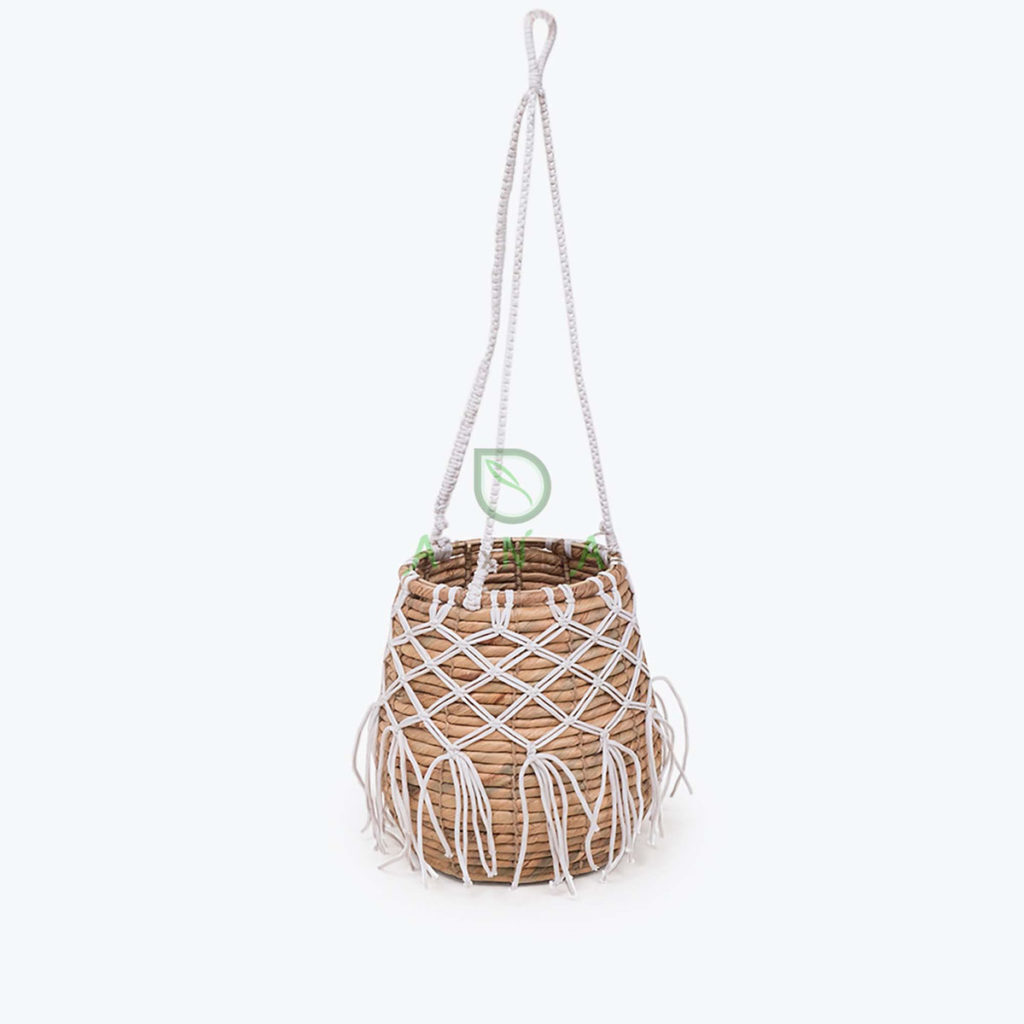
Hanging baskets are one of the few homeware categories that must be displayed as intended in order to sell. A basket lying flat on a shelf communicates almost nothing. Hung at eye level, ideally planted or at least filled with faux foliage, the same product tells the customer immediately what it will look like at home.
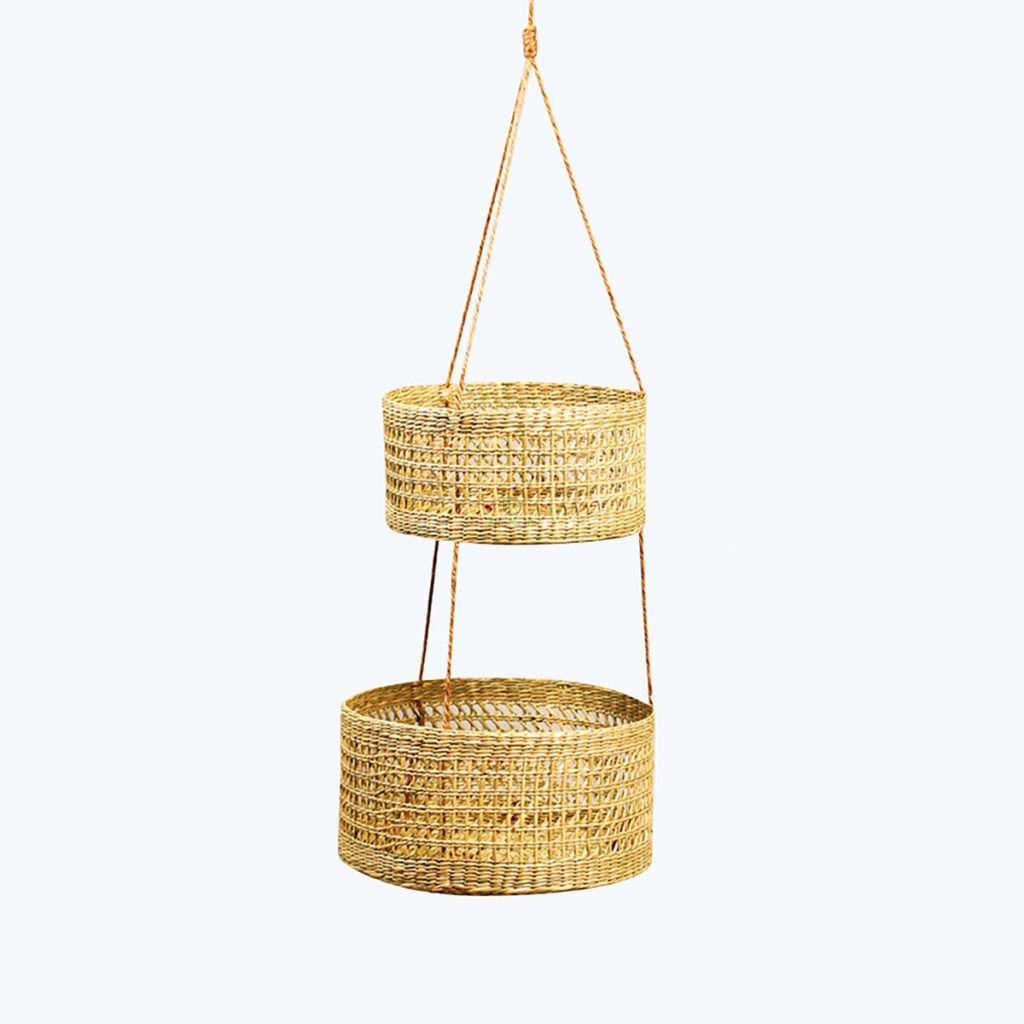
2 Tier Seagrass Hanging Baskets On Wall
Height variation across a display draws the eye upward and makes the whole area feel considered. Grouping baskets with adjacent decorative categories such as wall decor wholesale pieces builds a coherent outdoor living story rather than an isolated product bay. It is also worth training staff on the maintenance question, since the single most common objection is that hanging baskets are difficult to keep alive. A retailer whose staff can answer that confidently converts noticeably better than one whose staff shrug.
Managing the Supplier Relationship Across Seasons
A great deal of planning friction disappears once you are on your second or third season with the same workshop. The specification is already proven, the sampling round shortens dramatically, and the factory can often reserve capacity for you in advance rather than slotting you in behind whoever booked first. That continuity is worth protecting, which is a strong argument for choosing your handicraft supplier on the basis of reliability and communication rather than on whoever quoted lowest in a given quarter. Switching factories to save a few cents per unit resets the whole learning curve, and the cost of that reset almost always exceeds the saving.
Lock In Your Season Early
Handwoven production cannot be reordered midseason, which makes the date you confirm your order as important as the range you choose. Artex Nam An plans weaving capacity with wholesale buyers ahead of each spring, so your quantities are booked before the floor fills. Share your shelf date and volumes with Artex Nam An and we will work the calendar backwards with you.
Conclusion
Wholesale hanging flower baskets are a planning category more than a buying category. The margin is won in September, when you commit the order, not in May, when the customers arrive.
Count backwards from your shelf date with realistic production and freight assumptions, build a range with a clear price and size ladder rather than a single hero product, restrain yourself on colour variants, and lean deliberately long on the lines you already know sell. Then display the product the way the customer will use it, and give yourself the same supplier next season so that the whole exercise gets easier rather than starting over.
Read more: Best Rattan Furniture Manufacturer for OEM and Private Label Projects
You may also be interested in
6 Seagrass Weaving Styles For Eco-friendly Storage Baskets Wholesale
Read more...Apr
3 Tips To Find Trusted Wholesale Home Decor Suppliers From Vietnam
Read more...May
The Complete Guide to Sourcing High-Quality Willow Baskets Wholesale
Read more...Jul
Seagrass For Weaving: From Natural Fibers To Wholesale Seagrass Baskets
Read more...Oct
Where to Buy Wholesale Home Decor: Marketplaces and Trade Shows or Going Straight to the Factory
Read more...Sep
How to Partner with Reliable Wicker Basket Companies for Long-Term Success
Read more...Jul