



No products in the cart.
Industry News
Choosing the Right Woven Placemats Bulk for Hospitality Procurement
15
Jul
Jul
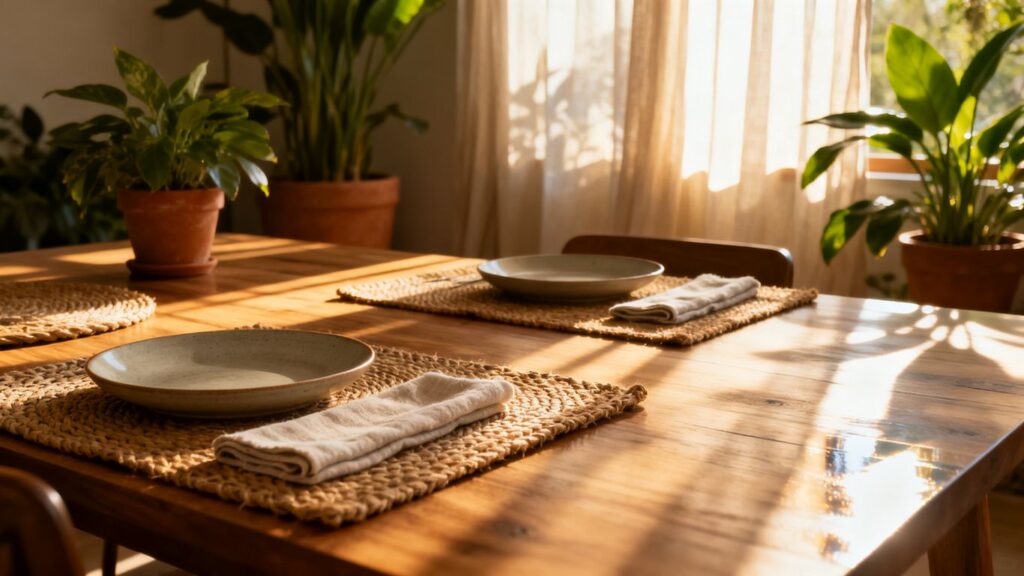
In hospitality, guest experience is built through countless small details, and table presentation plays a far greater role than many procurement teams initially expect. A placemat is no longer simply a protective layer between a plate and a table surface. It has become part of the dining atmosphere, the interior identity of the venue, and the overall perception of quality that guests associate with a hotel, restaurant, resort, or café.
As hospitality brands increasingly invest in natural materials and sustainable design concepts, demand for woven placemats bulk solutions continues to grow across global markets. Hotels are looking for products that complement modern interior concepts, restaurants seek table accessories capable of withstanding heavy daily use, and hospitality distributors require scalable sourcing solutions that balance quality, consistency, and cost efficiency.
However, selecting the right supplier involves far more than comparing prices or choosing attractive designs. Procurement teams must evaluate commercial durability, cleaning performance, logistics efficiency, and manufacturing capabilities to ensure products continue performing throughout their operational lifecycle.
This guide explores the most important considerations hospitality buyers should evaluate when sourcing woven placemats bulk, helping businesses make better procurement decisions while building reliable long-term supply partnerships.
Understanding Commercial Requirements for Woven Placemats Bulk
The requirements for hospitality products differ significantly from those of residential products. A placemat used in a private home may see occasional use during family meals, whereas products used in restaurants or hotels may experience hundreds of cleaning cycles every month. This difference fundamentally changes how procurement teams should evaluate woven placemats.
Understanding Commercial Requirements for Woven Placemats Bulk
A restaurant operating 120 seats with lunch and dinner service can easily generate 250 to 350 table turns per day. In resort buffets and conference venues, that number may be considerably higher. Under these conditions, woven placemats are exposed continuously to heat, moisture, food residue, cleaning chemicals, and physical handling.
Products selected purely for aesthetics often fail under these operational demands. The best woven placemats bulk programs therefore balance appearance with practical commercial performance, ensuring products remain attractive while maintaining structural integrity over long periods of use.
Heat Resistance in Hospitality Environments
Heat resistance is one of the most overlooked procurement criteria. Unlike residential dining environments, hospitality venues frequently place hot plates, cast iron cookware, teapots, coffee service sets, and heated serving dishes directly onto placemat surfaces. Surface temperatures may regularly exceed 60°C and occasionally approach 90°C depending on the service concept.
Materials with insufficient curing or low structural stability can warp, discolor, or lose their shape after prolonged exposure to heat.
Natural fibers such as rattan and high-quality seagrass generally perform better under repeated heat exposure due to their dense structure and lower moisture retention characteristics. Water hyacinth, while visually attractive, may require additional reinforcement when intended for heavy commercial applications.
For hospitality buyers purchasing woven placemats bulk, understanding thermal performance can significantly reduce replacement frequency and long-term operating costs.
Cleaning Performance Under Daily Use
Cleaning requirements in hospitality operations are considerably more demanding than those experienced in residential environments, and procurement teams should evaluate products accordingly. Restaurants, cafés, and hotel dining facilities frequently wipe, clean, and reset tables numerous times during a single service period, exposing placemats to cleaning agents, food residue, oils, wine, coffee, and acidic ingredients on a daily basis. Products that absorb moisture too easily or fail to dry quickly often develop staining issues or lose their visual consistency over time, creating unnecessary replacement costs and negatively affecting table presentation.
Restaurants typically clean placemats several times throughout a single service period, while hotels may clean and reset tables dozens of times per day during breakfast operations alone. Materials with excessive absorbency often develop staining issues or lose color consistency over time. Likewise, insufficient drying characteristics increase the risk of mold development, particularly in tropical climates and coastal environments.
For this reason, many hospitality procurement teams prioritize woven placemats manufactured from carefully dried and professionally treated natural fibers designed specifically for commercial use.
Shape Stability During Storage and Transportation
Shape retention becomes increasingly important as order volumes increase. A single shipment of woven placemats bulk may involve tens of thousands of units compressed inside export cartons, stacked on pallets, and transported across oceans for several weeks before reaching their final destination.
Products with insufficient weaving density or poor structural support often develop edge curling, warping, or deformation during transportation. This issue is particularly problematic for round placemats where even small distortions become immediately visible when placed on restaurant tables.
Reliable manufacturers therefore invest heavily in moisture control, weaving consistency, and export packaging systems that protect products throughout international logistics operations.
Selecting Materials for Different Hospitality Concepts
Different hospitality concepts require different material strategies.
Seagrass for Restaurants and Cafés
Seagrass remains one of the most widely used materials for everyday commercial dining environments. Its excellent durability, natural matte appearance, and competitive cost structure make it particularly attractive for cafés, casual dining restaurants, and food service businesses operating high table turnover.
Seagrass placemats also align well with Scandinavian, coastal, Japandi, and contemporary interior styles that dominate many hospitality markets today.
Water Hyacinth for Boutique Hotels and Resorts
Water hyacinth offers a softer texture and more decorative appearance. Boutique hotels and wellness resorts frequently choose water hyacinth placemats to create warm and inviting table presentations that complement relaxed luxury environments. Although highly attractive visually, the material is generally better suited to lower-intensity usage environments compared with seagrass or rattan.
Rattan for Premium Dining Concepts
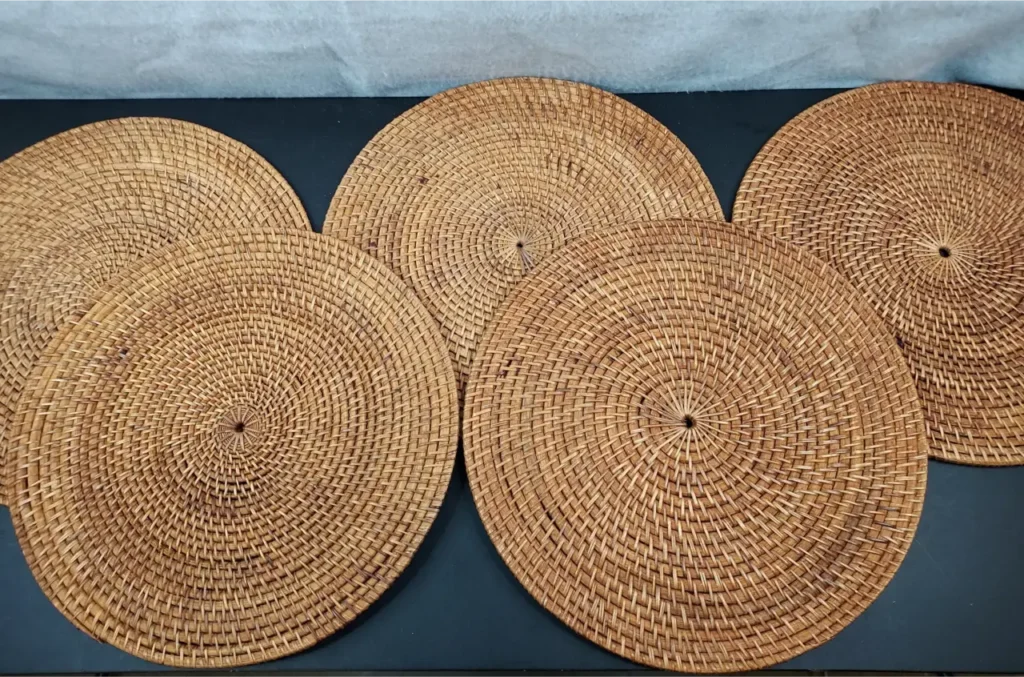
Rattan offers the highest structural durability among commonly used woven materials. Its rigid construction allows placemats to maintain shape exceptionally well under demanding commercial conditions, making it a preferred option for luxury restaurants, fine dining establishments, and premium hospitality projects.
For businesses investing in long-term woven placemats bulk programs, rattan often delivers lower replacement costs despite higher initial procurement prices.
Customization Opportunities for Hospitality Procurement
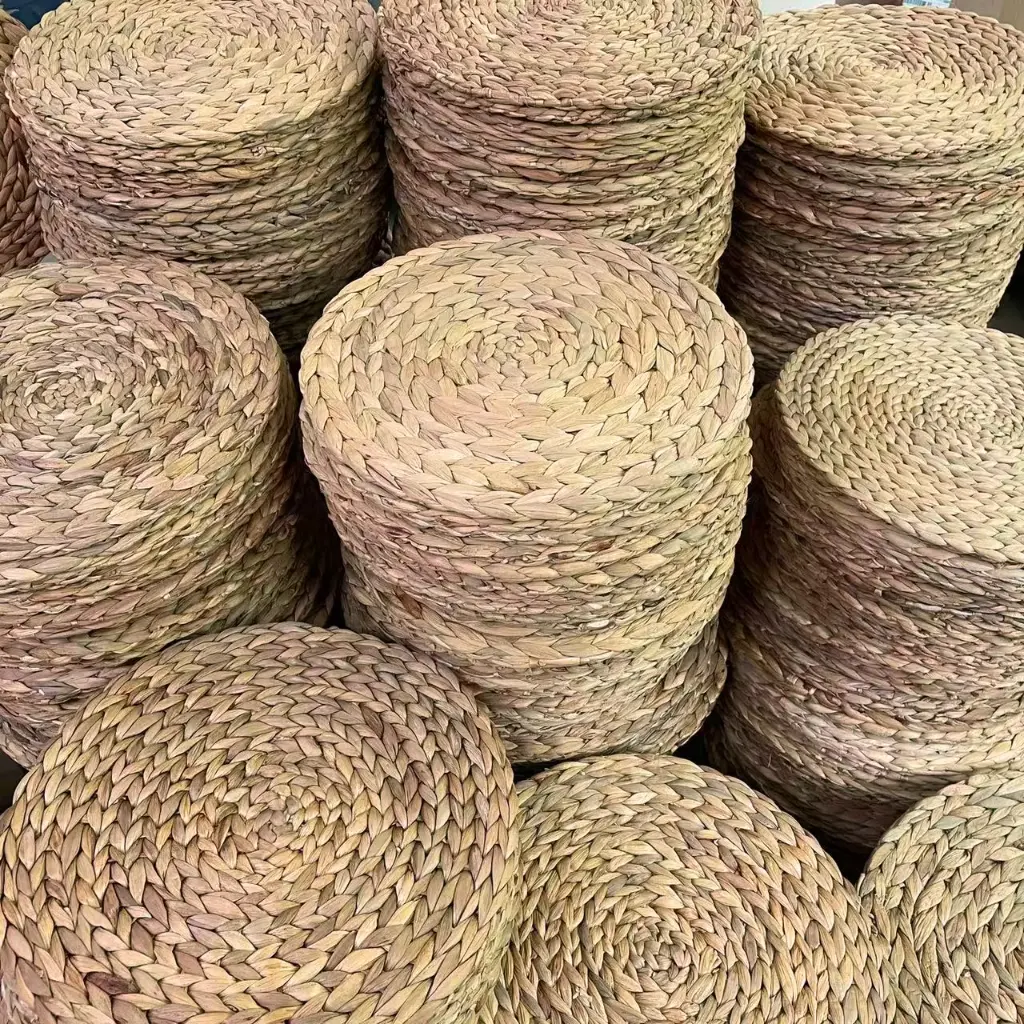
As hospitality businesses increasingly focus on creating distinctive dining experiences, many buyers are moving beyond standard catalog products and investing in customized solutions that better reflect their brand identity and interior design concepts. When sourcing woven placemats bulk, factors such as shape, size, and weaving style can significantly influence both table presentation and operational practicality.
Customization Opportunities for Hospitality Procurement
Round placemats remain the preferred choice for restaurants and cafés due to their versatility, while rectangular and oval designs are often selected for banquet venues, resorts, and premium dining environments seeking a more distinctive appearance. The dimensions of woven placemats bulk orders also vary according to table layouts and service styles, with 30 cm, 35 cm, 38 cm, and 40 cm remaining among the most common specifications in international hospitality markets.
Beyond dimensions, weave density and material thickness play an important role in product durability and guest perception. OEM and private label manufacturing further allow buyers to customize colors, edge finishes, labels, and packaging, helping hospitality brands create more consistent and recognizable dining experiences across multiple locations.
MOQ Strategy for Multi-SKU Programs
Large hospitality procurement projects rarely involve a single product specification, particularly when buyers are sourcing for multiple properties, restaurant concepts, or customer segments at the same time. A resort group may require different colors for various dining venues within the same property, while distributors often need several weaving patterns, dimensions, or material options to serve a broader market portfolio. As the number of SKUs increases, managing MOQ requirements becomes increasingly important, since a project involving four colors, three weaving styles, and two sizes can quickly expand into dozens of individual product variations. Manufacturers capable of supporting flexible production planning and mixed orders therefore provide a significant advantage for businesses sourcing woven placemats bulk, helping reduce inventory risk while improving purchasing flexibility.
Container Optimization for International Freight
For international buyers, transportation efficiency often has a greater influence on final landed cost than relatively small differences in factory pricing. Because woven placemats bulk orders are lightweight and highly stackable, professional packaging and container planning can significantly improve loading density while protecting products from compression damage and moisture exposure during long-distance transportation. Optimizing container utilization not only reduces shipping costs per unit but also improves margins throughout the distribution chain, making freight planning an important component of every large-scale procurement strategy.
Production Lead Time Planning
Unlike many retail purchasing programs, hospitality procurement is often linked to fixed project deadlines such as hotel openings, renovation schedules, seasonal campaigns, or restaurant launches where delays can create substantial operational costs. Maintaining close communication with manufacturers regarding factory capacity, raw material availability, and production schedules therefore becomes essential for ensuring reliable delivery performance. Forward planning is particularly important during peak export periods when demand across Vietnam’s handicraft sector increases significantly, while long-term forecasting allows manufacturers to secure materials earlier and allocate production resources more efficiently, ultimately improving both lead time stability and order consistency.
Why Global Hospitality Buyers Source from Vietnam
Vietnam has become one of the world’s leading sourcing destinations for handcrafted hospitality products. The country’s long history of weaving craftsmanship, access to natural materials, and mature export infrastructure allow manufacturers to compete successfully across international markets.
Vietnamese suppliers also offer a unique balance between artisan craftsmanship and scalable production capabilities, enabling buyers to source both standard collections and customized OEM projects through a single manufacturing partner. This flexibility has become increasingly important as hospitality brands seek products that combine operational performance with authentic design narratives.
Partner with Artex Nam An for Woven Placemats Bulk Solutions
At Artex Nam An, we understand that hospitality procurement requires products that perform as well operationally as they do visually. We work with hotels, restaurants, resorts, hospitality distributors, and tableware brands worldwide to develop premium woven placemats bulk solutions designed specifically for commercial environments.
Our collections utilize carefully selected natural materials and are supported by flexible OEM and private label capabilities, allowing customers to customize dimensions, weaving patterns, materials, colors, and packaging according to their operational requirements and brand identity. Supported by experienced artisans, rigorous quality control systems, and extensive export expertise, Artex Nam An delivers manufacturing solutions designed to support long-term hospitality procurement programs across global markets.
Conclusion
Selecting the right supplier for woven placemats bulk requires far more than evaluating pricing and aesthetics. Successful procurement decisions balance durability, operational performance, logistics efficiency, customization capabilities, and manufacturing reliability to ensure products continue delivering value long after installation. As hospitality businesses continue investing in sustainable dining experiences and natural interior concepts, woven placemats are becoming an increasingly important component of commercial tableware strategies. Businesses that prioritize quality manufacturing and long-term supplier relationships will be best positioned to build dining environments that strengthen guest satisfaction while supporting long-term operational efficiency.
Read more: Sustainable Rattan Bags Wholesale for Fashion and Lifestyle Brands
You may also be interested in
Choosing the Right Woven Placemats Bulk for Hospitality Procurement
Read more...Jul
Bamboo Serving Trays Wholesale: The Quiet Star of Modern Table Design
Read more...Aug
Back to basic – 2021 trendy home decor & organization
Read more...Dec
What Is the Best Quality Rattan Furniture? Five Checks That Matter
Read more...Sep
Unlock Lucrative Deals: Your Ultimate Guide to Rattan Furniture Wholesale
Read more...May
The Collaboration Of Artex Nam An and Asian Design House For Top-Notch Lampshade Production
Read more...Aug