


No products in the cart.
Industry News
How to Make a Woven Basket: From First Coil to a Basket That Holds Its Shape
31
Aug
Aug
The first basket almost everybody makes goes wrong in the same place. The base comes out fine, the sides start climbing, and then somewhere around the third row the whole thing begins to lean like a badly parked car. It is not a skill problem so much as a tension problem, and once you understand why it happens the fix takes about ten seconds. Learning how to make a woven basket is mostly a matter of understanding what the material wants to do and then stopping it politely, rather than fighting it.
Choosing a Material You Can Actually Work With
Material choice decides how forgiving the first attempt will be, and beginners consistently pick the hardest option because it looks the most impressive in photographs.
Start With Rope, Not Rattan
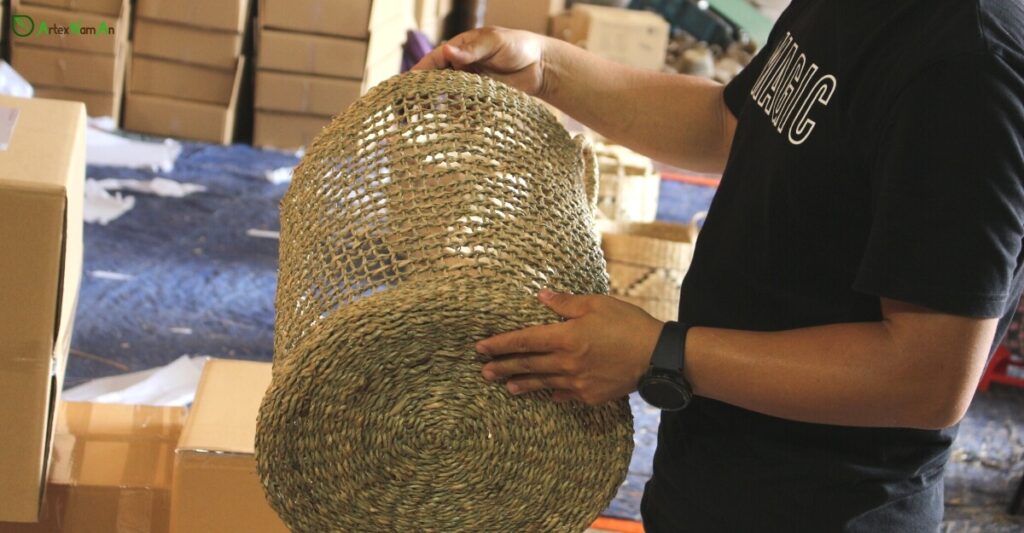
Cotton rope or seagrass cord coiled and stitched is the gentlest starting point. It does not need soaking, it does not crack, and mistakes can be unpicked. Rattan core, the round reed sold in coils, is the classic material and the one worth graduating to, but it has to be soaked and it punishes hesitation. Willow is beautiful and genuinely difficult, because green willow must be worked at exactly the right moisture and dried willow snaps if you rush it.
What Soaking Actually Does
Reed and rattan are woody. Soaking makes the fibres flexible enough to bend around a tight corner without the outer surface splitting. Twenty to thirty minutes in warm water suits most reed sizes, and the material should feel like cooked spaghetti rather than string. Over soaked reed goes furry and grey and never dries to a clean finish, so soak in small batches and keep the rest dry. Wrap the working length in a damp towel between rows.
The Two Constructions Worth Knowing
Almost every basket in the world is built one of two ways, and choosing between them at the start saves a lot of frustration later.
Coiling
A single continuous core, usually rope or bundled grass, is wound in a spiral and stitched to the row beneath it with thread or a thinner fibre. There are no stakes to keep upright, so nothing can lean. Coiling is slower, uses more material, and is by far the easiest way to produce something that looks deliberate on a first attempt. It also handles curves that stake and strand weaving struggles with.
Stake and Strand
Rigid uprights, called stakes or spokes, are held in position while thinner weavers pass over and under them. This is what most people picture when they think of basketry, and it produces the crisp, structured shapes used in storage and display. It is faster once learned and much less forgiving at the start, because the stakes have to be kept under even tension the whole way round.
Building the Base
Everything after this inherits whatever you do here, so it is worth being slow. A base that is even slightly domed or dished will produce a basket that rocks on a table forever.
A Woven Base for Stake and Strand
Cut eight stakes and lay four across the other four in a cross, then split the arrangement into pairs and begin pairing two weavers around them, spreading the stakes out like a fan as you go. Keep the spacing even. Any gap you allow now becomes a visible hole in the finished base. Work outward until the base reaches the diameter you want, then stop and check it lies flat on the table.
A Coiled Base
Start by coiling the core into a tight flat spiral and stitching each turn to the last. Keep the spiral on the table as you work rather than in your hands, because a coil built in the air will always come out slightly domed. When the disc is the right size, stop and press it flat before beginning the sides.
Turning the Corner and Weaving the Sides
This is the part that goes wrong, and it goes wrong for one reason. The upsett, the moment where a flat base becomes a standing wall, needs the stakes to be deliberately kinked upward before any weaving happens above the base. Most beginners simply start pulling the weaver tighter and let the stakes drift upward on their own. That produces a soft rounded shoulder, uneven stake tension, and the lean that shows up three rows later. Squeeze each stake at the base with round nose pliers, bend it up to vertical, and only then begin the first row of the wall.
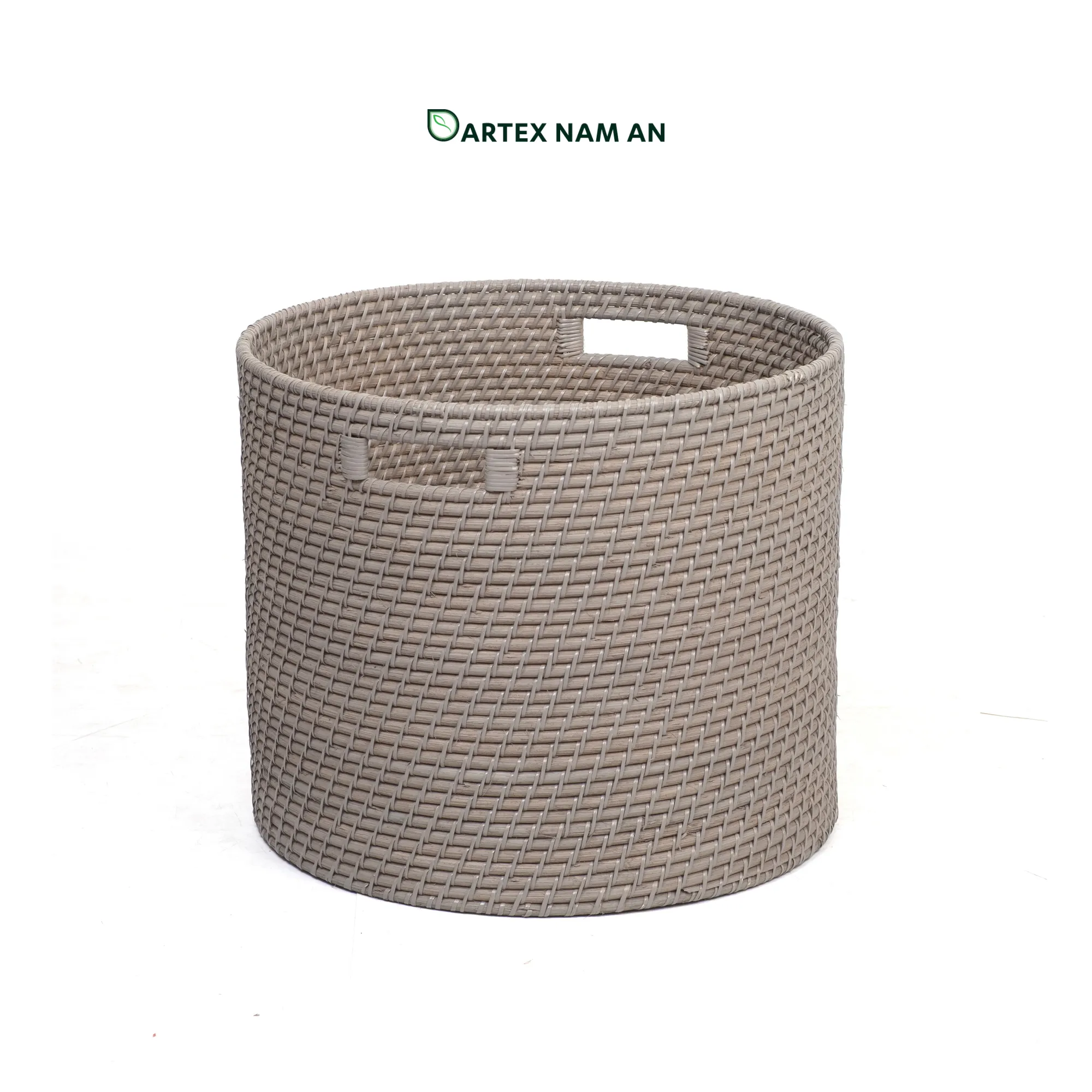
Eco-friendly Wholesale Storage Basket 4-piece set
From there the discipline is consistency rather than strength. Keep the weaver at the same tension on every stake, work in the same direction throughout, and add new lengths behind a stake rather than in an open span. Check the shape every few rows by looking down into the basket from directly above. A circle that has gone slightly oval is easy to correct at row four and impossible at row fifteen. Traditional weaving techniques across cultures are catalogued in some detail under basket weaving, and it is worth a look simply to see how many structural answers exist to the same problem.
Finishing the Rim
An unfinished basket is not a basket, it is a bundle of loose ends. The rim is what locks everything together, and it is also the first thing anyone looks at.
The Folded Border
Soak the top of the stakes thoroughly, then bend each one down and tuck it behind the neighbouring stake, working all the way round until the last few are threaded through the first loops. Trim the ends inside on a slant so nothing catches a hand reaching into the basket. This is the standard border and it is strong enough for anything that will carry weight.
A Bound Rim for Coiled Work
Coiled baskets finish by tapering the core over the last few centimetres so the spiral disappears rather than stopping abruptly, then binding over the final section with tight stitches. Taper too quickly and the rim looks chopped. Taper over roughly a full turn and it reads as intentional.
From One Basket to A Thousand
Making one basket teaches you why handmade goods are priced the way they are. A competent weaver produces a simple rattan storage basket in perhaps forty minutes, and that is after years of practice on the same shape. Multiply that by a retail order and the arithmetic of doing it yourself stops working very quickly.
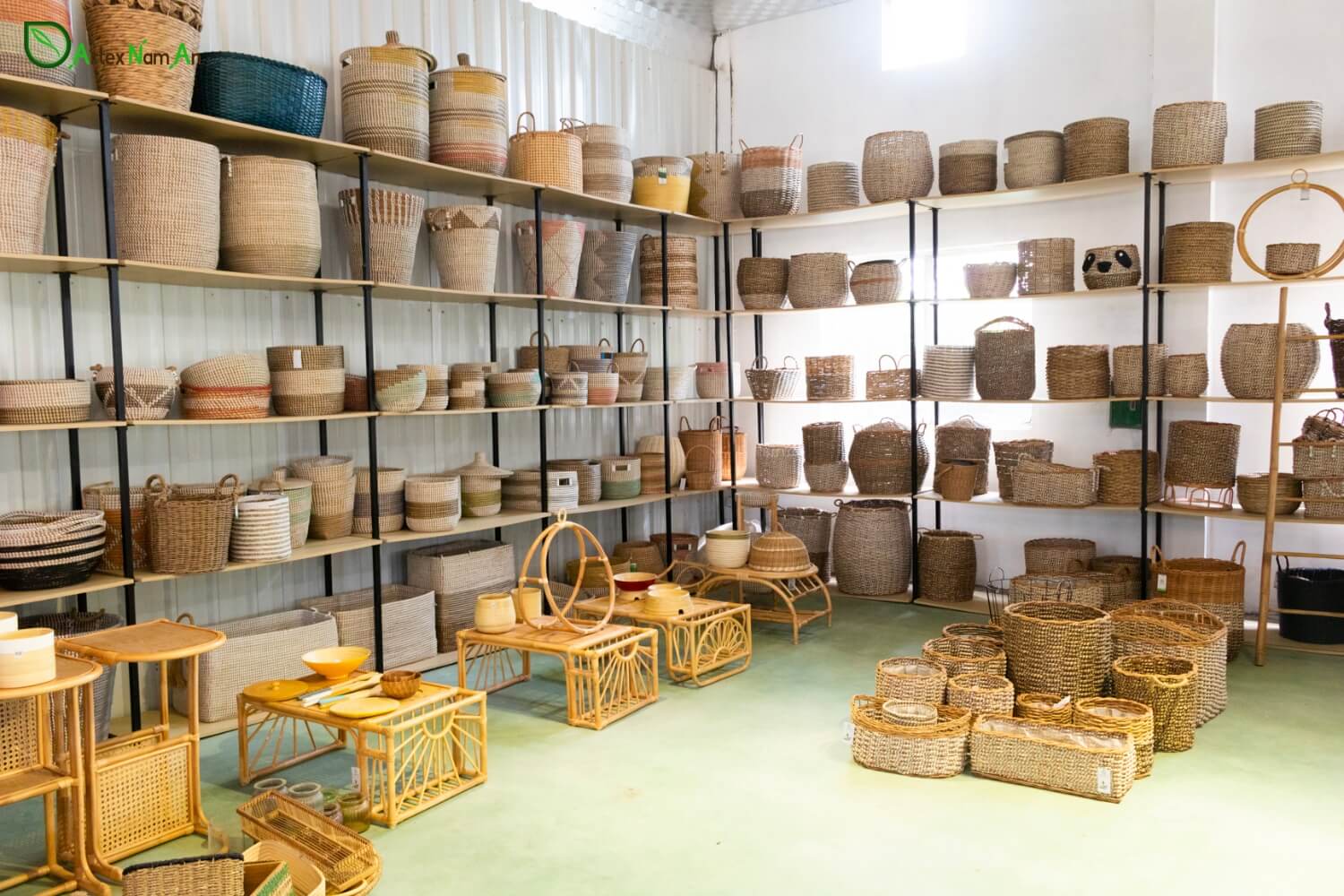
Woven bamboo basket wholesale in Vietnam
The other thing a first basket teaches is how much consistency matters. Two baskets woven by the same person on the same afternoon will differ slightly, and a retail buyer receiving three hundred of them expects them to stack, nest, and match. That consistency is a production discipline rather than a craft skill, which is why brands buying at volume work with an established handicraft manufacturer rather than a collective of individual weavers.
Volume also changes what is worth specifying. Frame construction, wall thickness, and finish all matter more when a product has to survive a container journey and a season on a shop floor. Buyers ordering wholesale woven baskets or bulk woven baskets tend to specify these details in writing, and the sourcing considerations behind that are set out in woven basket wholesale.
Conclusion
Learning how to make a woven basket comes down to four things and none of them are talent. Pick a forgiving material for the first attempt. Build the base flat on the table rather than in your hands. Kink the stakes properly at the upsett instead of letting them drift upward, because that single step prevents the lean that ruins most first baskets. Then finish the rim properly, since it is what holds the whole structure together. Get those right and the fifth basket will look like something you meant to make.
If you have made one and now need three hundred that match, wicker basket manufacturers working to export standards are a different proposition from a craft supplier. Artex Nam An weaves rattan, seagrass, bamboo, and water hyacinth for retail and hospitality brands worldwide. Browse the range in wholesale wicker baskets, see how we work on our materials and production page, then send us your drawing or a photograph and we will quote it properly.
You may also be interested in
Get Inspired with over 200 most trusted Suppliers from Asia at the Global Sourcing Fair Viet Nam
Read more...Aug
China Power Shortage Affect Manufacturing and Supply Chain in Q4 2021
Read more...Oct
Find Your Ideal Handicraft Supplier: A Guide for Artisans and Businesses
Read more...May
Wholesale Flower Hanging Baskets: A Materials and Construction Guide for Buyers
Read more...Aug
Choosing Reliable Wall Decor Wholesale Suppliers for Retail and Home Décor Brands
Read more...Jul
Rattan vs Wicker, Cane, Willow: Here is the difference between 4 popular terms
Read more...Nov