


No products in the cart.
Industry News
What Are the Materials Used in Handicraft? From Rattan and Bamboo to Clay and Lacquer
27
Sep
Sep
Walk through a craft village outside Hanoi and you can tell what each household makes before you see a single finished piece. Bundles of split rattan drying along a wall, stacks of bamboo poles by the road, piles of dried water hyacinth stems, a kiln smoking at the end of the lane. The material comes first, and it decides almost everything else: the shape, the weight, the price and where the finished piece can be used. So what are the materials used in handicraft today? This guide sorts them into plant fibres, solid materials like wood and clay, textiles and animal materials, and the man made alternatives that now sit alongside them, then explains how makers and buyers choose between them.
What Are the Materials Used in Handicraft Today
Handicraft covers anything made mainly by hand with traditional skills, so the list of materials is long. In practice, most handmade products fall into a few groups. Plant fibres such as rattan, bamboo, seagrass and water hyacinth are woven or coiled into baskets, furniture and home decor. Wood, clay and stone are carved, turned or fired. Cotton, silk, jute and wool are spun and woven into cloth. Leather, shell and bone are cut and shaped into smaller pieces. Man made materials, mostly plastic strands and resin, now copy many of these for outdoor use.
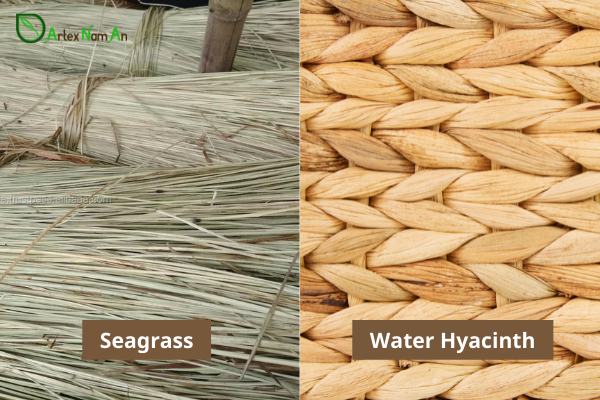
Seagrass & Water Hyacinth
Each country leans on what grows or is dug up nearby, which is why which country is famous for handicrafts so often comes down to its raw materials. Vietnam, for example, has rattan and bamboo in its forests, seagrass along its coasts and river deltas, and clay deposits that have supported pottery villages for centuries.
Plant Fibres That Are Woven by Hand
Woven plant fibres are the largest group of handicraft materials in Southeast Asia. They are light, renewable and flexible enough to shape by hand, but each one behaves differently.
Rattan for Strong Furniture and Baskets
Rattan is a climbing palm, and its solid stems are strong enough to bend into chair frames when heated. The outer skin is peeled into thin strips called cane for weaving and binding, and the inner core becomes round reed. It is the backbone of most natural wicker furniture, and anyone asking what is rattan basket usually has this tough, glossy cane in mind.
Bamboo for Trays and Frames and Lampshades
Bamboo is a fast growing grass with hollow stems. Whole stems make frames and furniture, while split and shaved strips are woven into baskets, trays and lampshades. It can also be pressed into laminated boards, which is how many modern bamboo trays and utensils are made.
Seagrass for Soft Baskets and Rugs
Despite the name, the seagrass used in crafts is not an underwater plant but a tough sedge that grows in wet, salty ground near coasts and river mouths. Its long leaves are dried and twisted into a strong cord that is woven into storage baskets, rugs and placemats. It has a soft green to brown colour and a faint natural scent when new.
Water Hyacinth for Chunky Baskets and Hampers
Water hyacinth is a floating plant that clogs rivers, so harvesting it helps waterways. The stems are dried, then braided into a thick, soft strand that gives baskets and hampers a chunky, textured look. It is best kept indoors and away from damp.
Wood and Clay and Other Solid Materials
Not every handicraft is woven. Wood is carved into bowls, trays and figures, or turned on a lathe, with mango, acacia and teak common in Asia because they are hard and have attractive grain. Clay is shaped on a wheel or in moulds and fired in a kiln. Bát Tràng pottery, made in a village on the outskirts of Hanoi, traces its history back to the fourteenth century. Stone is carved into sculptures and garden pieces, and lacquer, built up in many thin coats on wood or bamboo, gives Vietnamese lacquerware its deep, glossy finish.
Textiles and Animal Materials
Cloth has its own long list of handmade traditions: hand woven cotton and silk, embroidery, batik and hand knotted rugs. Jute and hemp are spun into rope and coarse fabric used for bags, rugs and basket handles. Animal materials include leather for bags and trims, horn and bone for spoons and inlay, and shell, especially mother of pearl, set into lacquer and wood.
How to Choose the Right Material for a Product
The same basket shape can be woven from four different fibres, and each one gives a different result. Makers and buyers usually decide on two questions.
Where the Piece Will Be Used Indoors or Outdoors
Natural fibres suit indoor use. Rain, strong sun and damp cause them to fade, soften or grow mould over time. For outdoor furniture or planters, buyers either choose a heavily treated natural material under a covered porch or switch to a man made strand designed for weather.
How Much It Costs and How Easily It Can Be Supplied
Material price, weaving time and supply all feed into the final cost. Seagrass and water hyacinth are fast to weave and usually cost less, while rattan furniture takes more skilled hours. A reliable handicraft supplier will say plainly which fibre is in steady supply for large repeat orders.
Plastic Rattan and Other Man Made Materials
Man made materials have taken a large share of outdoor furniture. The most common is resin wicker, a strand made from polyethylene or similar plastics and woven by hand over an aluminium frame, just like natural rattan. That is why the honest answer to what is wicker furniture made of is now often plastic rather than plant.
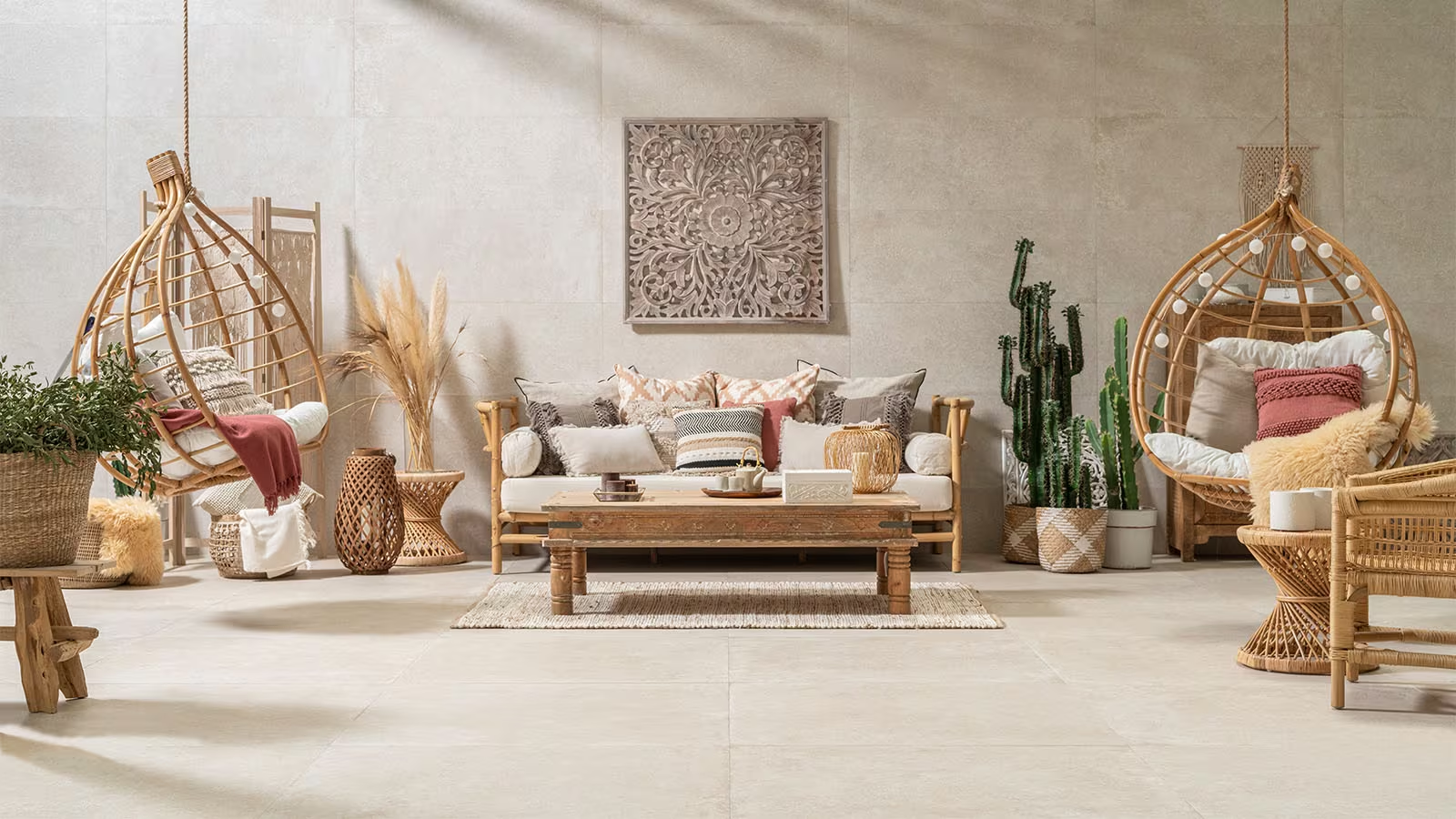
Wicker Furniture
It survives rain and sun far better than natural fibre, although it lacks the texture and scent of the real thing. Polyresin is also moulded into decorative figures, and engineered wood is used for flat panels. These materials are still handmade in the sense that matters, since the weaving and finishing are done by hand.
Conclusion
What are the materials used in handicraft? Mostly what grows or lies nearby: plant fibres like rattan, bamboo, seagrass and water hyacinth for woven pieces; wood, clay, stone and lacquer for solid ones; cotton, silk, jute and leather for textiles and trims; and plastic strands and resin for outdoor versions of traditional designs. The right choice depends on where the piece will live, how long it needs to last and how steadily the material can be supplied.
Artex Nam An is a Vietnamese handicraft manufacturer weaving rattan, bamboo, seagrass and water hyacinth through its own factories and over 30 local facilities in the craft villages, for retail and hospitality buyers worldwide. See the range in our product catalogue, or tell us what the product is for and where it will live and we will recommend the material before we quote.
Read more: Handcrafted In Vietnam Baskets: What Are Baskets Made Of?
You may also be interested in
Rattan vs Wicker – What’s The Sharp Difference?
Read more...May
Care Guidelines For Your Business: How To Preserve Wicker Baskets
Read more...Jun
The Complete Guide to Sourcing High-Quality Willow Baskets Wholesale
Read more...Jul
What Are the Materials Used in Handicraft? From Rattan and Bamboo to Clay and Lacquer
Read more...Sep
How to Source Export Standard Bamboo Baskets Wholesale for Global Retail
Read more...Jun
Fern – Durable Weaving Material For Wholesale Picnic Baskets & Homewares
Read more...Mar