


No products in the cart.
Industry News
What Is Wicker Furniture Made Of? Start With the Weave Rather Than the Material
07
Sep
Sep
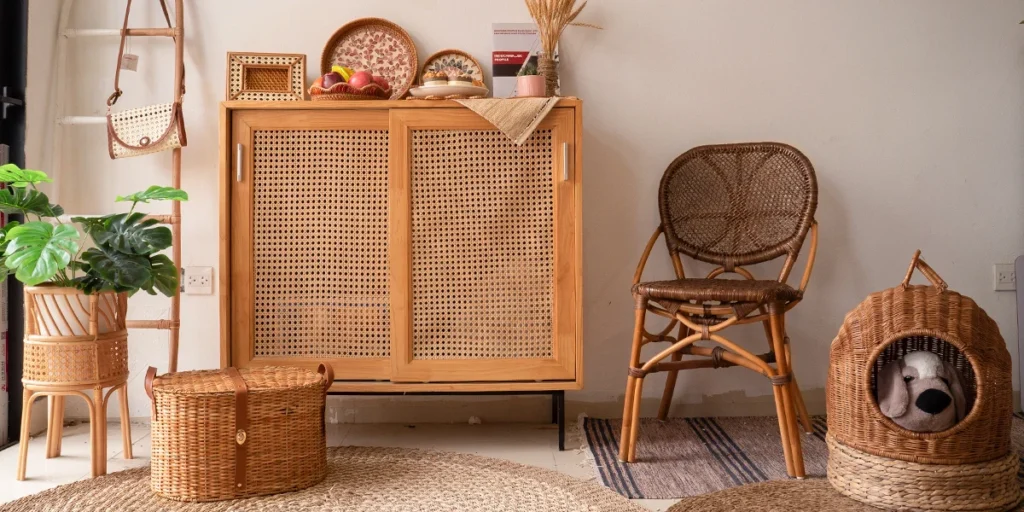
Turn a wicker armchair upside down and you learn more in ten seconds than any product page will tell you. There is a frame under there, and the frame is either a thick pole of natural rattan, a piece of hardwood, or a welded aluminium tube. Wrapped around it is a weave, and the weave is either a plant fibre that grew somewhere or a plastic strand that was extruded to look like one. Those two choices, frame and fibre, are the whole answer to what is wicker furniture made of, and the word wicker itself does not tell you which combination you are holding.
What Is Wicker Furniture Made Of?
What the Word Wicker Actually Describes
Wicker is a method of weaving pliable strands over a rigid frame. It has been used for baskets and seating for thousands of years, and it works with any fibre that bends without breaking.
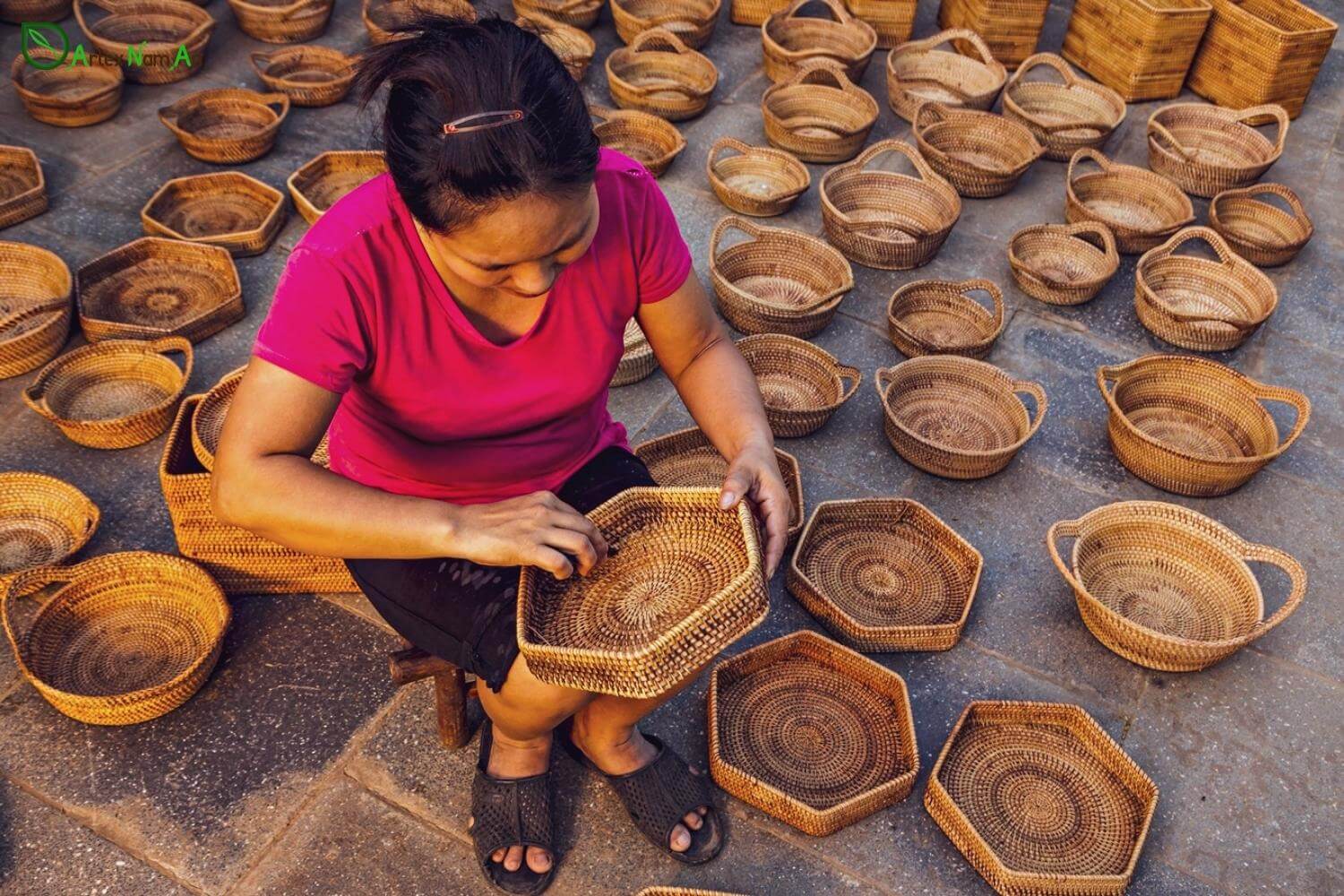
Rattan wicker baskets bulk in Vietnam – Artex Nam An
A chair woven from rattan and a chair woven from plastic are both wicker, in exactly the way a jumper knitted from wool and one knitted from acrylic are both knitwear. That is why the question keeps getting asked, and why the useful answer is about fibres and frames rather than about wicker at all. The same confusion runs through baskets, and anyone who has already asked what are wicker baskets made of knows the first half of this article.
Why the Difference Is Worth Money to a Wicker Furniture Supplier and a Buyer
Two chairs described identically as wicker can differ by a factor of three in price and by a decade in outdoor life. One is natural rattan over a rattan pole and belongs indoors. The other is polyethylene over aluminium and can sit in the rain for years. Nothing in the word wicker separates them, so the material has to be asked for by name.
The Natural Fibres Behind Wicker Furniture
Six plant materials cover almost everything sold as natural wicker furniture, and each behaves differently under a body’s weight and a season’s weather.
Rattan Is the Top Fibre That Rattan Furniture Manufacturers Build Around
The premium fibre and the most common in quality furniture. Rattan is a climbing palm with a solid stem, which is what separates it from bamboo, and it steams into tight curves and holds them. The thick pole makes frames, the peeled outer skin makes the fine weave, and the inner core is split into round or flat reed for binding. A chair can be rattan from frame to weave, which is why so much of the world’s natural wicker seating comes from Southeast Asia and why the region’s rattan furniture manufacturers are the reference point for the category.
Bamboo Is Split Flat and Woven Into Neat Patterns
Hollow, split into flat strips, and woven into crisp geometric patterns. Strong along the strip and reliant on a good frame for structure. Bamboo furniture tends to read as more architectural and less soft than rattan.
Willow Is the Traditional European Wicker
The traditional European choice, grown as a coppice crop and harvested annually. Springy, hard wearing, and slightly irregular in a way machine work cannot copy. More common in baskets than in seating, but the classic garden chair of northern Europe was willow.
Seagrass and Water Hyacinth Woven Over a Wooden Frame
Wetland plants dried and twisted into cord. Soft, textured, inexpensive, and popular for the chunky matte look in current interiors. Neither has the strength to be structural, so both are always woven over a hardwood or rattan frame, and neither enjoys damp. This is decorative indoor furniture, not a patio set.
Paper Fibre and the Old Lloyd Loom Style
Twisted, treated paper cord, often wrapped over a wire core, woven into the tight, even surfaces associated with the Lloyd Loom tradition. Perfectly regular, takes paint and dye beautifully, and surprisingly durable indoors. It is the one natural fibre that looks manufactured, because in a sense it is.
How to Tell What You Are Looking At
You can identify most wicker furniture by hand in under a minute, before reading a single label.
Check the Frame
Turn the piece over. A natural rattan pole is visibly a plant stem, with nodes and slight irregularity. A hardwood frame shows grain and screw heads. Aluminium is cold, light, uniform, and usually visible where the weave ends. If the frame is metal, the weave is almost certainly synthetic regardless of how natural it looks.
Check a Cut End of the Strand
Cut or worn ends tell the truth. Natural rattan shows a solid, slightly fibrous core. Bamboo is flat with a glossy skin on one face. Seagrass and water hyacinth are twisted cords with a papery, slightly spongy feel. Synthetic strands are perfectly consistent along their whole length and show a plastic sheen where they bend. Nothing that grew is ever quite that regular.
Check the Weight and the Joint Wrapping
Natural rattan is surprisingly light for its strength. Hardwood framed seagrass is heavy. Aluminium framed synthetic is the lightest of all. Joints on natural furniture are wrapped with rattan peel or leather binding. Joints on synthetic furniture are welds hidden under the weave. Either can be well made, but the binding on natural furniture is where quality shows, and the standard buyers hold cane furniture manufacturers to is largely a standard about that binding.
Matching the Material to Where the Furniture Stays
The material question only matters because of the use question, and most disappointment comes from getting the second one wrong.
Indoors Is Where Every Natural Fibre Works
Every natural fibre works. Rattan for structure and longevity, seagrass or water hyacinth for texture at a lower price, paper fibre for a painted or coloured finish. Keep all of them away from radiators and direct sun, which dry and crack the fibre, and away from bathrooms, which mould it.
A Covered Porch Is Where Natural Rattan Usually Gets Ruined
A porch or a roofed terrace suits natural rattan with a proper finish, provided it does not get rained on and is brought in for winter. This is the margin where a lot of natural furniture gets ruined by optimism.
What Changes When a Wicker Supplier Ships You a Container of It
For one armchair, all of this is useful context. For a hotel fit out or a retail range, it is the specification. Natural fibre varies by harvest and region, so a retailer receiving forty chairs expects them to match and the supplier has to batch material to make that happen.
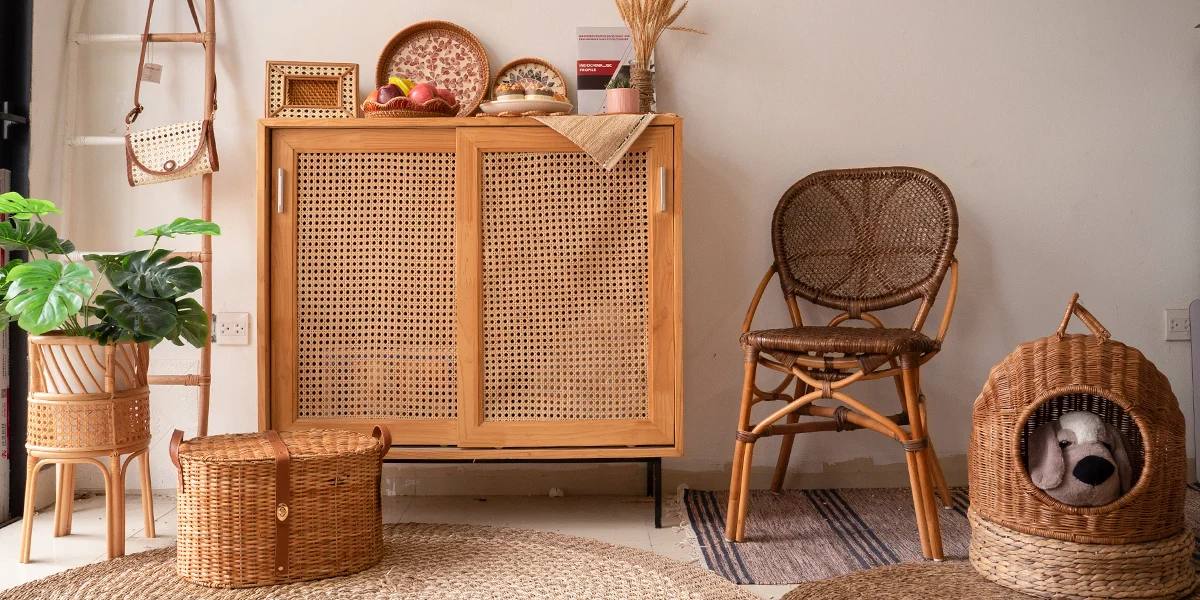
Wicker Furniture Supplier – Artex Nam An
Moisture content at packing matters, because rattan woven in a humid climate and shipped to a dry heated shop will loosen if it left the factory too wet. Frame binding, finish, and load testing all belong in writing. Buyers who specify by fibre and frame rather than by the word wicker get comparable quotations, which is the practical difference between a good wicker furniture supplier relationship and an expensive one, and it is the first thing a serious wicker supplier will ask you to define.
Conclusion
What is wicker furniture made of? A frame and a fibre, and the word wicker names neither. Natural pieces are rattan, bamboo, willow, seagrass, water hyacinth, or paper fibre woven over a rattan pole or a hardwood frame, and they belong indoors or under cover. Synthetic pieces are polyethylene over aluminium and belong outside. Turn the piece over, look at the frame, look at a cut end of the strand, and you will know which you are holding before anyone tells you. Then match it to where it is going to live, because that is the decision the material was always really about.
Artex Nam An is a Vietnamese handicraft manufacturer weaving rattan, seagrass, water hyacinth, and bamboo furniture for retail and hospitality buyers, with fibre, frame, and finish written into every specification. See the current range on our furniture page, or tell us where the furniture will live and how many pieces you need and we will recommend the fibre before we quote the price.
Read more: Cane Furniture Manufacturers: A Buyer’s Sourcing Guide
You may also be interested in
Overwhelmed by the Many Global Fairs? Navigating the 2026 Handicraft Trade Show Calendar
What Are the Materials Used in Handicraft? From Rattan and Bamboo to Clay and Lacquer
Read more...Sep
3 Natural Materials For Wicker Laundry Hampers Wholesale In Vietnam
Read more...Mar
How Artex Nam An and Tradepoint A/S Worked Together to Balance Speed and Quality in Bamboo Product Development
Bulk Hanging Baskets: The Economics of Ordering at Volume
Read more...Aug
Choosing the Right Handicraft Manufacturer: Quality, Ethics, and Global Reach
Read more...May