


No products in the cart.
Industry News
What Are Wicker Baskets Made Of? The Answer Is Not a Material
31
Aug
Aug
Here is the thing that trips almost everybody up, including a fair number of people who sell baskets for a living. Wicker is not a plant. There is no wicker tree, no wicker field, nothing to harvest. Wicker is a weaving technique, which means asking what are wicker baskets made of is a bit like asking what knitted jumpers are made of. The honest answer is that it depends entirely on which fibre the weaver reached for, and the differences between those fibres decide almost everything about how the basket performs.
Wicker Is a Method, Not a Plant
Clearing this up first makes every other question easier to answer, and it explains why two baskets sold under the same word can behave completely differently.
What the Word Actually Describes
Wicker describes weaving pliable material around a rigid frame of stakes. The technique is thousands of years old and appears independently across most of the world, which is roughly what you would expect from a solution that only requires flexible plants and patience.
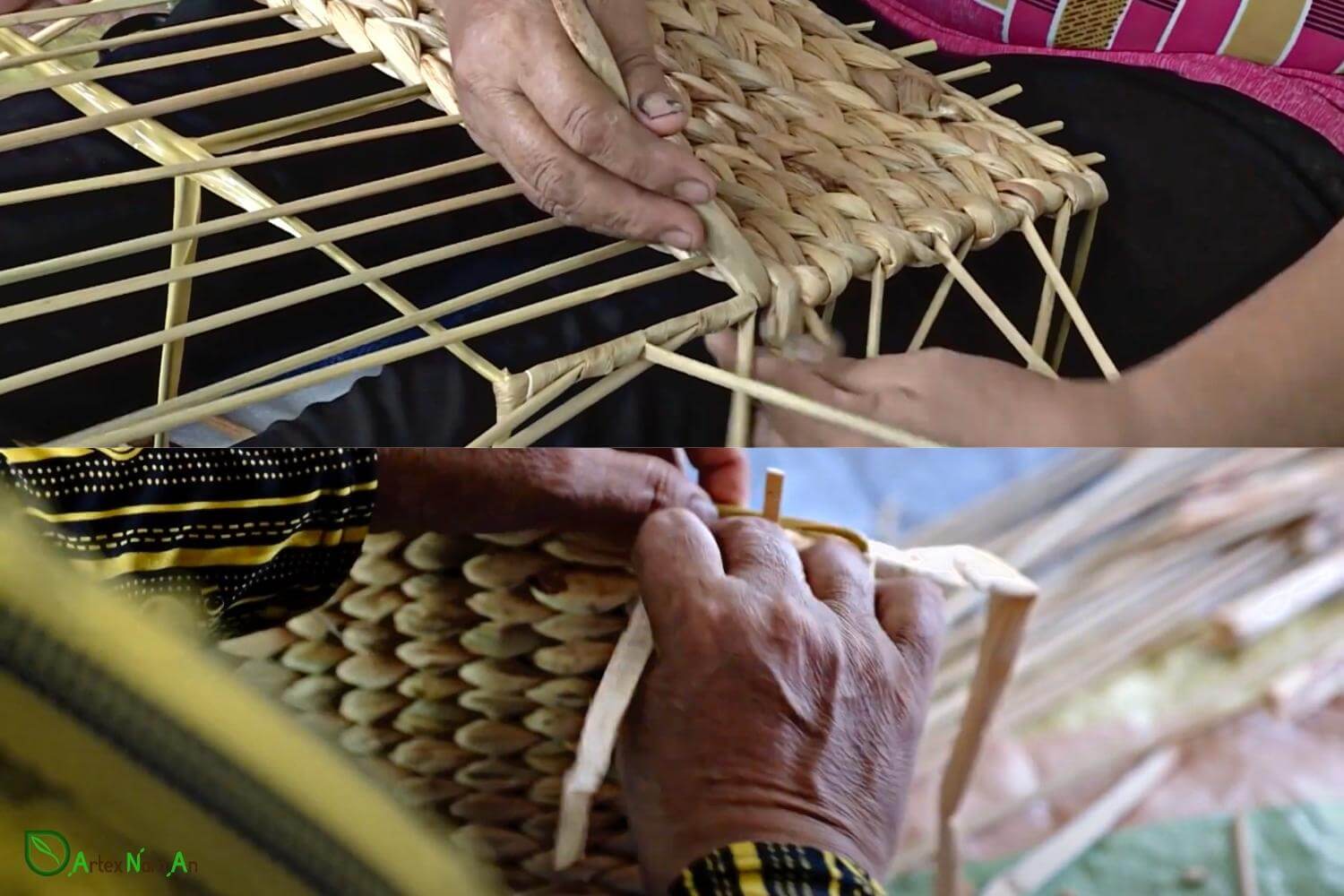
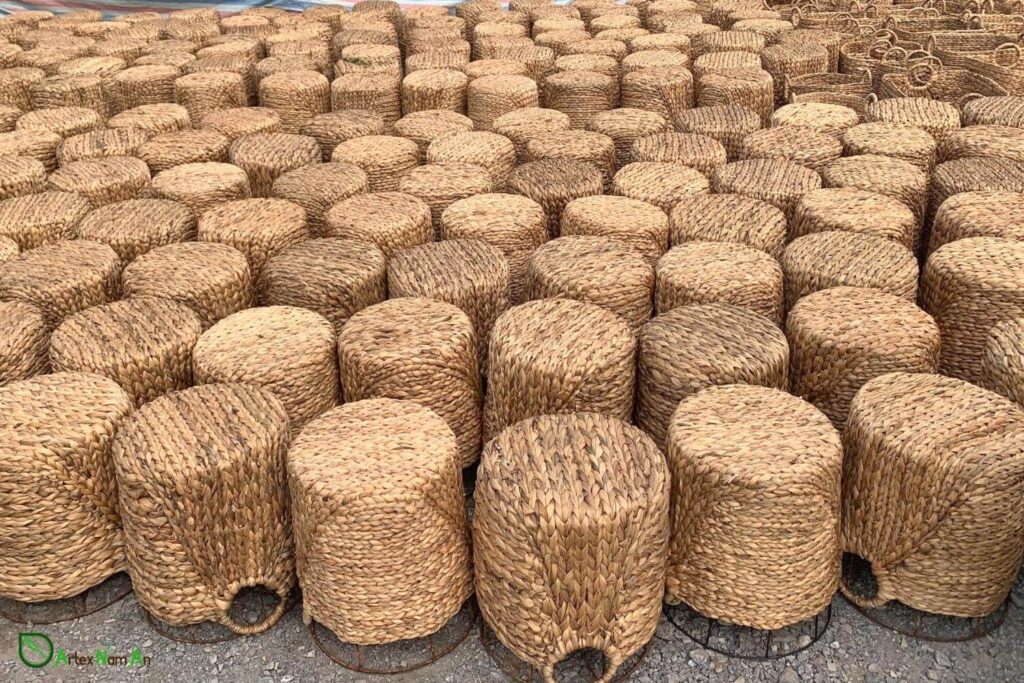
Water hyacinth wicker baskets production
The term itself is described under wicker, and the entry makes the same point: the word names a construction, not a raw material.
Why Suppliers Use the Word Loosely
Because customers search for it. A retailer listing a seagrass basket as wicker is not being dishonest so much as commercially sensible, since far more people search for wicker than for seagrass. The practical consequence is that a product description saying wicker tells you nothing useful about durability, water tolerance, or price. Always find out the actual fibre before comparing two quotations, because two baskets described identically can differ by half in cost and by years in service life.
The Fibres Actually Used
Five materials cover the overwhelming majority of what is sold as wicker, and each has a personality.
Rattan
A climbing palm from Southeast Asia with a solid core rather than a hollow one, which is what separates it from bamboo. It is strong, bends beautifully when steamed, and takes stain and lacquer evenly. Rattan is the premium answer for structured baskets and furniture and it carries a price to match. It is also the only one of these fibres that reliably holds a tight curve without a frame, which is why it dominates rattan basket wholesale ranges.
Willow
The classic European material and the one most people picture. Willow rods are grown as a coppice crop, harvested annually, and used either green with the bark on for a rustic brown finish or stripped and dried for a pale buff. It is springy, hard wearing, and gives that faintly irregular handmade texture that machine work cannot fake. Willow is also why traditional picnic hampers look the way they do, and the sourcing detail sits in willow baskets wholesale.
Seagrass
Harvested from coastal wetlands, dried, and twisted into a cord before weaving. It is soft, slightly glossy, has a distinctive green to honey colour that mellows with age, and is considerably cheaper than rattan. It suits soft sided storage baskets and laundry hampers rather than anything structural, and it does not enjoy getting wet. The material and sourcing notes are in seagrass basket wholesale.
Water Hyacinth
An invasive floating weed that clogs waterways across Asia, harvested, sun dried, and twisted into thick rope. Using it is genuinely environmentally useful rather than a marketing angle, since the plant has to be removed anyway. It produces chunky, matte, pale baskets with a lot of visual texture, and it is the cheapest of the natural options. Like seagrass, it will spot and darken if left damp.
Bamboo, Cane, and Paper Rope
Bamboo is split into flat strips and woven into crisp geometric patterns. Cane is the outer skin peeled from rattan, used for the fine hexagonal caning on chair seats and delicate basket panels. Paper rope, made from twisted recycled paper often wrapped over a wire core, is a modern addition that is light, cheap, and takes colour perfectly, though it has none of the strength of the natural fibres.
How the Material Changes the Basket
Once you know the fibre, most of the important questions answer themselves. Strength follows a fairly predictable order. Rattan and willow will carry real weight and hold a shape without support. Bamboo is strong along the strip but needs a proper rim to hold the structure. Seagrass, water hyacinth, and paper rope are all soft sided and rely on an internal frame if the basket has to keep its shape when empty. A laundry hamper woven from water hyacinth without a frame will slump within a year, and no amount of good weaving prevents it.
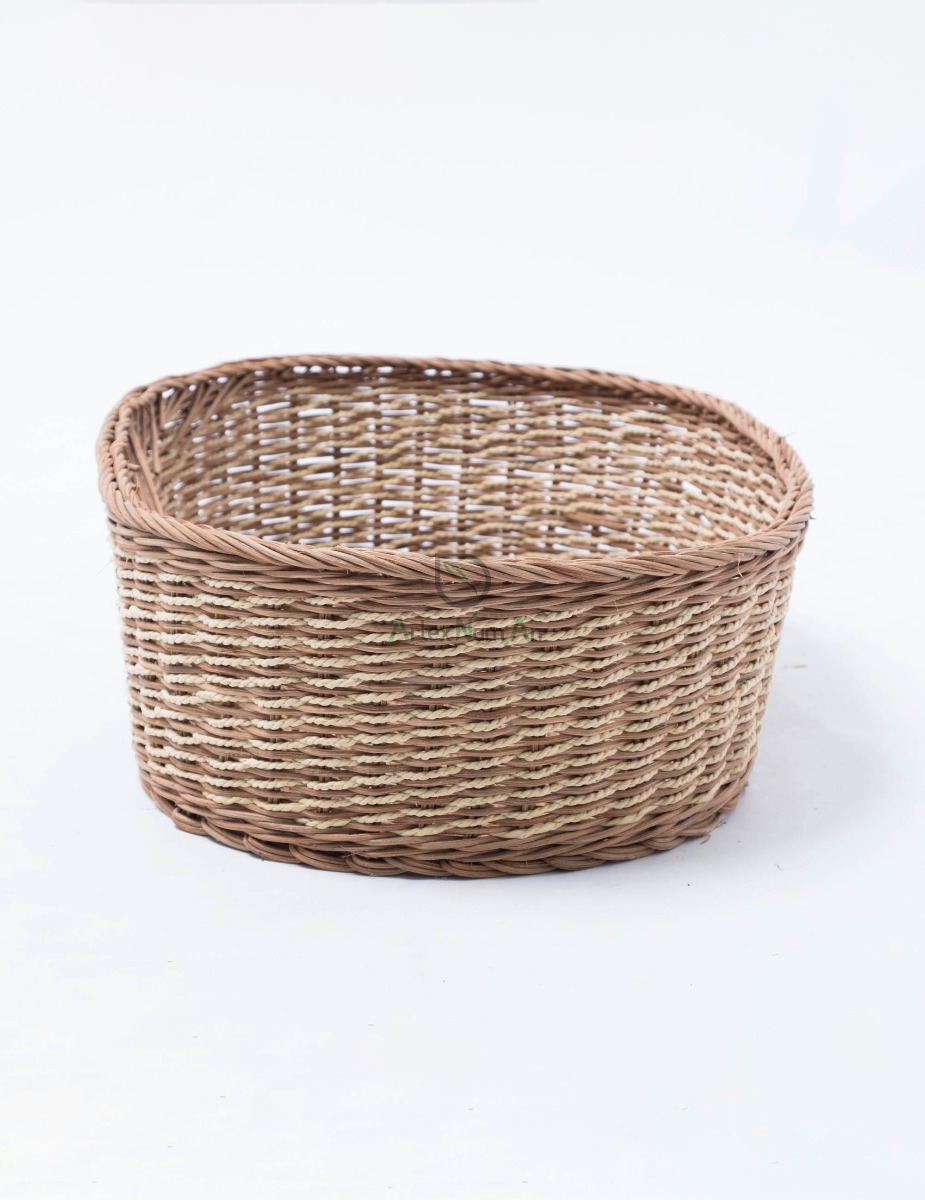
Rattan wicker woven toy snack bread storage basket
Moisture tolerance splits them differently. Rattan handles humidity well and can be finished for occasional damp. Willow tolerates damp and was historically used for exactly that. The wetland fibres and paper rope all mark, darken, or grow mould if left wet, which is why bathroom storage in these materials is usually a mistake unless the room ventilates properly. Price runs roughly rattan at the top, then willow, then bamboo, with seagrass, water hyacinth, and paper rope at the accessible end.
What This Means When You Are Buying
For a single basket, this is interesting context. For an order of two thousand, it is the whole conversation.
Specify the Fibre, Not the Look
Two suppliers quoting on the same photograph can be quoting on entirely different materials, and the cheaper one is often quoting water hyacinth against a rattan reference. Write the fibre into the specification alongside dimensions, frame construction, and finish. Buyers who do this consistently get comparable quotations and far fewer surprises at first shipment, which is the practical theme running through wicker basket suppliers and wicker basket companies.
Ask About Treatment and Moisture
Natural fibre shipped from a humid climate to a dry heated one will lose moisture and can loosen or crack if it left the factory too wet. Ask what the moisture content is at packing and what anti mould treatment is applied for the container journey. Suppliers who cannot answer either question are usually trading rather than manufacturing.
Match the Fibre to the End Use
Structural and load bearing goes to rattan or willow. Decorative and soft sided goes to seagrass or water hyacinth, with a frame if it must hold shape. Colour led ranges go to paper rope, because it dyes consistently where natural fibre never quite does. Getting this right at specification stage is what stops a range being discounted at the end of its first season, and it is the reasoning behind the ranges in bulk wicker baskets.
Conclusion
So what are wicker baskets made of? Whatever the weaver had that would bend. Rattan and willow for strength, bamboo for crisp geometry, seagrass and water hyacinth for soft texture at an accessible price, cane for fine detail, paper rope for colour. Wicker names the weaving, not the plant, and the moment you stop treating it as a material and start asking which fibre is actually in the basket, comparing products and comparing quotations both become far more straightforward.
Artex Nam An is a Vietnamese handicraft manufacturer weaving rattan, seagrass, water hyacinth, bamboo, and paper rope for retail and hospitality brands, with fibre and finish specified in writing on every order. Browse the range in wholesale wicker baskets, read how we select and treat material on our materials and production page, then tell us what you need and in what quantity for a quotation you can actually compare.
You may also be interested in
3 Helpful Things You Should Know To Buy Wholesale Seagrass Baskets From Vietnam
Read more...Jun
6 Seagrass Weaving Styles For Eco-friendly Storage Baskets Wholesale
Read more...Apr
Top Differences Between Cane vs Bamboo In Home Industry
Read more...Jul
Is Rattan Furniture Waterproof? What Water Does to Natural Rattan and How to Protect It
Read more...Sep
Sustainable Wicker Placemats Bulk for Retail and Hospitality Markets
Read more...Jul
Which Country Is Famous for Handicrafts? Six Countries and What Each One Does Best
Read more...Sep