





No products in the cart.
Industry News
Outdoor Furniture Supplier: How to Work With One From First Sample to Repeat Orders
04
Oct
Oct
The first order from a new outdoor furniture supplier is nearly always the hardest. The sample looked right, the price was agreed, and then the container arrives with chairs a shade darker than the sample, three cartons crushed and no one sure who pays. None of that comes from a bad supplier. It comes from a working relationship that was never set up properly. Finding a supplier is the easy part; getting the same furniture, on time, order after order, is the job. This guide walks through the relationship in order: the brief, the sample, the terms, the production checks, the shipment and the reorder, with the questions that save the most trouble at each step.
What a Good Outdoor Furniture Supplier Provides
A supplier sells more than chairs. A good one provides a stable product that matches the sample every time, honest advice about what will and will not survive where you plan to put it, packing that gets bulky pieces across an ocean intact, and a clear answer when something goes wrong. Price matters, but a slightly higher price from a supplier who delivers all four is cheaper than a bargain from one who delivers none.
Rattan Furniture Manufacturer
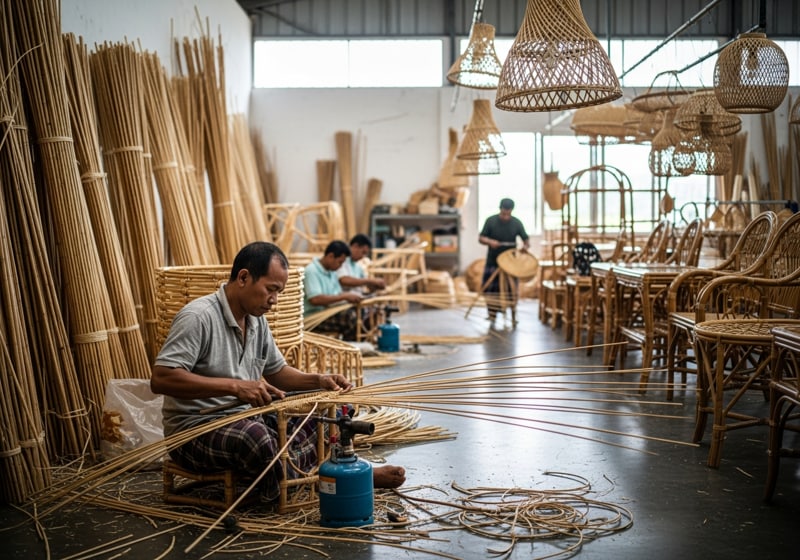
It helps to know which kind of company you are dealing with. A factory controls the making, a trading company controls the paperwork and a local wholesaler controls the stock, and each answers the questions below differently. A dedicated rattan furniture supplier, for instance, will answer in terms of cane, weave and finish rather than catalogue numbers.
Working With an Outdoor Furniture Supplier Step by Step
Write a Brief About Where the Furniture Will Live
Start with the place, not the product. A covered terrace, an open garden, a poolside and a conservatory each need different materials, and a supplier can only advise well if they know which one you mean. Add the quantities, the target price, the delivery date and the standards your market requires. A one page brief avoids most misunderstandings later. Include photographs of the space if you can. A supplier who can see the roof line and the floor will often suggest a better material than the one you asked for.
Order a Sample and Test It
Pay for a proper sample in the final materials and finish, then put it outside in the conditions it will face. Sun, rain, a hose, a week of use. Photograph it before and after. A sample that changes in a month will change in a customer’s garden, and it is far cheaper to learn that now. With natural rattan, settle the question is rattan furniture waterproof before the test. It is not, so the sample should be tested under a roof, where it will actually be used.
Agree on Terms That Could Cause Arguments Later
Before production, agree in writing the approved sample as the standard, the allowed variation in colour and size, the inspection method, the packing specification, who pays for transit damage, the payment schedule and what happens if delivery is late. Most disputes with suppliers are about things that were never written down. Agree the currency and who carries exchange rate risk too, because a long production lead time gives the rate plenty of time to move.
Check Production Before It Ships
Ask for photographs of the first pieces off the line and compare them with the sample. For larger orders, arrange an inspection of the finished goods before they are packed, either by your own staff or an independent inspector, and ask to see the packed cartons. Problems found in the factory cost a fraction of problems found at your warehouse.
Receive the Shipment and Record Everything
Open cartons on arrival, count, photograph damage and report it within the time the terms allow. Keep the approved sample and compare a few pieces from each carton against it. What you record now becomes the evidence for any claim and the reference for the next order.
Turn the First Order Into a Repeat Order
The real value of a supplier shows on the second order. Send feedback on what sold, what customers said and what failed. Ask the supplier to keep the same materials and finish, and to tell you before anything changes. Suppliers give their best prices and attention to buyers who reorder predictably. Many will hold materials or frame stock for a buyer with a steady pattern, which shortens the lead time on every order after the first.
Questions That Reveal a Reliable Supplier
A few questions early on tell you most of what you need. Which of your products do you make yourself, and which do you source? Where does the material come from, and how is it treated for outdoor use? Can I see an inspection report from a recent order? What was the last problem a customer had, and what did you do about it? How do you pack this set, and how many fit in a container? Clear, specific answers are a good sign. Vague ones, or a rush to talk about price instead, are not. Ask the same questions of two or three suppliers and the differences become obvious quickly.
Why Material Knowledge Matters Most
The single biggest cause of failed outdoor orders is furniture in the wrong material for the place. Solid hardwoods such as teak handle open weather, powder coated metal frames resist rust, and natural fibre pieces in rattan, bamboo and seagrass belong on covered terraces, verandas and in conservatories where rain cannot reach them.

Rattan Furniture Making
A supplier who knows their material will tell you where their furniture should not go. That honesty is worth more than a wide catalogue. It also protects your own reputation, because the customer who finds their new set grey and sagging after one season blames the shop, not the factory.
Conclusion
An outdoor furniture supplier is judged on the second order, not the first. Write a brief that starts with where the furniture will live, test a real sample there, agree the terms that cause arguments, check production before it ships, record everything on arrival and feed what you learn into the reorder. Ask the questions that reveal how a supplier handles problems, and choose one who knows their material well enough to tell you where their furniture should not go.
Artex Nam An is a Vietnamese handicraft manufacturer weaving rattan, bamboo, seagrass and water hyacinth furniture and home decor for retailers and hospitality buyers worldwide, through its own factories and over 30 local facilities in the craft villages. See the range on our furniture page, or tell us where the furniture will be used and your target quantity and we will recommend the material and finish before we quote.
Read more: Finding the Best Rattan Furniture Manufacturers: A Buyer’s Guide
You may also be interested in
Wholesale Hanging Flower Baskets: Planning Your Season Before You Order
Read more...Aug
Sustainable Wicker Placemats Bulk for Retail and Hospitality Markets
Read more...Jul
Wholesale Rattan Baskets Crafted for Global Retail and Home Décor Markets
Read more...Jun
Spun Bamboo: How To Make Wholesale Bamboo Fiber Salad Tableware
Read more...Sep
What Is Rattan Furniture Made Of? The Plant Behind It
Read more...Sep
China Power Shortage Affect Manufacturing and Supply Chain in Q4 2021
Read more...Oct