





No products in the cart.
Industry News
What Is Rattan Furniture Made Of? The Plant Behind It
07
Sep
Sep
A single rattan vine can run two hundred metres through a forest canopy, and a furniture maker uses almost all of it. The thick lower stem becomes the frame of a chair. The glossy outer skin, peeled off in strips, becomes the fine weave across its back. The pale inner core, split into round or flat lengths, becomes the binding that holds the joints together. So the honest answer to what is rattan furniture made of is: rattan, three different ways. The complication is that a large share of what is sold under the name never grew anywhere, and telling the two apart is worth a few minutes before buying either.
What Is Rattan Furniture Made Of?
Rattan is not a tree and it is not bamboo, and both confusions lead people to the wrong expectations of the furniture.
A Climbing Palm With a Solid Core
Rattan is a family of climbing palms native to the tropical forests of Southeast Asia, where it grows as a vine that hooks its way up trees.
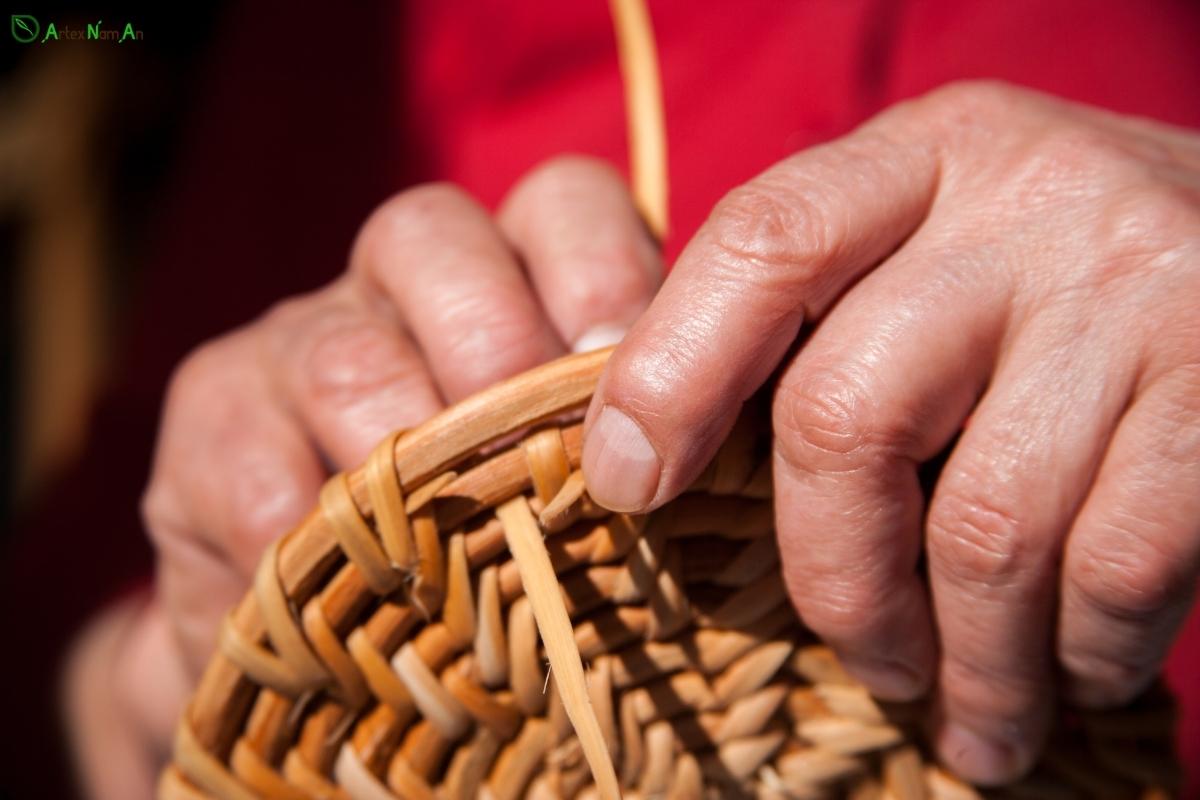
Rattan furniture production – Artex Nam An
Unlike bamboo, the stem is solid all the way through, which is why it can be bent into a tight curve under steam and hold that curve for decades without cracking. It is also why it takes screws, nails, and glue where bamboo would split. Almost all commercial rattan is harvested from managed forests in Indonesia, Malaysia, Vietnam, and the Philippines, and processed close to where it grows.
Why Rattan Became the Default Material for Lightweight Chair
Strength for its weight is the reason. A rattan chair frame weighs a fraction of the same chair in hardwood and carries the same load. Add the fact that it bends rather than needing to be cut and jointed, that it grows back within a few years of harvest, and that it takes stain and lacquer evenly, and you have a material that has been the default for lightweight seating for two centuries.
The Three Parts of the Vine and What Each One Does
Every piece of natural rattan furniture is built from the same three components, and knowing which is which tells you where to look for quality.
The Pole That Becomes the Frame and Carries the Weight
The thick, straight lower section of the vine, typically 25 to 40 millimetres across, forms the load bearing skeleton. Legs, arm rests, seat rails, and back frames are all pole. It is steamed, bent into shape on a jig, and dried, and the quality of a piece rests mostly on whether the pole is straight grained, evenly matured, and free of the soft immature sections that snap under weight.
The Peel That Wraps the Joints and Weaves the Panels
The smooth, glossy outer bark is stripped off in narrow flat strips and used for two things: wrapping the joints where two poles meet, and weaving the open panels of a chair back or a cabinet door. It is the part you see and touch, it takes colour well, and a peel wrap that is tight and evenly spaced is the single clearest sign that a piece was made carefully.
The Core That Becomes Reed for Panels and Baskets
What is left after peeling is the pale inner core, which is split into round reed and flat reed of various diameters. Round core is the material of most woven furniture panels and nearly all baskets, which is why the answer to what are woven baskets made of so often starts with the same vine. Flat core is used for binding and for the wide flat weaves on cabinet fronts. Because core is soft and porous compared to peel, it is the part most vulnerable to damp and the part that shows wear first.
The Plastic Version Sold as Rattan Garden Furniture Wholesale
Most of what is sold as rattan garden furniture contains no rattan at all, and that is not necessarily a problem, provided you know what you are buying.
Polyethylene Is the Only Plastic Weave Worth Buying
Synthetic rattan is an extruded plastic strand, usually high density polyethylene, coloured through and stabilised against ultraviolet light. It is made to resemble peel and woven in the same patterns. The good grades resist fading and cracking for a decade outdoors. The cheap grades, often generic resin or polyvinyl chloride, go brittle within a few summers. The chemistry of polyethylene is the reason the good grades survive weather that would destroy the natural material within a season.
The Aluminium Frame Under Every Plastic Weave
Under a synthetic weave the frame is nearly always powder coated aluminium, welded rather than bent. It does not rust, it is light, and it allows shapes a natural pole cannot take. A synthetic rattan sofa is really an aluminium sofa with a plastic skin, and the gauge of that aluminium matters as much as the strand.
How to Tell Natural From Plastic Rattan in Under a Minute
Turn the piece over. A natural pole shows nodes and slight irregularity and feels warm. Aluminium is cold, uniform, and usually visible where the weave ends. Cut or worn strand ends show a fibrous core on natural rattan and a smooth plastic section on synthetic. If it is for a patio and it is natural, it will not last. If it is for a living room and it is synthetic, you are paying for weatherproofing you will never use.
What Is the Best Quality Rattan Furniture
Because the material is natural and the work is manual, quality varies more than in almost any other furniture category, and it varies in predictable places.
Straight Poles Cut From Fully Grown Plants
Immature rattan is pale, soft, and bends too easily. Mature pole is dense, evenly coloured, and springs back when flexed. A frame built from mixed maturity will develop a weak point at the softest section. Straightness matters because a bent pole steamed straight will try to return to its old shape over years.
Joint Wrapping
Every joint should be wrapped tightly, with no gaps and no loose ends, and the wrap should sit flush rather than lumpy. Loose wrapping is the earliest sign of a rushed piece, and it is where a chair starts to creak within a year. It is the first thing an experienced rattan furniture supplier will point to when explaining a price difference.
A Tight Weave and a Good Finish
Panels should be tight, even, and free of gaps where a finger fits through. Finish should be uniform with no drips or bare patches, and on furniture that will see any humidity it should include a sealer rather than just a colour coat. The finishing standard is one of the main things that distinguish the best rattan furniture manufacturer operations from average ones, because it is where corners are easiest to cut.
Buying Rattan Furniture Wholesale in Large Orders
For a single chair, everything above is useful context. For a hotel fit out or a retail range, it is the specification. Natural rattan varies by harvest, so a buyer receiving fifty chairs expects them to match and the supplier has to sort pole by colour and maturity to make that happen. Moisture content at packing belongs in the order, because rattan shipped from a humid climate to a dry heated showroom will loosen at the joints if it left the factory too wet.
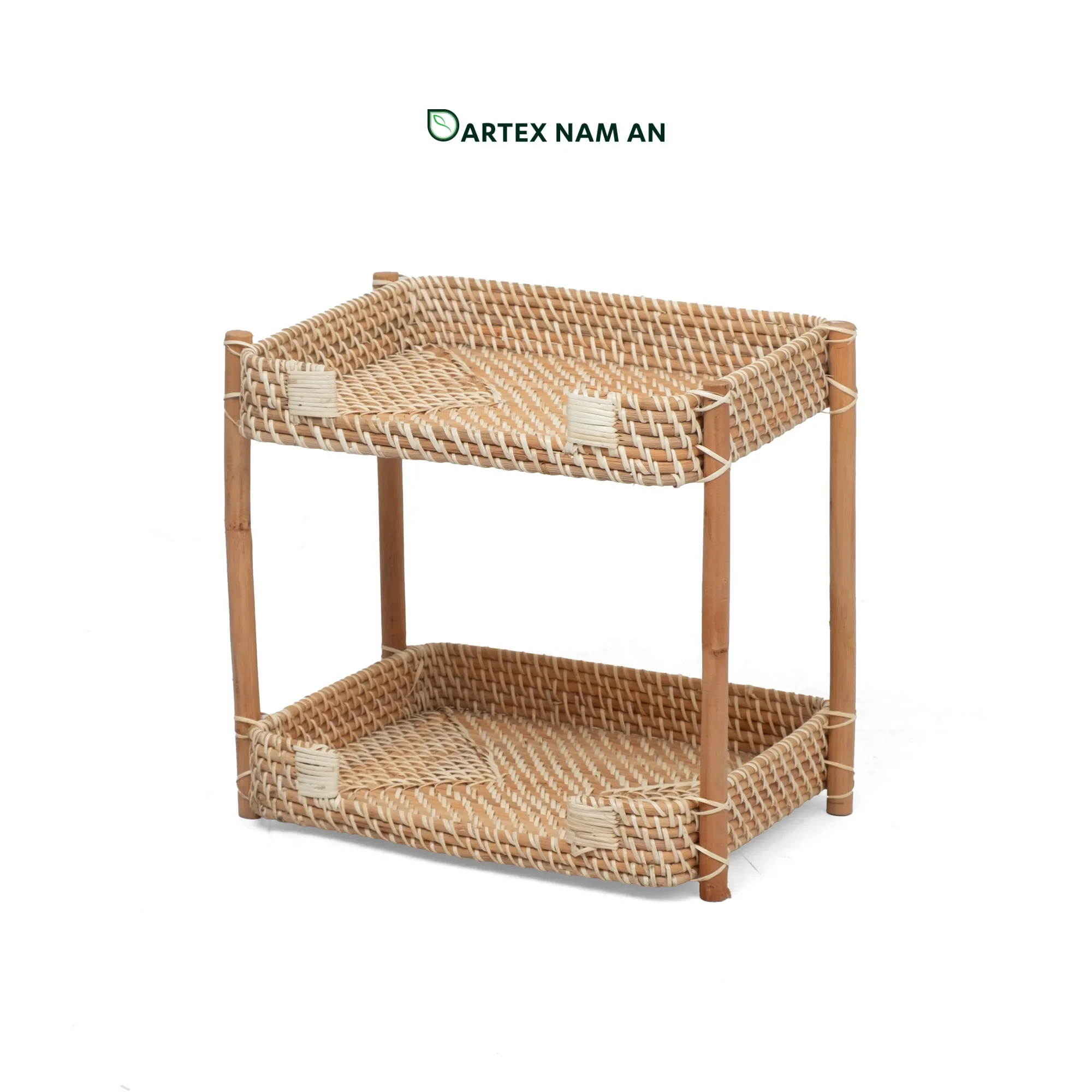
2-tier Wholesale Rattan Shelf – Artex Nam An
Load testing, finish specification, and treatment against insects should all be written down rather than assumed. Buyers who specify pole, peel, and core rather than the word rattan get comparable quotations, which is the practical theme running through rattan furniture wholesale sourcing, and it is the first thing established rattan furniture companies will ask you to define.
Conclusion
What is rattan furniture made of? A climbing palm, used three ways: the pole for the frame, the peel for the wrap and the visible weave, and the core for the panels and the binding. Or, on a patio, a polyethylene strand over an aluminium frame that borrows the name and none of the plant. Turn the piece over, look at the frame and a cut end of the strand, and you will know which you have. Then judge it on pole maturity, joint wrapping, and weave density, because those three are where good rattan furniture and bad rattan furniture part company.
Artex Nam An is a Vietnamese handicraft manufacturer producing rattan, seagrass, and water hyacinth furniture and homeware for retail and hospitality buyers, with pole grade, weave, and finish written into every specification. Read how we grade and treat material on our quality assurance page, or tell us what the furniture is for and how many pieces you need and we will recommend the construction before we quote.
Read more: Finding The Best Rattan Furniture Manufacturers: A Buyer’s Guide
You may also be interested in
Choosing the Right Woven Placemats Bulk for Hospitality Procurement
Read more...Jul
Laminated Bamboo: Ideal To Make Bamboo Trays For Eating
Read more...Oct
A Complete Sourcing Guide to Finding Premium Picnic Baskets Wholesale
Read more...Jun
Finding the Best Wicker Supplier for Your Next Project
Read more...May
China Power Shortage Affect Manufacturing and Supply Chain in Q4 2021
Read more...Oct
What Are Picnic Baskets Made Of? From Willow Hampers to Foil Lined Coolers
Read more...Sep