




No products in the cart.
Industry News
Rattan Furniture Companies: Mapping the Global Landscape for Wholesale Buyers
06
Aug
Aug
If you are the person responsible for placing a wholesale order, you have likely already discovered that a search for rattan furniture companies returns an overwhelming, undifferentiated list. Large factories, small workshops, trading agents, and brand owned production facilities all show up side by side, often using nearly identical language to describe themselves, which makes it genuinely difficult to tell what kind of business you are actually about to contact. This piece is written specifically for the wholesale buyer trying to make sense of that landscape, not as another generic checklist of qualities to look for, but as an actual map of how this industry is structured, who the different players are, and how understanding that structure should shape your own sourcing strategy before you request your first quote.
The Four Business Models Hiding Behind One Search Result Page
When you search for rattan furniture companies, you are really searching across four distinct business models that happen to use overlapping marketing language, and knowing which one you are looking at changes almost everything about how a relationship with that business will actually work.
Large Scale and Vertically Integrated Manufacturers
Large scale, vertically integrated rattan furniture manufacturers represent one end of the spectrum. These businesses run substantial factory operations, control raw material sourcing, weaving, frame fabrication, and finishing directly, and are built specifically to fulfill large, repeatable wholesale rattan furniture orders on predictable timelines. If your buying plan involves container level volume, ongoing seasonal reorders, or a national retail rollout, this is almost always the category of company your sourcing strategy should be built around, since smaller operations simply are not structured to absorb that kind of order without straining their capacity.
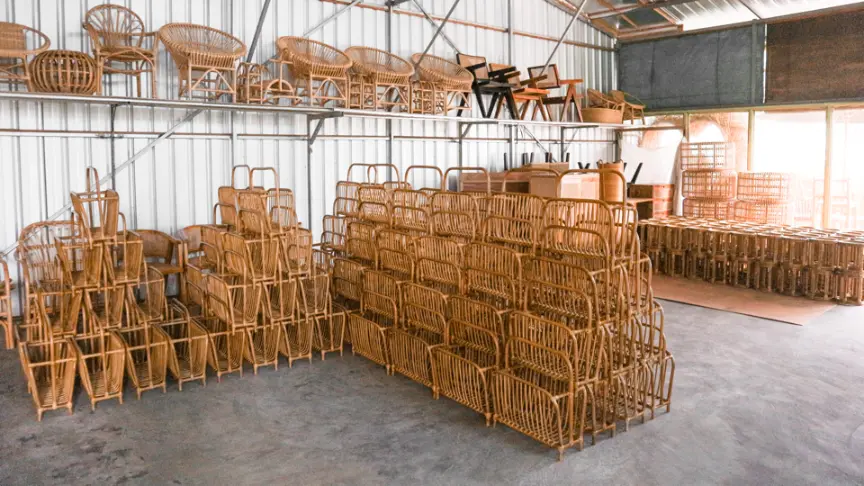
Large Scale and Vertically Integrated Manufacturers
Boutique Artisan Workshops
Boutique workshops sit at the other end, often organized around a small team of genuinely skilled artisans rather than an industrial production line. A boutique handicraft manufacturer in this category can produce extraordinary, highly individualized work, and is often the right partner for a hospitality brand or design led retailer chasing a distinctive, non mass produced aesthetic for a smaller order. What these workshops generally cannot offer is the volume and delivery consistency a large retail chain requires, which makes them a poor fit for buyers whose priority is scale rather than bespoke character.
Trading Companies and Export Agents
Trading companies and export agents make up a third category, and this is where buyer confusion causes the most costly mistakes. These businesses often present themselves using language nearly identical to a genuine manufacturer, yet they typically source finished goods from a rotating network of third party workshops rather than producing anything themselves. This isn’t automatically a red flag, since some trading companies provide real value through consolidated shipping, language support, and reduced minimum order quantities for buyers still building initial order volume. But it does mean design changes, quality issues, and production timelines all travel through an extra layer of communication, which matters enormously once your order volume grows large enough that direct manufacturer access becomes worth pursuing.
Brand Owned and Private Label Focused Facilities
Brand owned or private label focused production facilities form the fourth category, businesses that have specifically built their internal structure, meaning dedicated design, production, and quality assurance teams, around developing original, brand specific collections for wholesale buyers rather than simply reproducing an existing catalog. This is the category most relevant to a buyer planning a genuine private label program rather than a straightforward reorder of existing SKUs.
Where These Companies Actually Cluster Geographically
Understanding the regional landscape matters just as much as understanding the business model, since geography directly affects cost structure, lead time, and the kind of compliance documentation a company is likely to have already developed.
Vietnam
Vietnam has become one of the strongest concentrations of established rattan furniture manufacturers globally, built on generations of artisan weaving tradition combined with increasingly sophisticated factory infrastructure and design capability.
Indonesia and the Philippines
Indonesia and the Philippines represent two other historically significant sourcing regions with deep rattan craft traditions of their own, each with slightly different cost structures and specialization tendencies that a buyer comparing regions should research directly rather than assuming interchangeability.
China
China has developed a strong presence specifically in synthetic PE rattan production at very large industrial scale, often at highly competitive pricing for buyers whose priority is volume and cost above craftsmanship distinctiveness. Buyers weighing this option against a more traditionally artisan focused rattan furniture wholesale partner in Vietnam or Indonesia should weigh that trade off honestly against their own brand positioning, since a mass industrial aesthetic and a handcrafted artisan aesthetic genuinely read differently to end customers, even when both meet acceptable durability standards.
Eastern Europe and the Mediterranean
A smaller but relevant category of businesses operates in Eastern Europe and parts of the Mediterranean, often functioning as final assembly or finishing operations for components sourced from Asian raw material suppliers, which can offer shorter shipping times to European retail buyers at the cost of somewhat higher base production pricing. Understanding where a given supplier actually falls within this geographic landscape, rather than assuming all rattan furniture companies operate identically regardless of location, helps you set realistic expectations for both pricing and lead time before you request your first formal quote.
Top 4 Rattan Furniture Companies Worth Comparing
To make this concrete, it helps to look at a small set of real, differently built companies rather than treating the category as one interchangeable pool of suppliers. The four companies below were chosen specifically because they represent different business models and different regions within the landscape described earlier, giving a buyer a genuinely useful basis for comparison rather than four similar looking options.
Rattan Land Furniture
Rattan Land Furniture is based in Indonesia and has operated since 1999, making it one of the more established names among Indonesian exporters in this category. The company sources rattan directly from regions such as Kalimantan and processes it into both natural and synthetic rattan pieces, shipping to buyers across Europe, Australia, and other international markets. For a buyer specifically prioritizing deep, direct access to Indonesian raw rattan and decades of export experience within that supply chain, this company represents a solid reference point on any comparison shortlist.
Wisanka Group
Wisanka Group is headquartered in Jepara, Central Java, a region long associated with skilled Indonesian furniture craftsmanship. The company operates a dedicated rattan division built specifically to serve international wholesale buyers across natural fiber furniture categories, alongside its broader furniture business. Buyers comparing established Indonesian exporters often place Wisanka Group alongside Rattan Land Furniture as a similarly long running option, though each company is worth evaluating on its own current capacity and specialization rather than assumed to be interchangeable simply because both are based in the same region.
Foshan Nanhai Ease Outdoor Furniture
Foshan Nanhai Ease Outdoor Furniture sits on the industrial end of the spectrum, based in the Foshan manufacturing cluster in China that has become one of the world’s largest concentrations of outdoor and rattan chair production. Companies built on this model tend to emphasize commercial grade materials, OEM flexibility, and large scale export capacity aimed at hospitality groups and major retail buyers who need very high volume at competitive pricing. A buyer whose priority is sheer production scale and cost efficiency above artisan distinctiveness is likely to find this kind of Chinese manufacturing model a relevant comparison point.
Artex Nam An
Artex Nam An represents the Vietnamese craft heritage model within this same landscape, built on generations of rattan, bamboo, and seagrass weaving tradition combined with an internal Research and Development, Production, and Quality Assurance structure. Unlike a purely industrial manufacturer or a raw material focused exporter, Artex Nam An is organized specifically to support both standard wholesale orders and genuine private label development, and its catalog extends beyond furniture into dining accessories and other natural material categories, giving buyers a path to consolidate multiple product lines under one accountable partner. For a buyer who wants artisan craftsmanship paired with real design and quality control infrastructure, rather than a purely industrial or purely raw material sourcing relationship, this is the profile worth shortlisting alongside the other three.
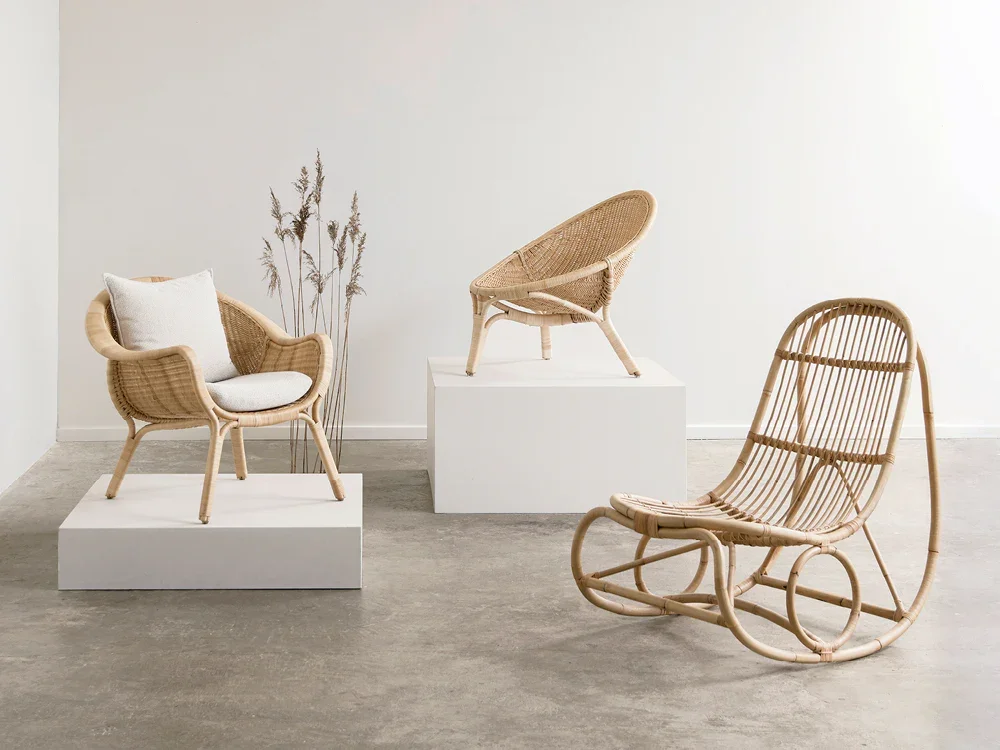
Artex Nam An represents the Vietnamese craft heritage model within this same landscape
None of these four companies is interchangeable with the others, even though a first glance at their marketing pages might suggest otherwise. A buyer prioritizing sheer industrial scale and the lowest possible unit cost may lean toward the Foshan style manufacturing model. A buyer prioritizing deep Indonesian rattan sourcing relationships may lean toward an established Indonesian exporter like Rattan Land Furniture or Wisanka Group. A buyer who wants a partner combining genuine artisan craftsmanship with the kind of integrated design and quality control structure that supports custom, brand specific collections, and who wants to consolidate that furniture relationship with adjacent natural material categories like dining accessories, is generally better matched with a manufacturer positioned like Artex Nam An. Comparing named companies like these side by side, rather than relying only on an abstract list of criteria, is often what actually turns a vague search for rattan furniture companies into a confident, well matched sourcing decision.
Building a Shortlist of Trusted Rattan Furniture Companies to Compare Side by Side
Very few experienced buyers commit to a single supplier based on one conversation. Most build a shortlist of three to five candidates and compare them directly before placing a first order, which is exactly why so many searches in this category are phrased in the plural, rattan furniture companies rather than a single company, since the buyer’s actual intent is comparison, not a single recommendation. Building that shortlist well matters just as much as evaluating any individual company on its own, and it deserves a deliberate process rather than simply collecting a handful of quotes and picking the cheapest one.
Once you have a small set of real companies in view, such as the four profiled above, apply the same comparison discipline to each. Request an identical specification sheet from every company on your shortlist for the same reference product, rather than allowing each supplier to describe their own version of a comparable item on their own terms. This forces an apples to apples comparison of frame material, fiber type, weight, and finishing across candidates, which a side by side review of marketing photos alone will never reveal. Ask every shortlisted company the same set of technical questions, covering production capacity, realistic lead time, minimum order quantity, and compliance documentation, and keep a simple written record of how directly and specifically each one answers, since hesitation or vague deflection on identical questions is one of the clearest signals for separating a trustworthy operation from one still building its export credibility.
Pay close attention to how each company positions itself within the landscape described above as well. A trading company presenting itself with language nearly identical to a vertically integrated manufacturer should be asked directly whether they own their production facilities, and a hesitant or evasive answer to that specific question is itself useful comparison data. Request references or documented case studies from each shortlisted company, and where possible, speak to a previous buyer directly rather than relying only on testimonials the company has chosen to publish itself.
Once you have gathered comparable information across your full shortlist of trusted rattan furniture companies, the strongest candidate is rarely the one with the lowest quoted price alone. It is typically the one whose business model, geographic positioning, and production transparency most closely match your specific order profile, the same alignment described earlier in this piece, now validated directly against real, comparable answers from multiple companies rather than assumed from a single sales conversation.
Positioning Your Own Sourcing Strategy Within This Landscape
Once you understand the landscape, the practical question becomes how to position your own wholesale buying strategy within it, and this depends heavily on where your business currently sits in terms of order volume and growth trajectory.
A buyer just beginning to test this category, placing a modest trial order before committing to a larger program, often benefits from starting with a trading company or a mid sized manufacturer willing to accept lower minimum order quantities, using that initial relationship to learn the category’s quality benchmarks and pricing norms before scaling up. A buyer with established order volume and a clear multi season growth plan is usually better served moving directly to a large scale manufacturer capable of absorbing that growth without the buyer needing to renegotiate capacity and pricing from scratch every time order volume increases.
For a buyer specifically evaluating which company might be considered the best rattan furniture manufacturer for their situation, the honest answer, as this landscape view makes clear, is that the label depends entirely on matching a company’s actual business model and geographic positioning to your own order profile, rather than chasing a single universal ranking that ignores how differently these businesses are actually built.
Why Consolidating Categories Under Fewer, Well Matched Partners Pays Off
Once you have identified the right type of rattan furniture manufacturers for your core furniture program, there is a real procurement advantage in exploring whether that same partner can also support adjacent categories in your assortment, rather than opening a separate vendor relationship for every product type. Buyers already sourcing rattan garden furniture, for instance, often find that the same manufacturer, or a closely related division of the same company, can also produce dining accessories like bulk rattan placemats or bamboo serving trays wholesale, allowing a wholesale buyer to consolidate shipments, simplify quality auditing, and negotiate more favorable terms based on total combined order volume rather than fragmenting spend across many disconnected suppliers.
This consolidation logic applies just as strongly when evaluating a genuine handicraft manufacturer capable of spanning multiple natural material categories, since the underlying craftsmanship, quality systems, and export experience that make a company reliable for furniture tend to translate directly into reliability across smaller accessory categories as well.
Where Artex Nam An Fits Within This Landscape
Artex Nam An is a Vietnam based handicraft manufacturer and exporter, positioned within the vertically integrated manufacturer category described above rather than operating as a trading intermediary. The company controls its own Research and Development, Production, and Quality Assurance functions directly, producing handmade home, dining, and outdoor décor from natural materials including rattan, bamboo, and seagrass, with an established export history serving wholesale buyers across Asia, Europe, North America, Oceania, and Africa.
For a wholesale buyer trying to place this company accurately within the broader landscape of rattan furniture companies, Artex Nam An sits specifically in the category built for buyers who want both genuine production control and the ability to consolidate multiple natural material categories, from rattan garden furniture wholesale programs through to dining accessories, under a single accountable partner rather than piecing together several disconnected vendor relationships.
If you are ready to place this company within your own sourcing map and see how its capacity and catalog align with your specific order profile, contact Artex Nam An today to request a full product catalog or discuss a tailored quote for your next order.
Read more: Finding the Best Rattan Furniture Manufacturers: A Buyer’s Guide
You may also be interested in
Sustainable Rattan Bags Wholesale for Fashion and Lifestyle Brands
Read more...Jul
Sustainable Wicker Placemats Bulk for Retail and Hospitality Markets
Read more...Jul
Bamboo Basket Making Process: From Bamboo Pole to Finished Basket
Read more...Oct
Best Rattan Furniture Manufacturer for OEM and Private Label Projects
Read more...Jul
China Power Shortage Affect Manufacturing and Supply Chain in Q4 2021
Read more...Oct
FCL vs LCL Ocean Freight Shipping: Differences, Pros & Cons
Read more...Aug