


No products in the cart.
Industry News
What Is Handicraft Industry? A Working Definition From a Factory That Lives Inside It
13
Sep
Sep
Walk into a weaving village an hour from Hanoi at seven in the morning and the handicraft industry is a woman on a low stool turning a coil of seagrass into a laundry basket at a rate of one every forty minutes, while her neighbour does the same across the lane. Multiply that by 723 craft villages and 342,000 workers and it is also a sector that shipped 574 million dollars of rattan, bamboo and seagrass goods from Vietnam in the first eight months of 2025 alone. So the question what is handicraft industry has a small answer and a large one, and both are true at once. This article gives the definition, what counts and what does not, why governments care about it, which countries lead it, and how a modern factory fits inside a trade built on hands.
What Is Handicraft Industry and What Counts as Handicraft
The handicraft industry is the part of the economy that makes decorative and useful objects by hand or with simple tools, rather than on a production line. UNESCO’s working definition adds that the handmade element must be the most substantial part of the finished product, and that the goods carry a cultural or traditional character. Three things follow from that.
Made by Hand With Simple Tools
A machine may cut the cane or dry the reed, but the shaping is done by a person. That is what separates a woven rattan chair from a moulded plastic one, and it is why two baskets from the same order are never quite identical.
The Materials Used in Handicraft Work
Almost always local and natural. Textiles from cotton, silk and wool. Pottery from clay. Woodwork from whatever grows nearby. Metalwork from brass, copper and iron. And in Southeast Asia the fibres that define the region’s craft: rattan, bamboo, seagrass, water hyacinth, jute and palm leaf, all of which grow within a day’s drive of the villages that weave them.
Cultural Value Is Part of the Product
A handicraft carries where it came from. A Vietnamese lacquer bowl, an Indian block print or a Moroccan rug sells partly because of the place and the tradition, and that is a commercial fact as well as a sentimental one. It is why buyers ask which village made a basket and why a factory that can answer sells more.
Why the Handicraft Industry Matters to an Economy
Governments from India to Vietnam treat handicrafts as a development policy rather than a hobby, and the reasons are practical. The industry employs millions of rural workers, mostly women, in places where a factory would never be built, and it does so with almost no capital, because a weaver needs a stool and a knife rather than a machine. It earns export revenue from materials that would otherwise be worth nothing, since seagrass and water hyacinth are weeds until somebody twists them into a cord.
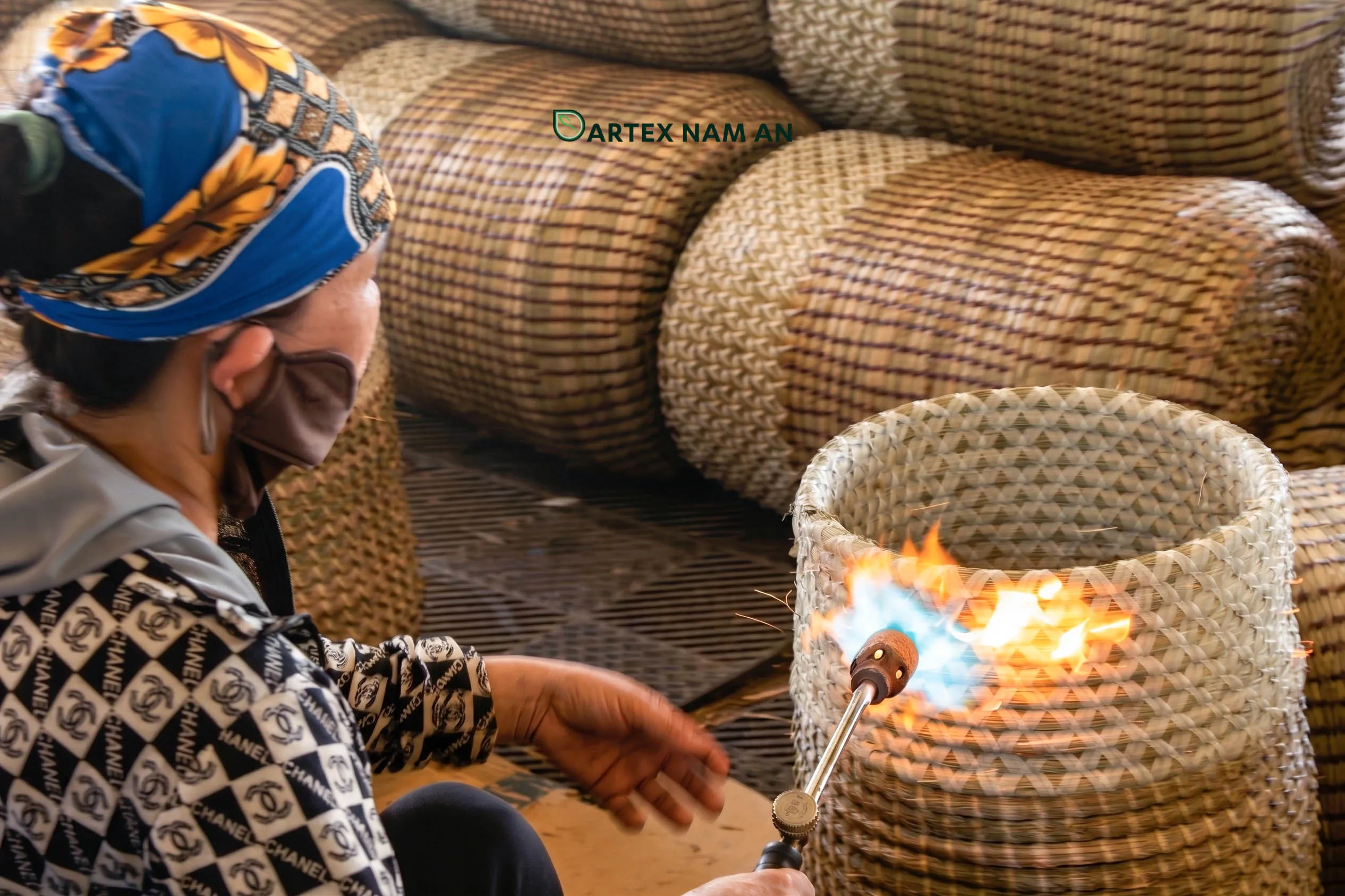
Handwoven Seagrass Laundry Basket
And it keeps techniques alive that would otherwise vanish in a generation. Vietnam’s export figures make the point, and the report on how Vietnam’s handmade goods earn 574 million dollars from global markets shows the United States alone taking 46 percent of it.
Which Country Is Famous for Handicrafts
Every country has crafts, but a handful have turned them into export industries, and buyers tend to source by country as much as by product.
India Leads in Textiles and Metal and Carved Wood
India’s handicraft sector is the largest in the world by workers and exports, built on hand loomed and block printed textiles, brass and copper ware, carved wood and jewellery. It is the reference for anything woven from thread rather than fibre.
Indonesia Leads in Rattan Furniture
Indonesia grows most of the world’s rattan and has built the largest rattan furniture industry around it, centred on Cirebon in West Java. For woven seating at volume it is the first place buyers look.
Vietnam Leads in Woven Baskets and Homeware
Vietnam’s strength is baskets, trays, placemats, lampshades and small furniture woven from rattan, bamboo, seagrass and water hyacinth, produced across hundreds of craft villages in the Red River Delta and the north.
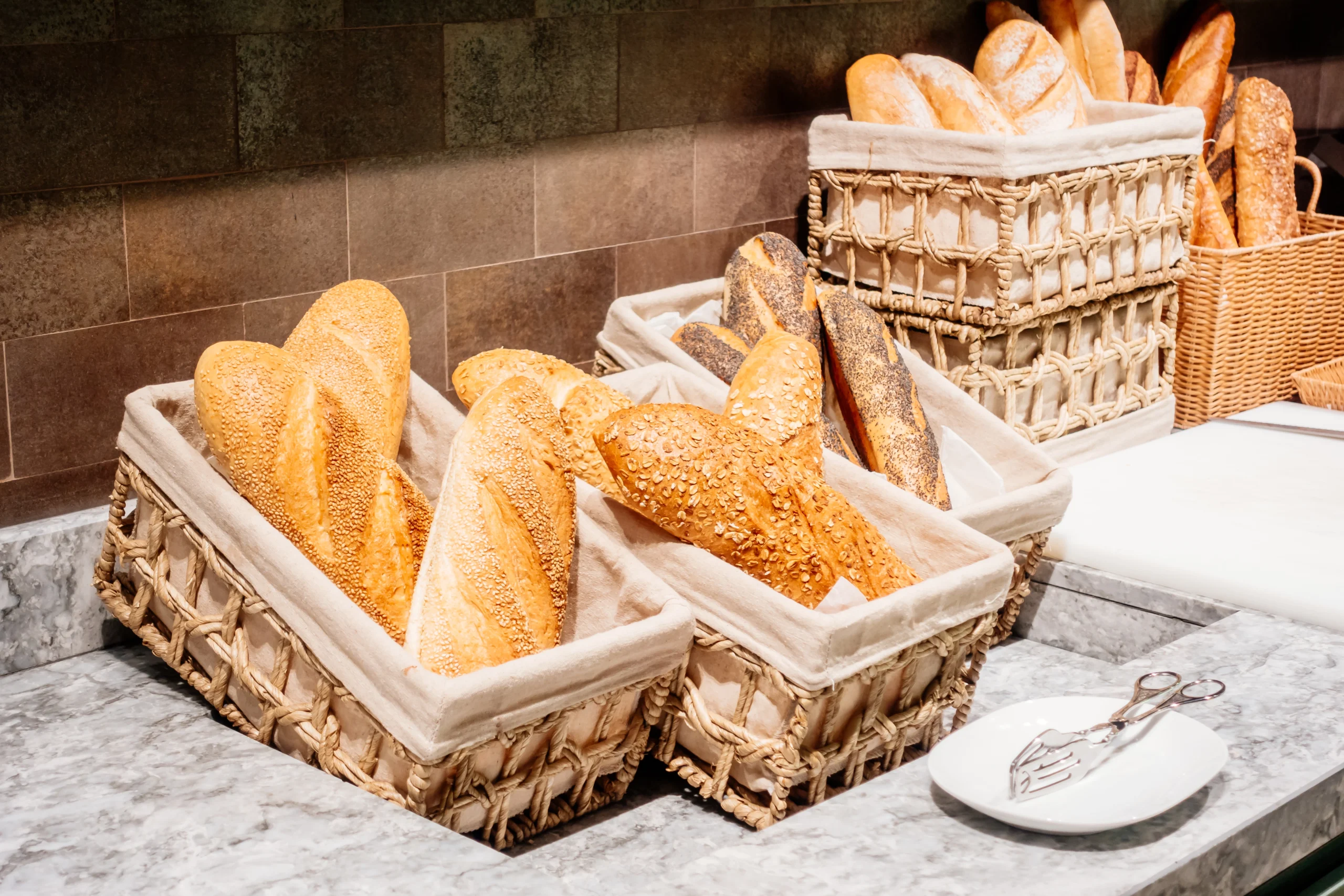
Natural Woven Basket In Vietnam
It has become the preferred source for retail homeware in the United States, Europe, Japan and Australia because of consistent quality at a competitive price, and the leading wicker basket manufacturers supplying Western retailers are almost all Vietnamese.
How a Modern Handicraft Factory Works
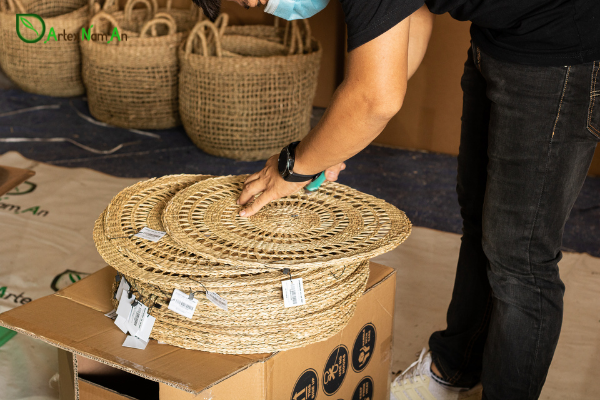
The phrase sounds like a contradiction and is not. A modern handicraft factory does not replace the weaver. It organises hundreds of them. Material is bought, graded, treated against mould and insects and dried under control in one place, then distributed to village workshops with a sample and a specification. Finished pieces come back to be inspected, trimmed, finished, packed and shipped from a central floor. The weaving stays by hand and everything around it becomes industrial, which is how a container of six thousand baskets arrives matching one sample. What that floor looks like in practice, from material sorting to the final inspection line, is easier to picture after a walk through a modern handicraft factory in operation.
Is Handicraft Business Profitable at Export Scale
It is, for the businesses that solve two problems the cottage version never faces. The first is consistency, because a retailer will not accept six thousand baskets in six thousand shapes, and the answer is the factory model above. The second is compliance, because Western buyers now require social audits, material traceability and packaging standards that a single workshop cannot document. The businesses that pass both earn steady margins on repeat orders, and the ones that cannot stay small. For a buyer, the difference shows up in the first conversation, and the questions worth asking any handicraft supplier before an order are mostly about those two problems.
Conclusion
What is handicraft industry? The part of the economy that makes useful and decorative objects mainly by hand, from local natural materials, carrying the culture of the place they were made. It matters because it employs millions in rural areas at almost no capital cost, earns export revenue from materials that would otherwise be waste and keeps traditions alive. India leads in textiles and metal, Indonesia in rattan furniture and Vietnam in woven baskets and homeware, and the modern version of the trade keeps the weaving by hand while making everything around it industrial enough to fill a container to one sample.
Artex Nam An is a Vietnamese handicraft manufacturer that works exactly that way, with its own factories and more than thirty partner workshops in the craft villages around Hanoi weaving rattan, bamboo, seagrass and water hyacinth homeware for retail and hospitality buyers worldwide. See how the material moves from village to container on our production page, or tell us what you want made and how many and we will show you the floor before we quote.
Read more: Transforming Livelihoods through One Million Bamboo Trees
You may also be interested in
Discover Premium Rattan Garden Furniture Wholesale Deals for Your Business
Read more...May
Bamboo Serving Trays Wholesale: The Quiet Star of Modern Table Design
Read more...Aug
Comfort Home 2022 – All-new Wicker Collection of Storage Baskets & Planters
Read more...Jul
Choosing the Right Woven Placemats Bulk for Hospitality Procurement
Read more...Jul
7 Qualities Of Good Natural Woven Baskets – Guide To Buy Baskets In Bulk
Read more...Dec
What Are Picnic Baskets Made Of? From Willow Hampers to Foil Lined Coolers
Read more...Sep