


No products in the cart.
Industry News
Wholesale Flower Hanging Baskets: A Materials and Construction Guide for Buyers
23
Aug
Aug
Hanging baskets look simple. A woven vessel, a liner, three cords, a hook. That simplicity is exactly why so many wholesale orders disappoint, because the details that decide whether a basket survives two seasons of watering are the ones that never show up in a product photograph.
If you are sourcing wholesale flower hanging baskets for a garden centre, a home décor range, or a florist supply business, this guide covers what genuinely differs between one basket and another: the materials, the liners, the hanging systems, and the construction points where failures quietly begin.
The Problem a Flower Basket Has to Solve
A hanging basket that holds living plants faces demands a decorative basket never encounters. It carries wet soil, and it carries that weight suspended from a single point rather than resting on a shelf. It sits in direct sun and rain for months at a stretch. And it has to drain without dumping muddy water onto whatever sits beneath it. Almost every quality decision follows from those four pressures. When you evaluate a sample, the useful question to keep asking is how this particular detail behaves under weight, water, and ultraviolet light. Most disappointing shipments trace back to a supplier who was answering a different question, usually one about price.
The Specifications That Decide Basket Quality
Four decisions carry most of the weight in a hanging basket specification, and each one fails in a different way if you leave it to the factory to choose.
Choosing the Right Material
Cane, the peeled outer skin of the rattan palm, is the strongest natural weaving material available for its weight. It resists water better than most fibres and holds a tight, uniform weave that reads as expensive at a glance. It is the premium option and it prices accordingly, which makes it best suited to indoor hanging planters and covered patios where its finish stays pristine. Willow sits at the traditional end of the category. It is sturdy, forgiving of rough handling, and carries a slightly irregular character that suits cottage garden and farmhouse ranges beautifully. It tolerates moisture reasonably well, though it greys noticeably under sun exposure. Some buyers consider that weathering part of the appeal and others consider it a defect, so decide which camp your customer falls into before you order.
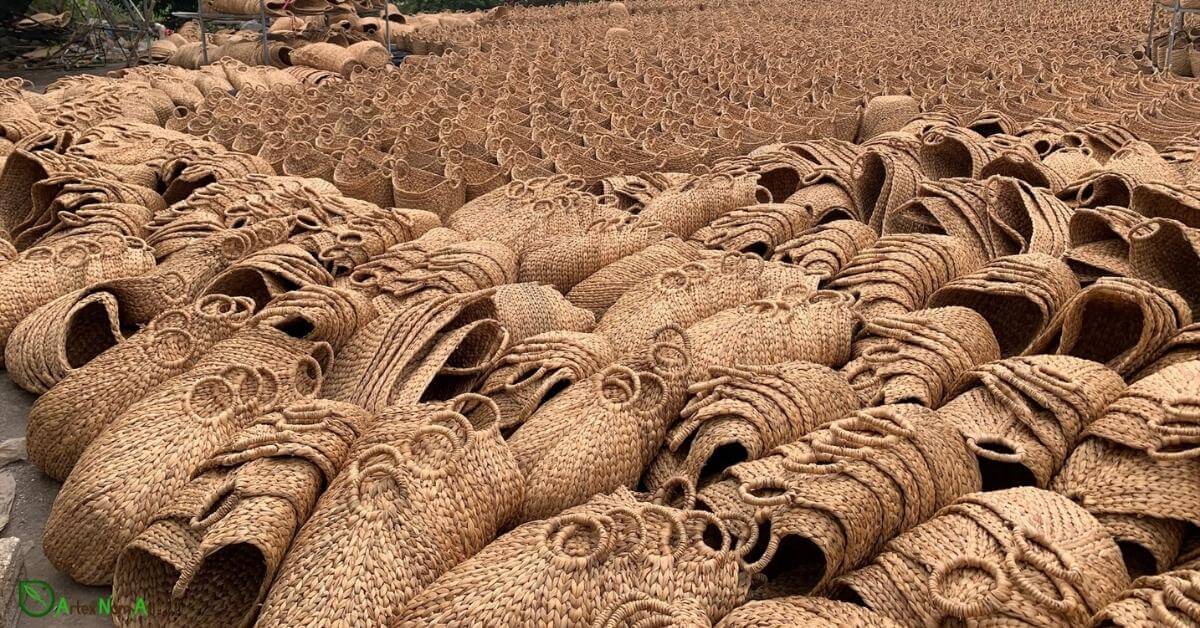
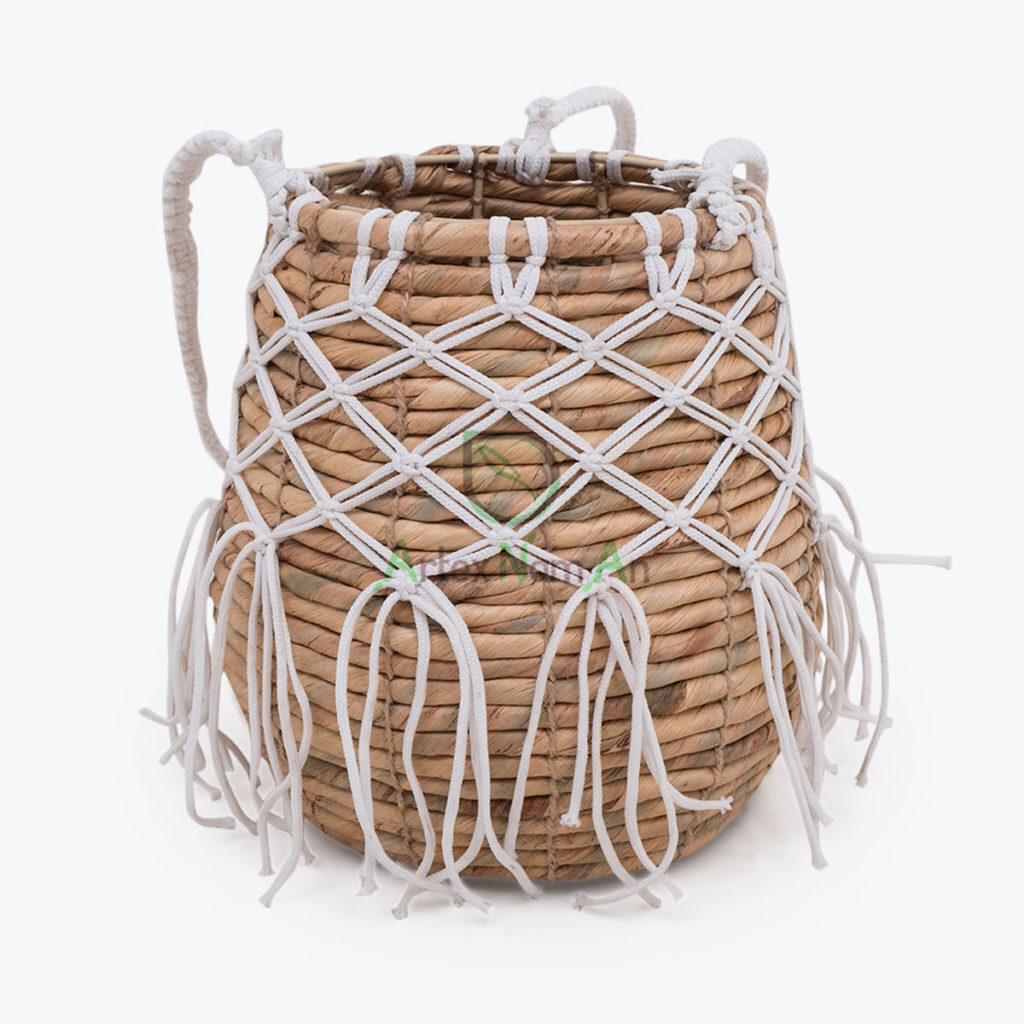
Water hyacinth wicker baskets bulk weaving material | Artex Nam An
Water hyacinth has become the volume material for softer, chunkier looks. It weaves quickly, which keeps labour costs down, and it delivers a generous texture that photographs extremely well on social media. It is also the least water tolerant of the common natural options, so it belongs in indoor or sheltered positions and should be described that way in your listings rather than sold as an all weather product. Seagrass falls between the two, denser than water hyacinth and more hard wearing, with a faint green tone that fades to a warm neutral. Bamboo, being rigid rather than pliable, tends to appear as split slats or as structural rims and frames rather than as the main body of the weave. Most retail ranges combine two or three of these to build a price ladder from entry level to premium. Comparing samples across several wicker basket manufacturers will show you quickly which workshops genuinely specialise in which material, since weaving skill does not transfer neatly from one fibre to another.
Liners Deserve Their Own Specification
The liner separates wet soil from your woven basket, and it is where cost cutting surfaces fastest. Yet it is routinely left as a single vague line on a purchase order. Coco coir remains the traditional choice. It breathes, it looks natural, it biodegrades, and it typically gives one to two seasons of service before it needs replacing. It also dries out considerably faster than plastic, which means more frequent watering and a slightly higher maintenance burden for the end customer. Moulded plastic inserts are the practical alternative. They hold water, protect the weave completely, and last indefinitely. If you specify one, confirm two things: that it has a drainage hole, and that the plastic is ultraviolet stabilised. Without that stabilisation the insert turns brittle and cracks within a single outdoor season, and you will hear about it from customers.
Thin plastic film liners are the cheap option. They function, but they look cheap the instant a customer lifts the plant out, and they tear easily. Selling a basket with no liner at all is perfectly reasonable, provided it is a deliberate decision for a decorative product or one designed to hold a nursery pot inside, and provided your listing says so plainly. Whatever you choose, name it explicitly on the purchase order, including material, thickness, and whether the liner is fixed or removable. The phrase “with liner” is not a specification, and a factory will interpret it in whichever direction protects its margin.
The Hanging System Is What Actually Fails
This is the component most likely to give way, and the one buyers scrutinise least. Start with the attachment points. Look at where the cords meet the basket and determine whether they are simply knotted through the weave or fixed to a reinforced rim or an internal metal ring. Cords tied directly into a woven wall will eventually tear through under a wet load, and the failure happens without warning. Anything intended to hold soil needs a properly reinforced anchor. The cord material matters just as much. Natural jute and cotton look wonderful and degrade steadily outdoors, which makes them a reasonable choice for indoor product and a risky one for exterior use. Braided synthetic cord, chain, or coated wire lasts far longer. A useful middle path that several workshops offer is jute wrapped around a steel core, which preserves the natural appearance while carrying the load on metal.
Then check the gathering point where three or four cords meet at a ring or knot. The load should distribute evenly across all of them. If one cord runs even slightly shorter than the rest the basket hangs crooked, and no retail customer will accept that. Finally, ask your supplier for a stated weight rating, then verify it yourself. Fill a sample with wet soil, hang it, and leave it hanging for a week. The number of suppliers who have never performed this basic test on their own product is genuinely surprising.
Getting Size and Proportion Right
Diameter drives everything downstream. The common wholesale range runs from twenty to forty centimetres, with twenty five to thirty centimetres carrying the volume for most retailers, since that size holds a respectable plant while remaining liftable once wet. Depth matters nearly as much and gets far less attention. A shallow basket dries out fast and restricts root growth, while an excessively deep one becomes heavy and awkward to handle. A depth of roughly sixty to seventy percent of the diameter is a dependable starting proportion.
Consider too how the basket will look once planted rather than empty. A wide flared rim frames trailing foliage attractively, whereas a straight sided cylinder tends to disappear entirely once the plant fills out. Since your customer is buying the planted look, ask your supplier to photograph samples with plants in them before you approve anything.
Finishes, Weather Treatment, and Compliance
Any basket sold for outdoor use needs a protective finish, and you should know exactly what has been applied, whether that is a clear water based lacquer, an oil treatment, or nothing whatsoever. Confirm that the finish satisfies the chemical regulations of your destination market, because European and American requirements differ and compliance has to be specified before production rather than discovered during customs clearance.
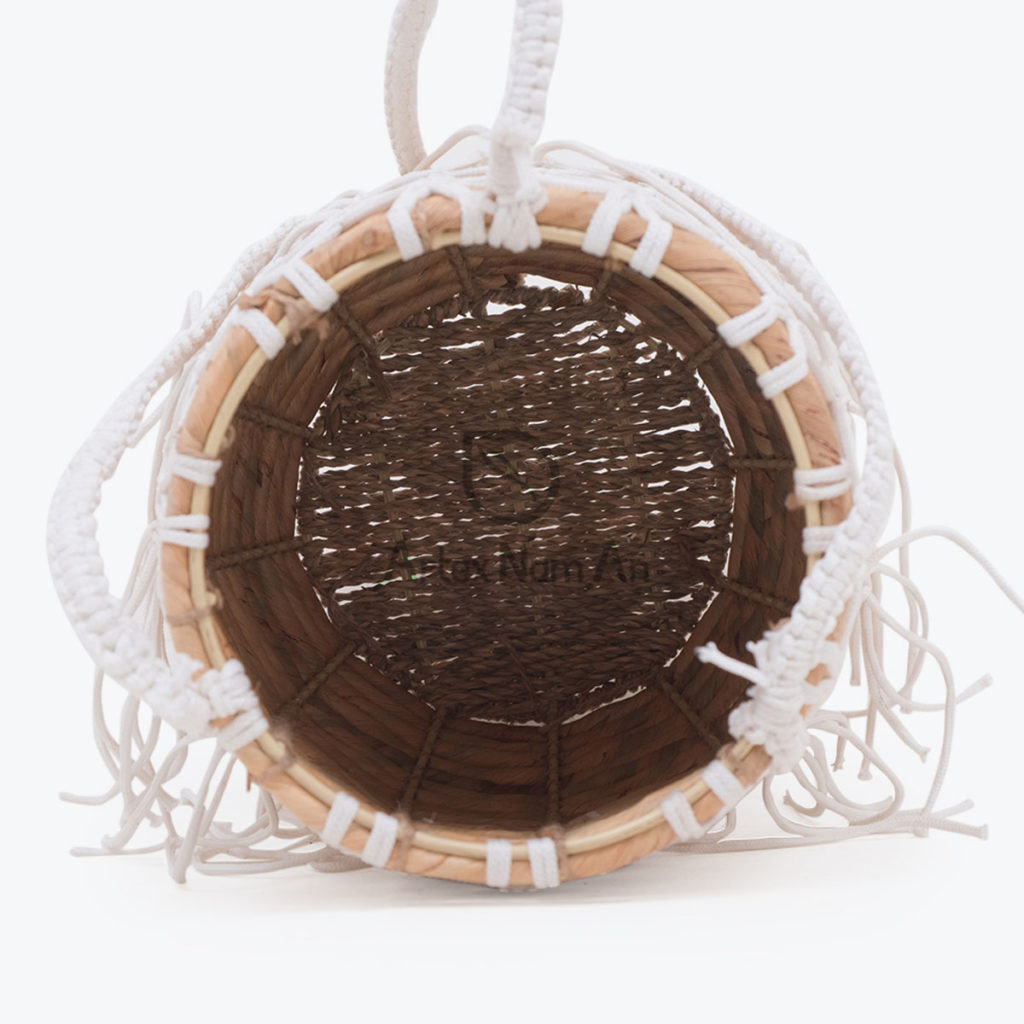
Wholesale Wicker Baskets For Wall Hanging | Artex Nam An
Coloured finishes such as whitewash, black wash, and natural stains expand a range without any tooling cost, since handwoven production involves no moulds. That flexibility is one of the real advantages of working directly with a handicraft factory rather than buying whatever happens to be sitting in a trading company’s stock.
What to Check When Samples Arrive
Press the side wall firmly with your thumb and watch whether it springs back or leaves a depression, since weave density is the clearest single indicator of how much material and labour went into the piece. Ask for moisture content documentation and expect readings between twelve and fourteen percent, because anything higher becomes mould once the container is sealed and crosses the equator. Run your hand around the rim feeling for protruding wire, staples, or glue residue. Measure the cords against each other, confirm the liner sits snugly rather than rattling, and then load test the whole thing with wet soil for several days. Buyers assembling a wider planter assortment often apply the same checks across adjacent formats, and developing a broader wholesale hanging planters range alongside the flower baskets lets you share development time and consolidate freight.
Specify a Hanging Basket That Holds Up
Liners, cord gauge, and the gathering ring are the components that decide whether a planted basket survives its first season. Artex Nam An manufactures hanging baskets in cane, rattan, and water hyacinth, and we will load test a sample to your stated weight before production begins. Send your sizes and target price to Artex Nam An to open a sampling round.
Conclusion
Wholesale flower hanging baskets reward buyers who specify rather than assume. Match your material to whether the product will live indoors or outdoors, treat the liner as a named component with its own line on the order, and scrutinise the hanging system harder than anything else, because that is the part that gives way.
Most importantly, load test before you commit to production. A basket that holds wet soil for a week without sagging, tearing, or hanging crooked will comfortably survive a retail season. One that has never been tested is simply a warranty claim that has not arrived yet.
Read more: Choosing the Right Woven Placemats Bulk for Hospitality Procurement
You may also be interested in
How Artex Nam An and Tradepoint A/S Worked Together to Balance Speed and Quality in Bamboo Product Development
Wholesale Hanging Baskets: How to Choose a Supplier You Can Rely On
Read more...Aug
What Is Woven Basket? A Plain Definition and How to Tell a Good One From a Bad One
Read more...Sep
Comfort Home 2022 – All-new Wicker Collection of Storage Baskets & Planters
Read more...Jul
Back to basic – 2021 trendy home decor & organization
Read more...Dec
Rattan vs Wicker – What’s The Sharp Difference?
Read more...May