




No products in the cart.
Industry News
Wholesale Hanging Baskets: How to Choose a Supplier You Can Rely On
23
Aug
Aug
Every buyer who has been in this trade for a few years has a story about the second order. The samples were excellent, the first shipment was fine, and then the second container arrived with a looser weave, a different shade of stain, and cords that were two centimetres shorter than the approved specification.
Sourcing wholesale hanging baskets successfully has less to do with finding a good product than with finding a partner who can reproduce that product consistently, shipment after shipment, without being watched. This guide covers how to identify one.
Understanding Who You Are Actually Buying From
Why Supplier Type Matters
The first question worth answering, and the one most buyers skip, is what kind of business sits at the other end of the email. A direct factory owns or operates its own production. It employs or contracts the weavers, controls the material supply, and can change a specification because you asked it to. Pricing is tighter and quality feedback loops are short, because the person reading your complaint can walk to the workshop floor. The tradeoff is higher minimum order quantities and, in some cases, less polished English communication.
Factory, Trading Company, or Agent
A trading company buys from multiple factories and resells. Their strength is flexibility, since they can offer lower minimums, source across categories, and handle export documentation smoothly. Their weakness is that you cannot see the production. When quality drifts, the trading company is negotiating with the factory on your behalf rather than fixing it directly, and their commercial incentive is not always aligned with yours. A sourcing agent works on commission and represents you rather than the goods. This can be genuinely valuable for a buyer without regional experience, provided the commission structure is transparent.
None of these is inherently right or wrong. What matters is knowing which one you are dealing with, because plenty of trading companies present themselves as factories. The simplest test is to ask specific production questions. How many weavers work on this product line? What is the workshop’s monthly capacity for this design? Which province does the raw material come from? A factory answers immediately. An intermediary produces vague generalities or promises to check. Comparing a handful of established handicraft wholesalers against direct workshops early in your search gives you a feel for where each sits on this spectrum before you have committed to anyone.
Vetting Before You Sample
Documents to Ask For
A short round of due diligence saves months. Ask for the business registration and export licence, and confirm the company name on those documents matches the name on the quotation and, later, on the invoice. Mismatches here are a genuine warning sign rather than a clerical quirk. Ask which markets they currently export to and in what volume. A workshop that regularly ships to Europe already understands packaging standards, chemical compliance, and documentation requirements. One that has only served the domestic market will be learning those requirements at your expense.
Verifying Capacity
Ask about capacity honestly. A workshop capable of forty thousand pieces a year cannot absorb a hundred thousand piece order, and a supplier who agrees to one anyway will subcontract it quietly to workshops you have never inspected. That is the single most common route to inconsistent quality in this trade. Finally, ask for references and actually contact them. Buyers are usually willing to speak candidly about a supplier, and ten minutes on a call regularly surfaces information that no amount of factory correspondence would.
The Sample Round Is a Test of the Supplier, Not Just the Product
Watching How the Factory Responds
Most buyers evaluate samples by examining the basket. The more useful evaluation is watching how the supplier handles the sampling process itself. Send a written specification with dimensions, material, finish, liner type, cord material and length, and weight rating. Then observe. A strong supplier reads it, asks clarifying questions about the ambiguous points, and flags anything that will be difficult or expensive to produce at volume. A weak supplier confirms everything enthusiastically and sends whatever they already make.
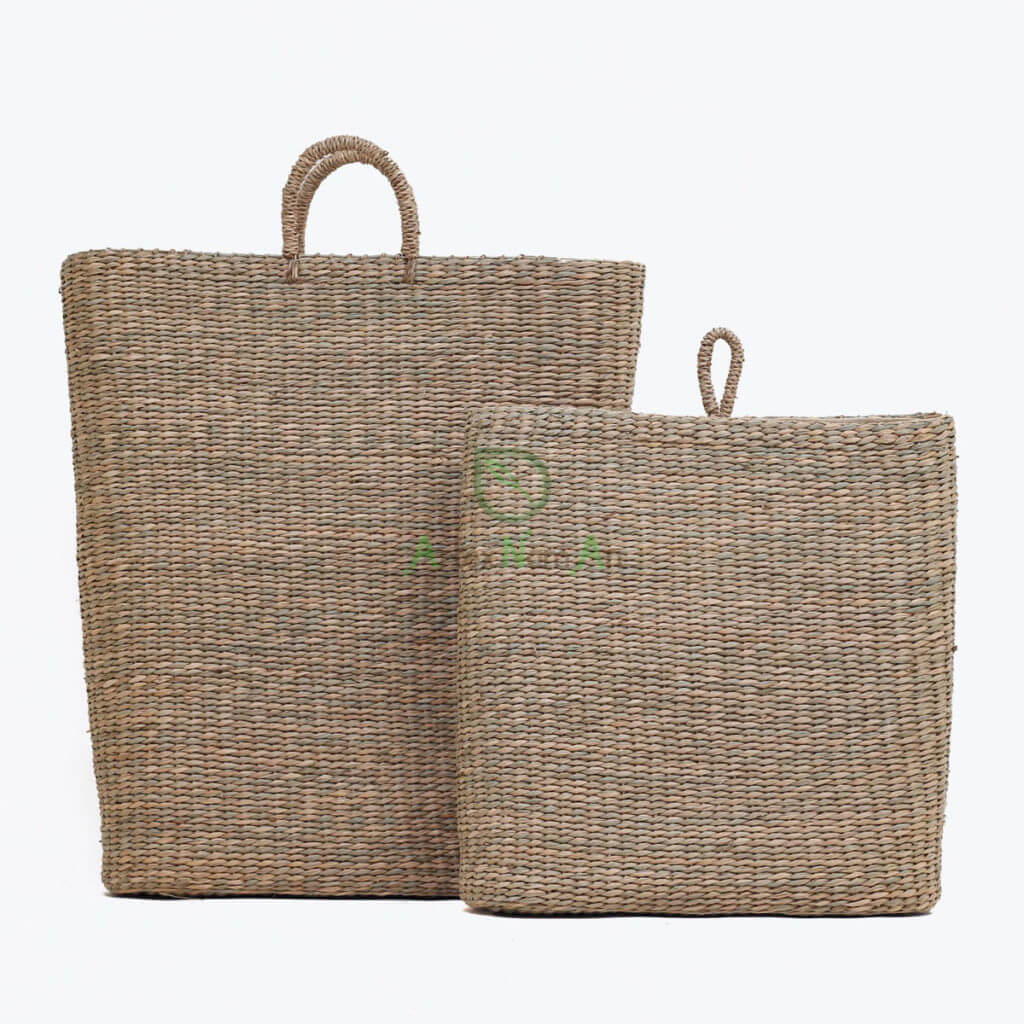
Handwoven Seagrass Hanging Basket also Storage Basket for Wholesale – Artex An Nam
That behaviour predicts your next three years with them. A factory that raises a manufacturability concern during sampling is a factory that will raise a problem during production instead of shipping around it silently. When the sample arrives, test it properly. Press the side wall for weave density and watch whether it recovers. Check the anchor points where cords meet the basket for reinforcement. Ask for moisture content documentation and expect readings in the twelve to fourteen percent range. Then hang the basket loaded with wet soil for a week and see what happens.
Approve a golden sample formally, keep it sealed and labelled in your own office, and make it the written reference for every subsequent production run. Without a retained physical reference, quality disputes become arguments about memory, and you will lose those.
Building Quality Control Into the Order
Inspection after arrival is not quality control. It is damage assessment, at which point your options are a discount or a return, and neither recovers your season. Effective control happens in three stages. Before production begins, confirm that the raw material and the finish match what was approved. Partway through production, when perhaps a third of the order is complete, inspect against the golden sample so that any drift is corrected while there is still time. Before shipment, inspect the finished goods and the packing itself.
For orders of meaningful value, a third party inspection agency is worth the few hundred dollars. Specify an acceptable quality level in your purchase order so that pass and fail are defined numerically rather than argued about afterward. A supplier who welcomes inspection is telling you something. So is one who resists it, delays it, or is mysteriously unavailable during the scheduled window.
Customisation and Private Label Capability
Handwoven production offers real flexibility because there are no moulds and no tooling costs. Sizes, proportions, handle styles, finishes, liners, and branding elements can all be adjusted at modest cost, which makes original equipment manufacturing genuinely accessible even at moderate volumes.
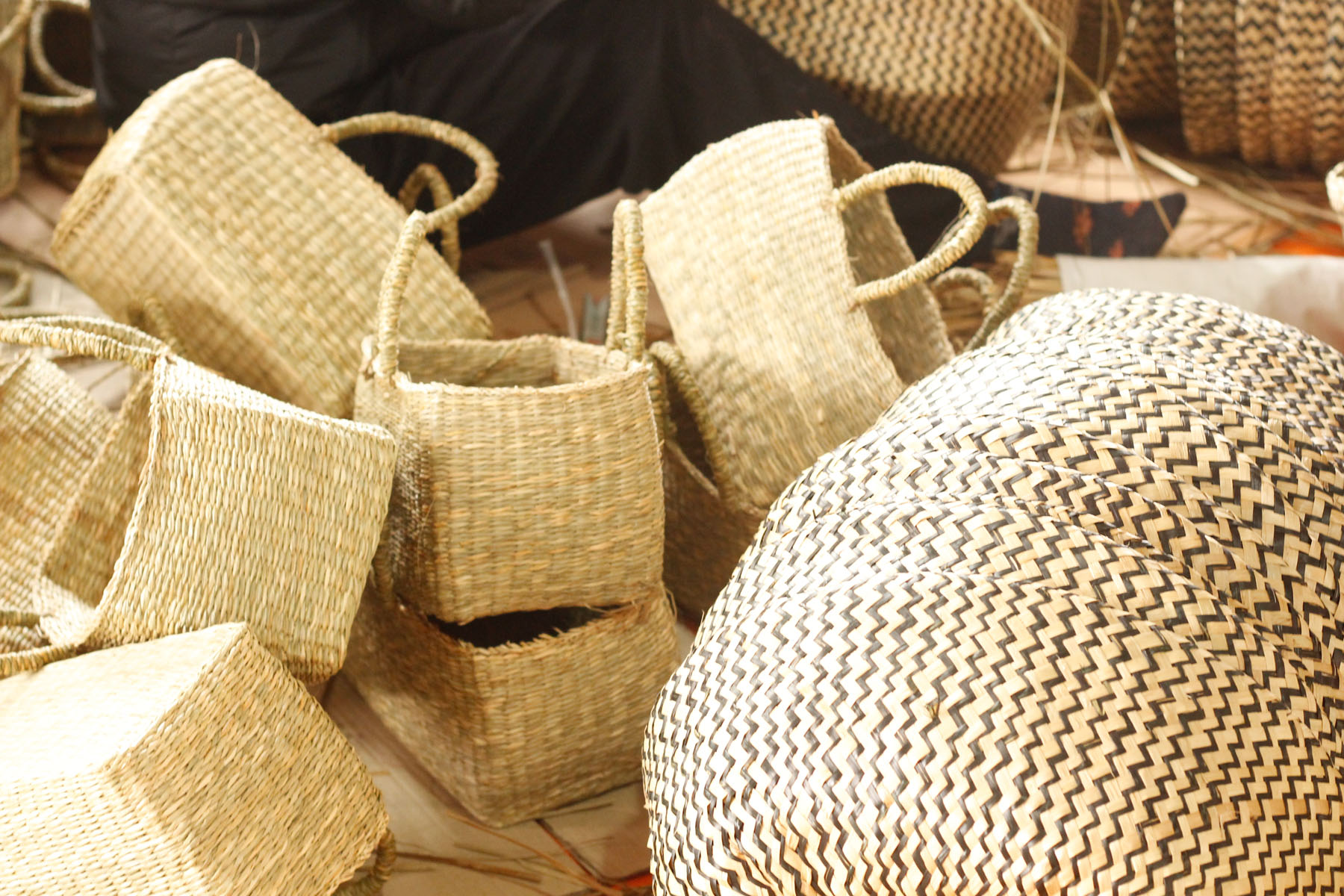
Customisation and Private Label Capability – Artex An Nam
Test this capability during sampling rather than assuming it. Ask for a small variation on a standard product and see whether the workshop can execute it cleanly. Suppliers accustomed to development work will also advise you on which design choices inflate labour cost, and that advice is worth more than it appears. Factories with experience across several product categories are often the most useful partners here, since a workshop that already produces wholesale wicker baskets in various formats can help you build a coordinated range rather than an isolated line.
Warning Signs Worth Taking Seriously
A price dramatically below every other quotation is not an opportunity. In a labour driven category it means less labour, which means a looser weave, a thinner frame, or skipped drying. Reluctance to provide documentation, whether that is business registration, moisture readings, or finish certificates, indicates either disorganisation or something worse. Communication that deteriorates once the deposit clears is a well known pattern. And any request to route payment to a personal account or a third country should end the discussion immediately.
Deal Directly With the Factory
Most of the risks described here come from not knowing who is actually weaving your order. Artex Nam An is a direct manufacturer in Vietnam, so you can visit the workshop, meet the team handling your samples, and hold us to a golden sample rather than a promise. Contact Artex Nam An and vet us the way this article recommends.
Conclusion
Choosing a supplier for wholesale hanging baskets is fundamentally a judgement about consistency rather than about product. Almost any workshop can produce one excellent sample. Far fewer can produce ten thousand units that all match it.
Establish what kind of business you are dealing with, verify capacity and export experience before you invest time in sampling, treat the sampling round as a behavioural test as much as a product test, and build inspection into the schedule rather than hoping for the best on arrival. Then, once you find a workshop that performs, keep it. The buyers who struggle least in this category are almost always the ones who have been working with the same weavers for years.
Read more: The Growing Demand for Sustainable Rattan Placemats Bulk in Global Markets
You may also be interested in
Best Rattan Furniture Manufacturer for OEM and Private Label Projects
Read more...Jul
Sustainable Wicker Baskets Bulk for Importers and Home Décor Collections
Read more...Jun
Ocean Freight Rates Continue to Skyrocket in 2021
Read more...Aug
Cane Furniture Suppliers: A Buyer’s Guide to Natural Materials and Ethical Sourcing
Read more...Aug
Spun Bamboo: How To Make Wholesale Bamboo Fiber Salad Tableware
Read more...Sep
How Artex Nam An and Tradepoint A/S Worked Together to Balance Speed and Quality in Bamboo Product Development