



No products in the cart.
Industry News
Bamboo Basket Making Process: From Bamboo Pole to Finished Basket
04
Oct
Oct
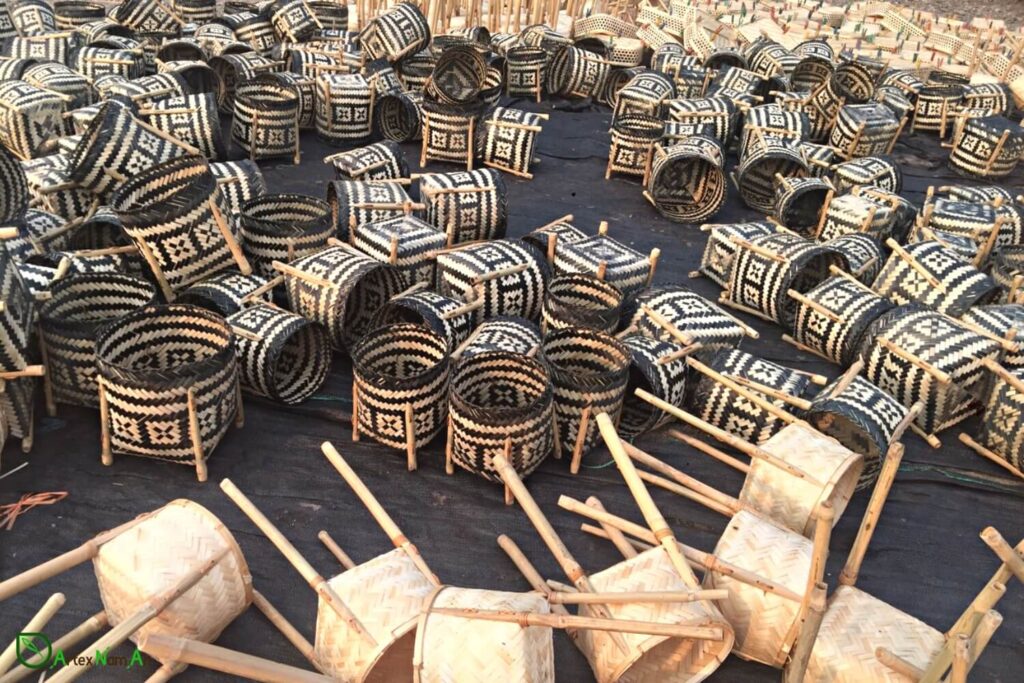
A bamboo basket that sells for a few dollars in a shop passed through more hands than most furniture. Someone cut the pole, someone treated and dried it, someone split it into strips no thicker than a fingernail, someone wove it, someone trimmed and finished it, and someone checked it before it went into a carton. Most guides to the bamboo basket making process describe the weaving alone, which is only the middle of the story. This guide follows the whole chain as it runs in a craft village and a factory, from choosing the pole to packing the container, and explains why the steps before and after weaving decide whether a basket lasts.
The Bamboo Basket Making Process in Seven Stages
Every workshop has its own habits, but the order below holds almost everywhere bamboo baskets are made at scale.
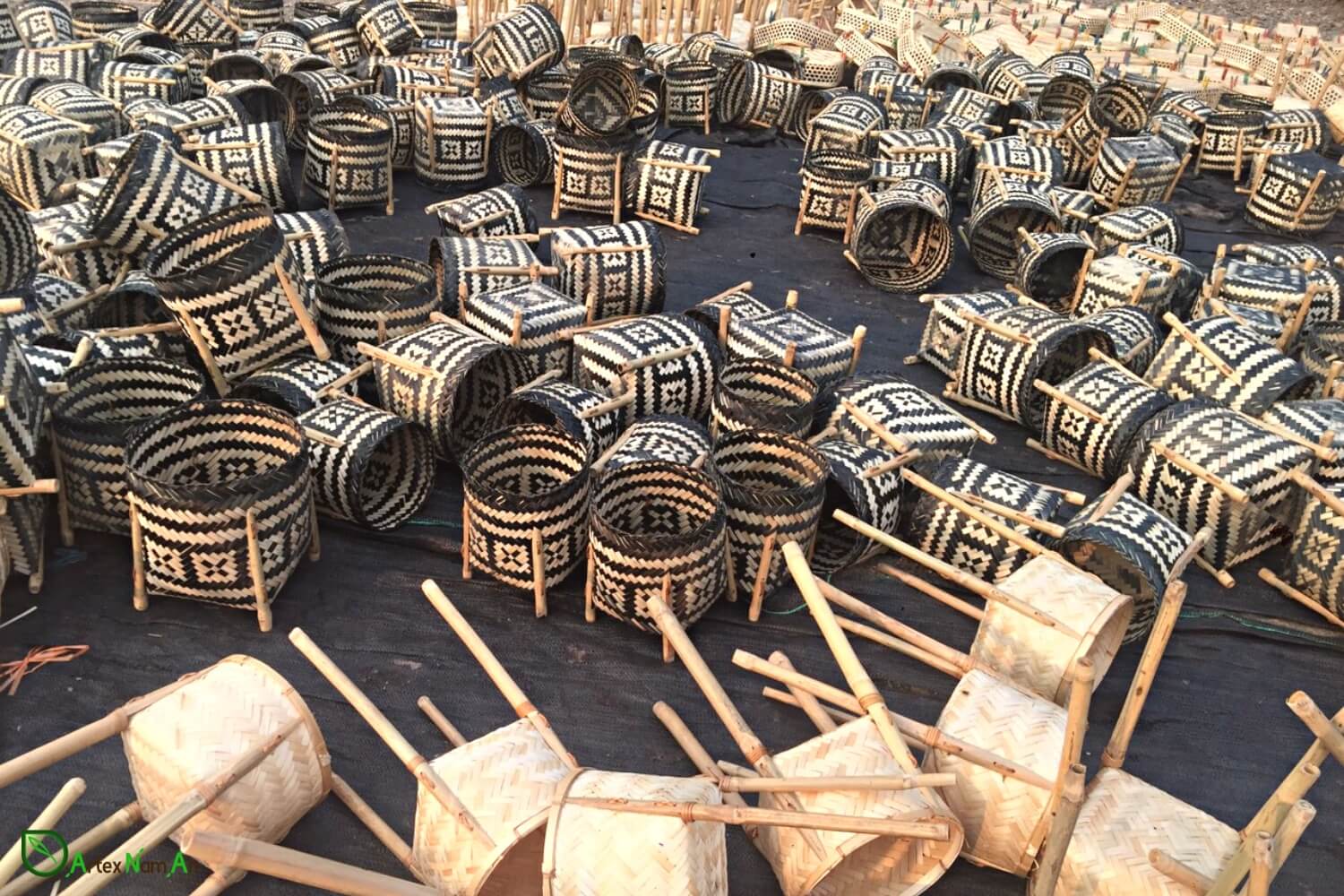
Bamboo Basket Wholesale In Vietnam
Each stage protects the ones after it, and skipping one shows up months later as a basket that cracks, warps or attracts insects.
Choosing and Cutting the Right Poles
Weavers want mature poles, usually several years old, that are straight, thick walled and free of insect holes. Young bamboo is soft and shrinks as it dries; very old bamboo is brittle. Cutting is timed for the dry season where possible, when the sap carries less starch, because starch is what insects feed on. Poles are cut close to the ground and carried out of the grove to be sorted by diameter.
Treating the Poles Against Insects and Mould
Fresh bamboo is full of sugars and water. Before it can be used, the poles are soaked in water, sometimes with a borax solution, or boiled, to draw out the starch and kill the eggs and mould spores already in the cane. This step is invisible in the finished basket and is the one most often skipped by cheap producers, which is why some baskets grow powdery holes within a year.
Drying Until the Strips Will Not Shrink Again
Treated poles are dried in the sun or in a drying room until the moisture level settles. Strips cut from wet bamboo shrink as they dry in the basket, and the weave loosens. In humid regions this drying takes patience, and good producers test the cane rather than counting days.
Splitting the Pole Into Weaving Strips
This is the most skilled step before weaving. A pole is split lengthwise with a heavy knife, then each half is split again and again until the strips reach the width needed. The hard, glossy outer skin is separated from the softer inner layer, and each strip is shaved to an even thickness so it bends without snapping. A skilled splitter can judge thickness by feel alone, and the evenness of the strips decides how tight and smooth the weave can be.
Weaving the Base and the Walls and the Rim
Weaving starts with the base, laid flat in a crossed pattern, then the uprights are turned up and rows are woven around them to raise the walls, often shaped against a wooden or metal form so every basket comes out the same size. The rim locks the top edge, either by folding the uprights back into the weave or by lashing a separate hoop around it. Anyone who wants to try the hands on part can learn how to make bamboo basket step by step with a single pole and a knife.
Trimming and Finishing the Surface
Loose ends are trimmed, sharp edges are smoothed and any strips that lifted during weaving are pressed back. Baskets may be left natural, smoked or scorched for colour, dyed, or sealed with a clear coat for markets where humidity or food contact matters. Handles are fitted, either woven in or attached with lashing.
Checking and Packing for Export
Each basket is checked for size against the sample, for loose strands and sharp ends, and for signs of damp or insects. In factories the check is written down so a buyer can see it. Baskets are then nested where the shape allows, wrapped and boxed to survive weeks in a container, and fumigated or heat treated where the destination requires it. A moisture check before sealing the carton matters too, because a basket packed damp can arrive mouldy however well it was made.
Why Bamboo Is Woven This Way
Bamboo is a grass rather than a tree, with hollow, jointed stems that grow to full height in a single season. That structure is why the process looks the way it does. The strong fibres run straight along the stem, so the pole splits cleanly into strips, and the hard outer skin gives the weave its shine and its resistance to wear. The same straight fibres mean bamboo does not bend across its width, so baskets rely on thin strips woven over and under rather than thick canes bent into shape as rattan is.
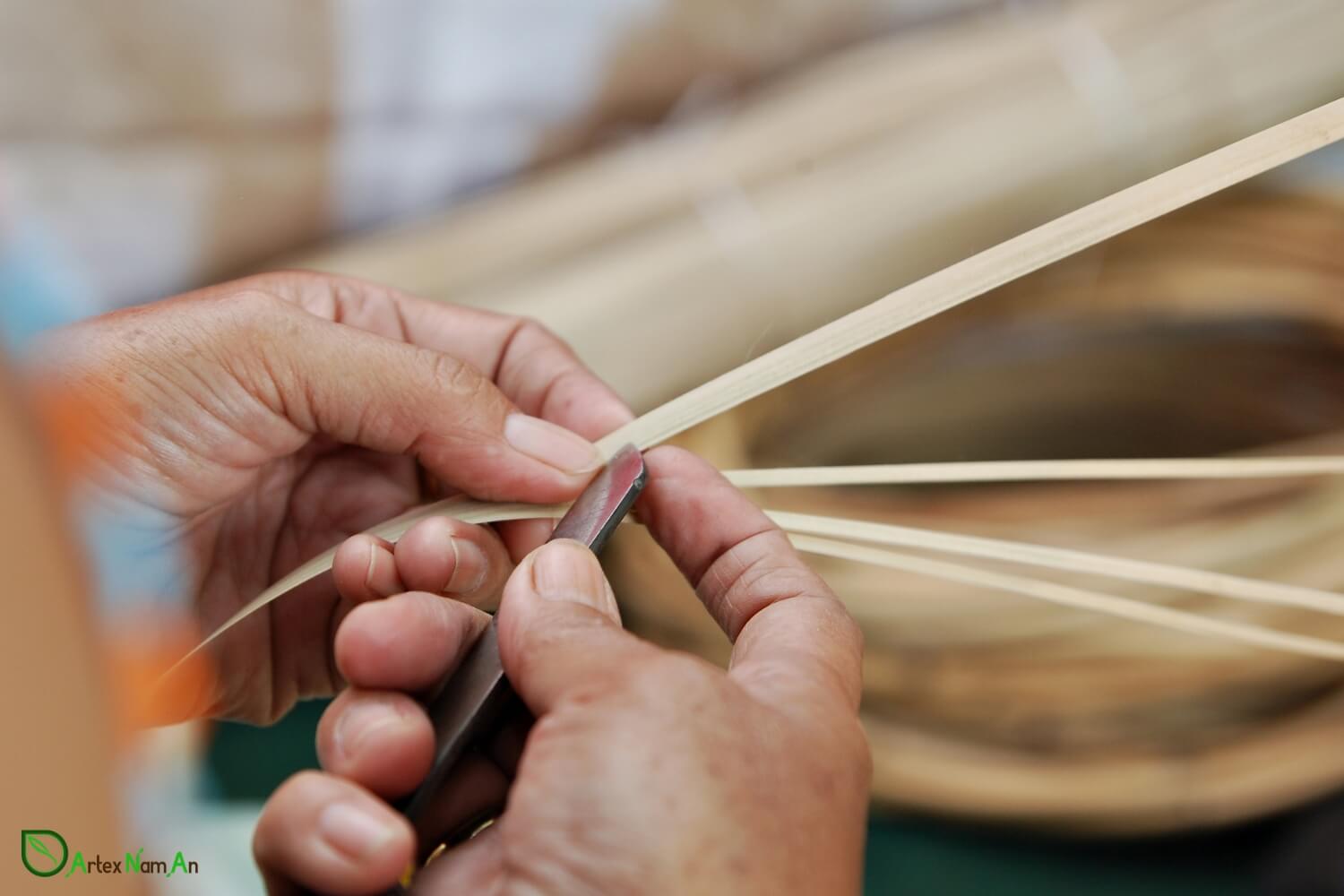
Bamboo Basket Weaving
That is also why every pattern a weaver learns when working out how to weave bamboo basket walls, plain, twill or hexagonal, runs strips over and under each other instead of curving them.
From a Village Workshop to a Factory Order
In a village, one family may do every stage, from cutting the pole to selling the basket at market. At export scale the stages separate. Growers and cutters supply treated poles, splitting is often done by specialists, weaving is spread across households in the craft villages, and a central factory handles shaping forms, finishing, quality checks and packing. That split is what lets a producer make thousands of matching baskets, and it is why buyers looking at bamboo baskets wholesale should ask how each stage is controlled, not just to see a finished sample.
Conclusion
The bamboo basket making process runs from the grove to the carton: choosing mature poles, treating them against insects, drying them fully, splitting them into even strips, weaving base, walls and rim, finishing the surface and checking every piece before packing. Weaving is the visible skill, but the treating, drying and splitting before it decide whether the basket stays tight and clean for years. Ask about those stages and you will know more about a basket than any label can tell you.
Artex Nam An is a Vietnamese handicraft manufacturer weaving bamboo, rattan, seagrass and water hyacinth baskets, trays, lampshades and furniture for retailers and hospitality buyers worldwide, through its own factories and over 30 local facilities in the craft villages. See the range in our product catalogue, or tell us what the basket is for and where it will live and we will recommend the material before we quote.
Read more: Handcrafted In Vietnam Baskets: What Are Baskets Made Of?
You may also be interested in
Rattan Furniture Manufacturer: How to Choose the Right Partner for Rattan Garden Furniture Wholesale
Read more...Jul
What Are Picnic Baskets Made Of? From Willow Hampers to Foil Lined Coolers
Read more...Sep
Overwhelmed by the Many Global Fairs? Navigating the 2026 Handicraft Trade Show Calendar
Wholesale Hanging Baskets: How to Choose a Supplier You Can Rely On
Read more...Aug
What Is Wicker? – 10 Things To Know About Wicker For Weaving
Read more...Nov
The Collaboration Of Artex Nam An and Asian Design House For Top-Notch Lampshade Production
Read more...Aug