



No products in the cart.
Industry News
How to Weave Bamboo Basket Walls That Stay Tight: The Three Patterns and Techniques
21
Sep
Sep
Most first bamboo baskets fail in the same place. The base comes out fine, the first few rows of the wall look right, and then the strips start to spread, the weave loosens and the basket leans. The strips were good and the plan was good. What went wrong was the weaving itself: the tension, the order of the strips and the pattern chosen for the job. So this guide to how to weave bamboo basket walls skips most of the preparation, which is covered elsewhere on this site, and concentrates on the hands: how to hold the tension, how to turn the corner from base to wall, the three weave patterns bamboo does best, and the mistakes that split strips. It ends with what changes when the same basket is made six thousand times.
Before You Weave: Strips and Tools You Need on the Table
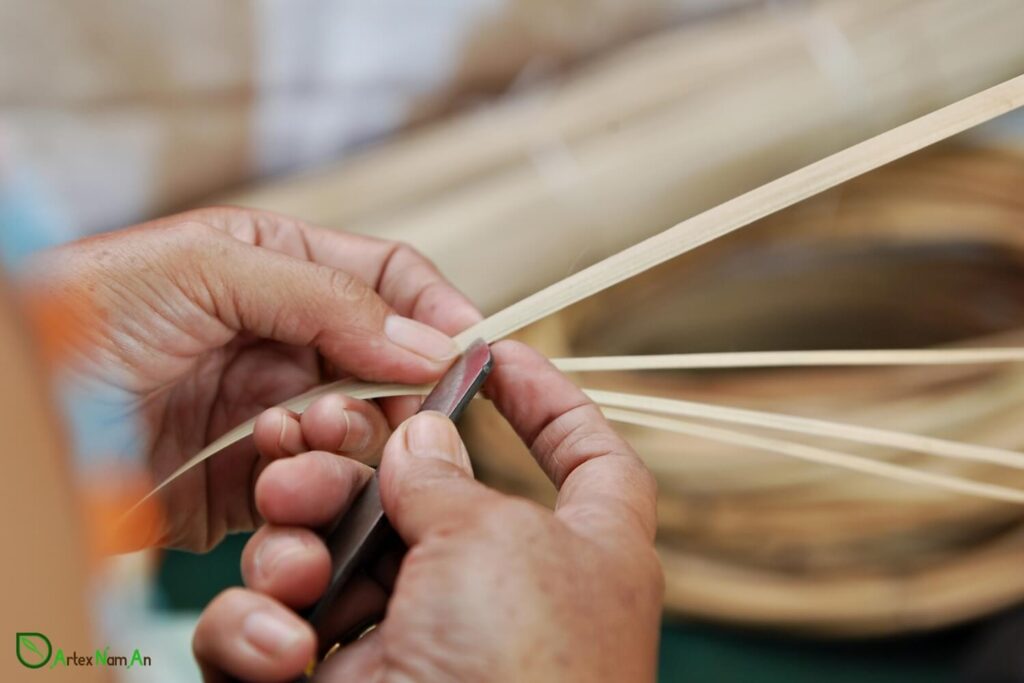
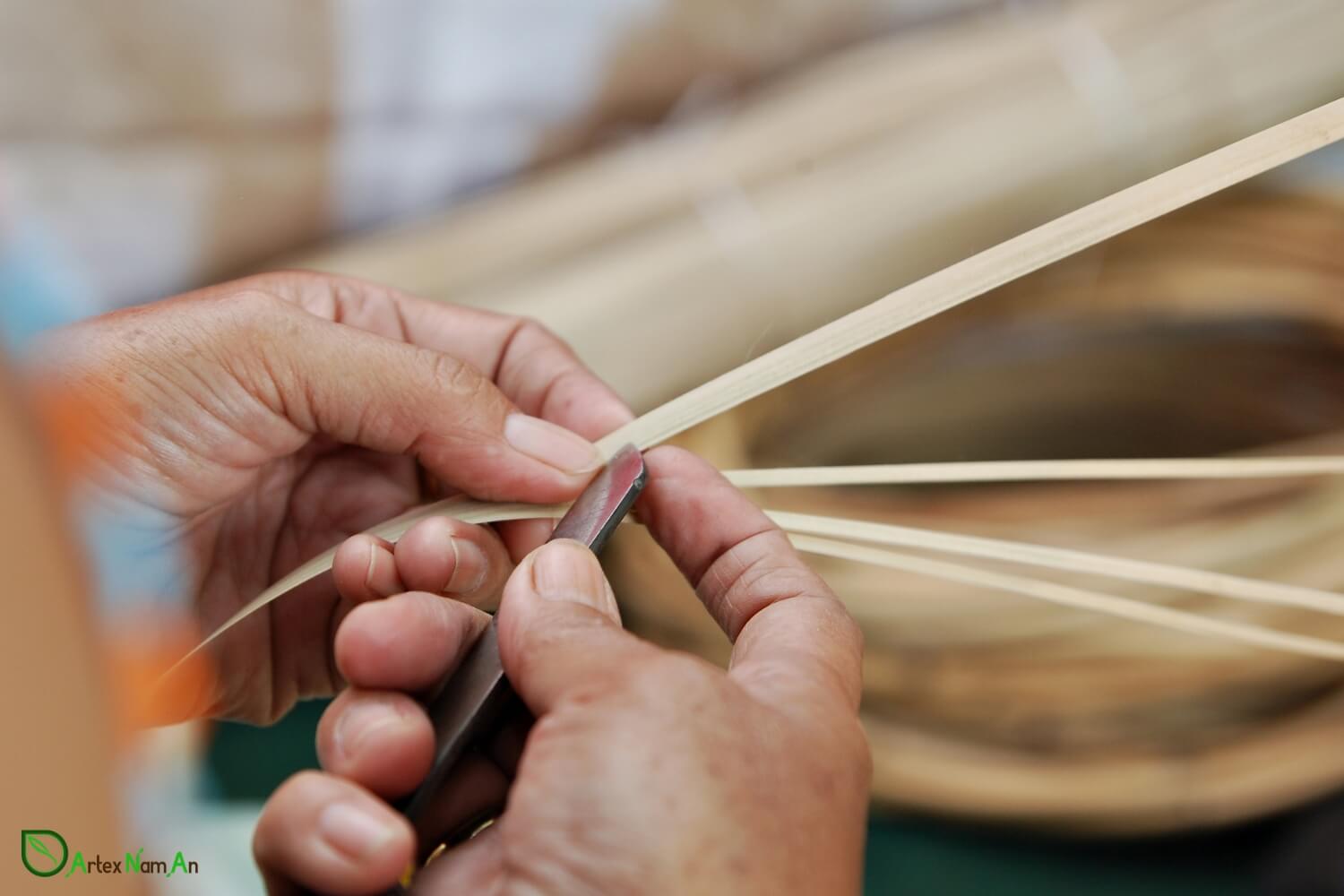
Bamboo is woven as flat strips split from the culm, and the weaving only goes well if the strips are right. Use strips of even width, between 5 and 10 millimetres for a small basket, with the glossy outer skin left on one face for strength. Soak them for twenty minutes before weaving so they bend without cracking, and keep a bowl of water beside you to re wet them as you go. A sharp knife, a pair of clips or clothes pegs to hold rows in place, and a round former such as a bowl or a bucket to shape the wall against are the only tools. This bamboo reference page explains why the plant behaves this way, and the short version is that bamboo is strong along the strip and splits easily across it, which decides everything below.
How to Weave Bamboo Basket Walls in Five Steps
The steps assume a woven flat base is already made, with the strips that will become the wall sticking out around its edge. Those strips are the uprights, and the strips woven around them are the weavers.
Step 1: Turn the Uprights Up and Hold Them With a Ring
Fold each upright up from the edge of the base at a sharp crease, not a curve, so the wall starts with a clear corner. Tie a loop of string or slip a rubber band around all of them a hand’s width up to hold them upright while the first rows go in. Without the ring the first row is a fight.
Step 2: Weave the First Row Slowly and Tight
Take a wet weaver and pass it over one upright and under the next all the way round, pulling it snug against the base at every upright. The first row sets the spacing for every row above it, so take the time to make the gaps even. Push the row down hard against the base with your thumbs before starting the second.
Bamboo Basket Production
Step 3: Stagger Every Row and Push It Down
Start each new row one upright along from where the last one started, so the overs and unders alternate. After every row, press it down onto the row below with both thumbs all the way round. A wall that is pushed down as it is built is tight; one that is pushed down at the end is loose in the middle and can never be fixed.
Step 4: Shape the Wall Against a Former
Pull the weaver tighter to make the wall lean in and looser to let it flare out. Weaving against a bowl or bucket makes the wall follow that shape and keeps it round. Check the shape every few rows by looking straight down at the rim, because a lean is invisible from the side until it is too late.
Step 5: Lock the Rim by Folding the Uprights Back In
When the wall is tall enough, wet the uprights, fold each one down over the top row and tuck it behind the second or third row below, on the inside. Cut the ends flush. For a stronger rim, lash a thicker split strip around the top edge with a thin weaver. The rim is what holds the whole basket together, and a basket without a locked rim unravels in a season.
The Three Weave Patterns Bamboo Works Best For
Flat strips can be woven in patterns that round willow rods cannot, and each one suits a different basket.
Plain Weave Goes Over One and Under One
The pattern above, and the one every beginner should master first. It is the tightest and the strongest for its weight, and it is the wall pattern for anything that has to carry a load, from a market basket to a laundry hamper.
Twill Weave Goes Over Two and Under Two
Each row steps one upright along, so a diagonal line runs up the wall. Twill is faster to weave, bends more easily around curves and gives the diagonal pattern seen on most decorative bamboo baskets and trays. It is a little looser than plain weave and wants slightly wider strips.
Hexagonal Weave Uses Three Directions at Once
Strips run in three directions at sixty degrees to each other and leave six sided holes between them. It is the open, airy weave of fruit baskets and steamer baskets, light and rigid, and it needs strips of exactly equal width because any variation shows in the holes. Learn it after the other two.
The Mistakes That Split Strips and Loosen Walls
Dry strips crack at the fold, so re wet before every corner. Pulling a weaver round a tight upright at full tension splits it along the grain, so ease the tension at each upright and take it up again between them. Uneven strip widths make uneven gaps that no amount of pushing down will close, so cut the strips more carefully than feels necessary. And the most common fault of all is leaving the pushing down to the end, which is why step three matters more than any other.
Anyone who has cut and soaked the strips and made the base already knows most of what matters; the preparation, from splitting the culm to washing the skin, is the first half of how to make bamboo basket from a whole cane, and the weaving here is the second half.
From One Basket to a Container
Every move above scales, and the ones that matter change. A weaver in a craft village making the same plain weave basket forty times a day works with strips split by machine to one width, soaks them in batches, and shapes every wall against the same former so that basket six thousand matches basket one. Tension is judged by hand and checked against a sample on the bench. The rim is lashed to a specification because the rim is what an inspector tests. That is the difference between a hobby basket and a bamboo baskets wholesale order that has to survive a container and a retailer’s shelf, and the weaving is the same.
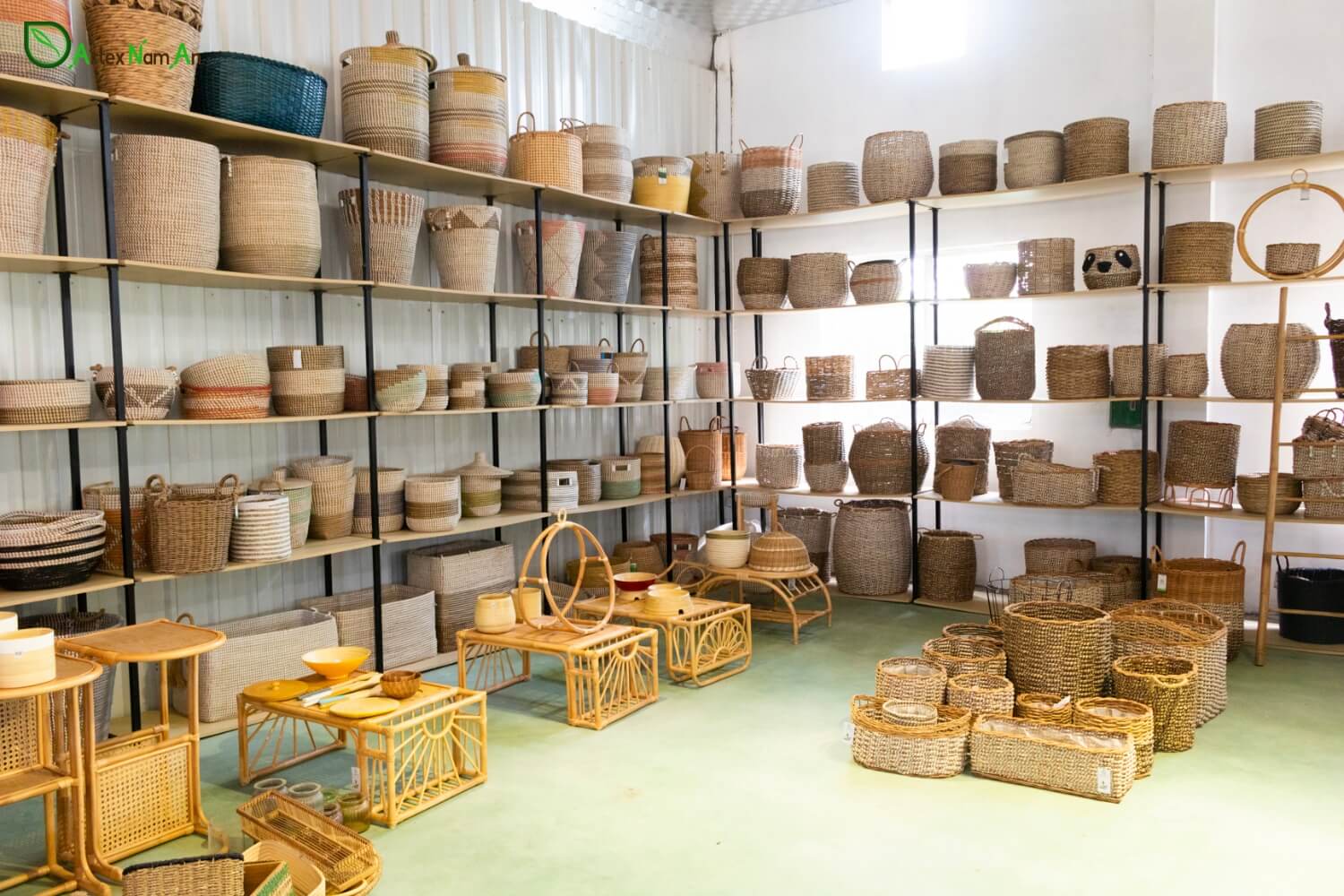
Woven Bamboo Basket Wholesale
The same skills produce trays, boxes and the crisp geometric storage that fills home decor catalogues, and the split strip plaiting that makes a basket makes a bamboo tray wholesale range on the same bench with the same hands.
Conclusion
How to weave bamboo basket walls that stay tight comes down to the hands. Fold the uprights up at a sharp crease and ring them, weave the first row tighter than feels right, stagger every row and push it down as you go, shape against a former, and lock the rim by folding the uprights back in. Use plain weave for strength, twill for speed and pattern, and hexagonal weave for light open baskets once the first two are steady. Keep the strips wet and even, ease the tension at each upright, and the wall will not spread.
Artex Nam An is a Vietnamese handicraft manufacturer whose partner villages around Hanoi weave bamboo baskets, trays and boxes to one sample, six thousand at a time, for retail and home decor buyers worldwide. See the bamboo range in our catalogue, or send us a photo of the basket you want made and we will tell you which weave it needs and what it costs at volume.
Read more: What Are Woven Baskets Made Of?
You may also be interested in
The Neutral Accents – 2021 Homeware Collection brings calm to homes
Read more...May
Sustainable Wicker Baskets Bulk for Importers and Home Décor Collections
Read more...Jun
Ocean Freight Rates 2022: Efficient Ways To Import Home Decor Wholesale
Read more...Mar
Wicker Basket Suppliers in Vietnam for Wholesale and OEM Projects
Read more...Jun
Rattan Furniture Manufacturer: How to Choose the Right Partner for Rattan Garden Furniture Wholesale
Read more...Jul
Overwhelmed by the Many Global Fairs? Navigating the 2026 Handicraft Trade Show Calendar