




No products in the cart.
Industry News
How to Source From Top Wicker Furniture Manufacturers for Global Retail
05
Jun
Jun
For global retail brands, hospitality procurement directors, and commercial interior design firms, the sustainable furniture market presents a unique set of supply chain challenges. When searching for a reliable wicker furniture manufacturer, procurement teams often find themselves lost in a maze of polished showroom brands, glossy catalogs, and trading companies posing as direct factories.
In the high-stakes world of commercial sourcing, bypassing middlemen to partner directly with a core wicker supplier on the factory floor is the only viable strategy to protect retail margins, control design intellectual property, and guarantee structural integrity at scale.
This comprehensive procurement guide is designed to dismantle the illusions of the global supply chain. We will break down how to identify a true manufacturing partner, analyze the regional strengths of global production hubs, decode the strict preparation behind authentic natural materials, and explore the grueling, uncompromising reality of the OEM prototyping process.
The Anatomy of a True Manufacturer vs. A Trading Company
The single most costly mistake a sourcing agent can make is signing a high-volume contract with a trading company under the assumption that they are dealing with a direct factory. Trading companies broker deals; they do not control the welding torches, the material curing kilns, or the weaving floors. When you partner with a trading company, you inherit their markups, their communication delays, and their inability to enforce strict Quality Control during mass production.
To ensure you are working with a legitimate wicker furniture manufacturer, procurement teams must demand transparency across several operational vectors, starting with in-house frame engineering. A genuine wicker furniture supplier possesses a dedicated metalworking and woodworking facility where they cut, bend, and assemble their own structural frames before the product ever reaches the weaving department. If a supplier is purchasing pre-fabricated frames from a third party, they are immediately compromising the structural integrity of the final product.
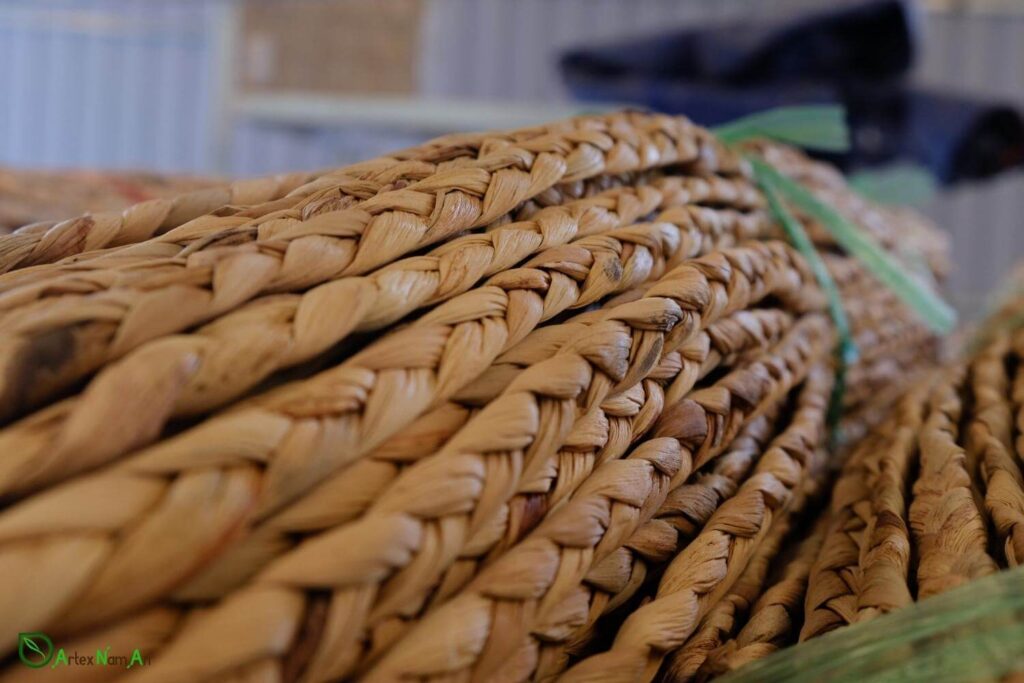
Raw Material
Equally important is the verification of raw material warehousing and prototyping capabilities. True factories buy raw natural fibers and solid wood in massive bulk tonnages. During a physical or virtual factory audit, ask to see the raw material storage to verify their access to premium, sustainably harvested rattan and bamboo. Furthermore, trading companies typically avoid custom designs because it forces them to rely on third-party factories to translate tech packs. A real manufacturer invests heavily in an in-house R&D team dedicated to translating architectural drawings into physical, load-bearing samples. Finally, export compliance provides definitive proof of identity. A direct factory holds its own international compliance certificates. If the BSCI or FSC certificates are registered under a different company name than the entity you are paying, you are dealing with a broker.
Evaluating the Global Manufacturing Hubs
The global production of wholesale wicker furniture is highly localized. Different regions possess distinct advantages based on geographical access to raw materials, governmental export infrastructure, and generational labor skills. To secure a resilient supply chain, buyers must align their specific material requirements with the correct geographical hub.
Vietnam: The Strategic and Sustainable Powerhouse
Over the past decade, Vietnam has aggressively captured the market share for premium, export-standard furniture. It is now the undisputed premier destination for global retail brands seeking a dependable, high-capacity wicker furniture manufacturer. Vietnamese factories expertly process natural rattan, seagrass, water hyacinth, and bamboo. Unlike other regions that rely on heavily mechanized plastic extrusion, Vietnam’s core strength lies in its generational mastery of eco-friendly, biodegradable materials, making it the ultimate destination for brands committed to genuine sustainability. Furthermore, Western markets demand absolute transparency regarding ethical compliance. Top-tier Vietnamese factories, such as Artex Nam An, have heavily invested in acquiring and maintaining strict global certifications, mitigating legal and PR risks for North American and European retail chains.
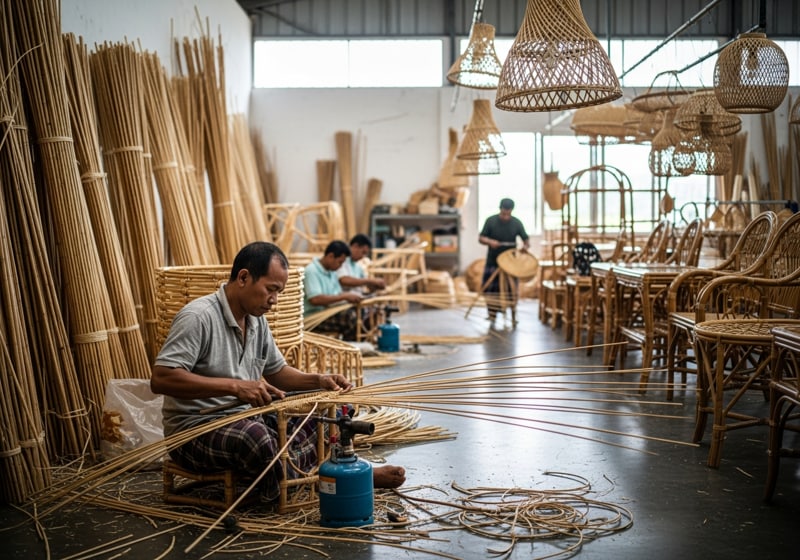
Vietnam: The Strategic and Sustainable Powerhouse
Indonesia: The Heritage Natural Artisan Hub
Centered around regions like Cirebon and Jepara, Indonesia holds deep historical significance in the natural rattan trade, heavily leveraging its proximity to raw rainforest materials. Indonesian factories are unparalleled when it comes to handling thick, raw rattan poles and integrating intricate woven panels with solid, locally sourced teak wood. However, there is a logistical compromise for commercial buyers. While this region is the holy grail for high-end, tropical-inspired boutique projects, lead times are often longer, and the focus remains firmly on artisanal craftsmanship over highly optimized standardization.
China: The Mass Synthetics and Extrusion Engine
Provinces like Guangdong operate massive, heavily mechanized industrial zones dedicated strictly to high-velocity furniture production. Chinese wicker furniture manufacturers dominate the fast-turnaround market for extruded aluminum frames and synthetic PE rattan. If you need to fill fifty containers in a month with fossil-fuel-based plastic furniture, this is the hub. However, for brands pivoting toward eco-conscious, natural interior collections, this highly mechanized plastic approach is completely incompatible.
The Crucible of Prototyping and Engineering Top Trade Value
There is a profound misconception in the retail sector that manufacturing is simply an automated, push-button process. In reality, achieving top retail margins on custom furniture leaves absolutely zero room for error. Developing an exclusive, structurally perfect woven chair or modular sofa from natural fibers is a grueling, unforgiving process.
True value is not magically generated on a sales floor; it is forged on the factory floor. The reality of OEM production is that things that take long, determined effort—the projects that involve suffering, pain, and repeated failures—are exactly the products that hold the absolute top trade value.
When a B2B buyer submits a complex tech pack to a dedicated wicker furniture supplier, the initial prototype rarely succeeds on the first attempt. The prototyping phase is a crucible. The first frame might warp under standard load-bearing tests. The initial weaving pattern might lack the necessary tension, causing the seat to sag after just twenty hours of simulated use, or the natural rattan core might snap if the bending technique is unrefined.
A lesser factory, or a trading company looking for a quick turnaround, will patch these flaws and push the product to mass production, ultimately causing catastrophic return rates for the retailer. A master manufacturer embraces the pain of this process. We push through the grueling OEM sampling phase, enduring the early failures and executing strict, relentless technical adjustments. We recalibrate the load-bearing frames, redesign the joints, and adjust the exact tension of the natural rattan core until the structural integrity is absolute. By investing this intense, uncompromising effort upfront, we guarantee that when the order scales to thousands of units, mass production is flawlessly executed. This relentless pursuit of technical perfection is the defining characteristic of a world-class manufacturing partner.
Material Science and Technical Specifications
To vet a sustainable wicker furniture supplier effectively, procurement managers must understand the science of natural material preservation. Natural fibers require a completely different, highly specialized set of protocols compared to synthetic plastics to ensure they endure commercial use.
Authentic Natural Fibers vs. Synthetic Plastics The global market is currently flooded with mass-produced synthetic plastics masquerading as traditional wicker. While many generic factories rely heavily on these fossil-fuel-based plastics, true luxury and environmental responsibility lie in authentic natural fibers. As a strictly sustainable manufacturing partner, we reject toxic plastics. We specialize exclusively in processing 100% biodegradable and rapidly renewable resources, including Natural Rattan, Bamboo, Water Hyacinth, and Seagrass. Working with authentic fibers requires a vastly higher level of technical mastery. To ensure our natural collections endure the rigors of commercial retail and luxury environments, we subject our raw materials to an extensive curing process. The rattan and bamboo are meticulously boiled, naturally dried, and rigorously fumigated to eliminate moisture and prevent pest degradation. Finally, they are sealed with eco-friendly, water-based lacquers. This uncompromising preparation process guarantees that our natural collections maintain their structural integrity and organic beauty without contributing a single ounce of plastic waste to the global supply chain.
The Skeleton: Frame Engineering for Natural Goods The longevity of wholesale wicker furniture is entirely dependent on its internal skeleton. Depending on the design, authentic woven furniture utilizes either solid wood frames (like mahogany or acacia) or powder-coated metal frames. When metal is required to achieve sleek, modern silhouettes, a high-capacity manufacturer will utilize thick-gauge steel or aluminum tubing. Furthermore, sourcing agents must demand that every structural metal joint is a 360-degree full circumference weld rather than spot welding, which is a cost-cutting measure that leads to frame failure under heavy commercial use. Before the natural fibers are woven, the raw frame must undergo a multi-stage wash and be baked with an industrial coating to provide an impenetrable layer of defense against oxidation.
Quality Control and Global Compliance
For major retail chains, a container of defective goods or a PR scandal regarding unethical factory labor can cost millions. Partnering with elite wicker furniture manufacturers means securing a supply chain that is insulated against these risks through strict compliance and relentless Quality Control.
Quality Control and Global Compliance
Before signing a purchasing agreement, buyers must demand up-to-date documentation. The Business Social Compliance Initiative (BSCI) is the gold standard for ethical labor, guaranteeing that the factory provides fair wages, safe working conditions, and strictly prohibits child or forced labor. For collections that incorporate natural wood frames, a Forest Stewardship Council (FSC) certification proves that the timber was harvested from responsibly managed forests, which is a critical selling point for modern, eco-conscious consumers.
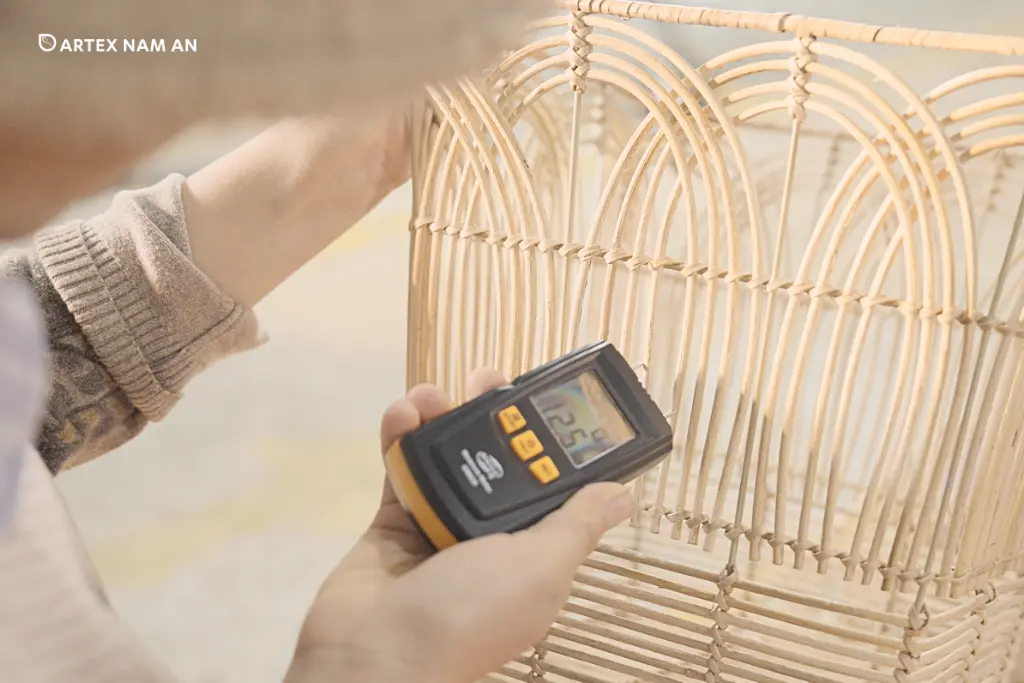
During mass production, true manufacturers operate under strict Acceptable Quality Limit (AQL) parameters. In-house QC teams conduct multi-stage inspections, beginning with an incoming material inspection to check the moisture content of the raw rattan poles, ensuring rigorous fumigation standards are met, and testing the load-bearing capacity of the structural frames before weaving begins. This is followed by in-line inspections to check the joints and the tightness of the natural weaving tension while the furniture is still on the assembly line. Finally, a pre-shipment inspection involves load-bearing drop tests, checking for loose fibers, and verifying packaging integrity before the container is permanently sealed.
Supply Chain Logistics and Container Optimization
The final hurdle in B2B sourcing is international freight. The most beautifully crafted chair in the world loses its trade value if the landed shipping costs consume the entire profit margin. Because wicker furniture is voluminous and lightweight, shipping it can be highly inefficient if not properly engineered. A sophisticated wicker furniture manufacturer designs with logistics in mind from the very first blueprint.
Stackability is a primary concern. Commercial dining chairs must be engineered to stack seamlessly without damaging the natural weave. For large modular sofas and dining tables, manufacturers offer “Knock-Down” or flat-pack designs. While this requires light assembly by the end-user, it can double or triple the amount of product that fits into a shipping container, drastically slashing the landed freight cost per unit. To protect these optimized shipments, high-volume factories utilize specialized packaging engineering. We deploy multi-ply corrugated cardboard, reinforced corner guards, and industrial desiccants to ensure the natural, biodegradable materials survive weeks of humid ocean transit without developing mold or suffering structural crushing.
Conclusion: Secure Your Supply Chain With Artex Nam An
Choosing the right manufacturing partner is a strategic, long-term decision that dictates your brand’s profitability, product lifespan, and market reputation. Stop losing margin to third-party distributors, and stop settling for fossil-fuel plastics or generic, easily replicated catalog designs.
At Artex Nam An, we do not shy away from the hard work. We embrace the grueling effort required to engineer top trade value using authentic, sustainable materials. As a dedicated, BSCI and FSC-certified wicker furniture manufacturer based in Vietnam, we possess the precise engineering capacity, the unyielding ethical framework, and the high-volume production lines necessary to execute your custom orders flawlessly.
We invite procurement teams, retail buyers, and project developers to bypass the middlemen and step directly onto our factory floor. Visit our website today to submit your OEM tech packs, review our extensive manufacturing capabilities, and request a comprehensive wholesale quote. Let’s endure the effort, overcome the technical challenges, and engineer your next top-selling sustainable collection together.
Read more: Finding the Perfect Rattan Furniture Manufacturer for Global Retail Brands
You may also be interested in
Handcrafted In Vietnam Baskets: What Are Baskets Made Of?
Read more...Nov
A Complete Sourcing Guide to Finding Premium Picnic Baskets Wholesale
Read more...Jun
What Is Woven Basket? A Plain Definition and How to Tell a Good One From a Bad One
Read more...Sep
Choosing the Right Woven Placemats Bulk for Hospitality Procurement
Read more...Jul
Finding the Best Rattan Furniture Manufacturers: A Buyer’s Guide
Read more...May
Seagrass For Weaving: From Natural Fibers To Wholesale Seagrass Baskets
Read more...Oct