


No products in the cart.
Industry News
How to Make Table Placemats: Four Methods, One Set of Rules That Matter
31
Aug
Aug
A placemat is a deceptively demanding object. It has to lie perfectly flat on a hard surface, survive a hot plate, wipe clean, and look identical to the five others sitting beside it. Get any one of those wrong and the whole table reads as slightly off, which is why so many handmade placemats end up in a drawer after two dinners. Working out how to make table placemats that actually stay on the table is less about the decorative technique than about size, flatness, and edge finishing.
Get the Dimensions Right Before Anything Else
This is the step people skip, and it is the one that determines whether the finished set gets used or quietly retired.
The Numbers That Work
The conventional rectangular placemat is 45 by 30 centimetres, roughly 18 by 12 inches. Round mats sit between 35 and 40 centimetres across. Those figures are not arbitrary: they are the footprint a dinner plate, a side plate, cutlery on both sides, and a glass actually occupy without crowding. Anything under 40 centimetres wide leaves cutlery hanging over the edge, and anything over 50 begins to collide with the next setting on a standard table.
Measure the Table, Not the Plate
Before cutting, lay out one full setting on the table and mark where it sits. A 140 centimetre table seats four comfortably at 45 centimetres per mat with a gap between. Six settings on the same table needs mats closer to 38 centimetres or they will touch. It takes two minutes and it prevents making six mats that do not fit the table they were made for.
Four Ways to Make Them
The method changes the look, the difficulty, and how the mat behaves after twenty washes. Pick based on the last of those three rather than the first.
Woven Paper Rope or Seagrass
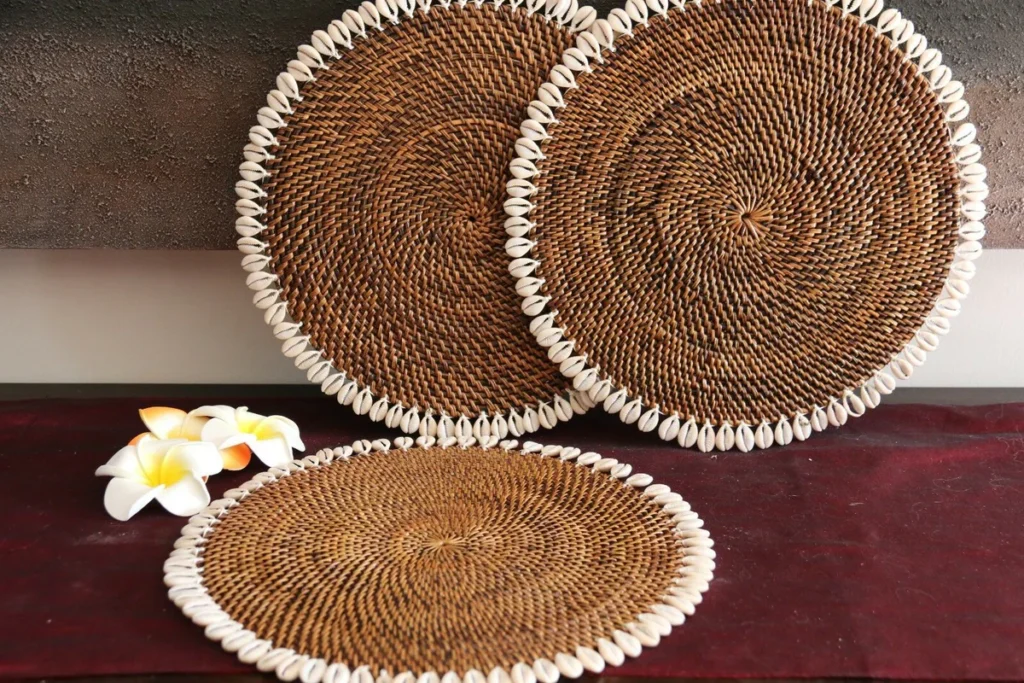
The most forgiving handmade option. A simple over and under plain weave using paper rope, seagrass cord, or raffia produces the natural textured mat that dominates current table styling. Weave on a simple cardboard loom with notches cut at both ends, keep the tension even, and bind the edges by folding the warp ends back and stitching them down. No sewing machine required.
Quilted Fabric
Two layers of cotton with an insulating batting between them, quilted through and bound at the edge. This gives genuine heat protection and washes well. Use cotton batting rather than polyester, because polyester melts under a hot dish and flattens permanently after a few washes. Prewash every fabric before cutting or the first wash will shrink the mat into a shape nobody wants.
Braided or Coiled
Fabric strips or cord braided into a long rope, then coiled into a spiral and stitched turn to turn. It produces the round mat that suits a circular table, and it is very tolerant of mistakes because the spiral hides small irregularities. The one rule is to keep the coil flat on the table while stitching. Coiled in the air, it will dome, and a domed placemat rocks under a plate.
Rattan and Wicker
The most durable and the hardest to make well at home, because the material needs soaking and the flatness has to be held while it dries. This is the construction behind most commercially produced natural mats, and it is worth understanding even if you never weave one, since it explains why rattan placemats bulk orders specify weave density and frame treatment rather than just a colour.
The Three Rules That Decide Whether It Works
Whatever method you choose, the same three things separate a placemat that gets used from one that does not. Flatness comes first. A mat that curls at the corners will push a plate around and looks untidy from the moment it goes down. Woven mats need the edges bound under tension. Quilted mats need to be pressed properly and the binding mitred at the corners rather than bunched. Coiled mats need to be built on a flat surface. If a finished mat curls, press it under a stack of books overnight before deciding it has failed.
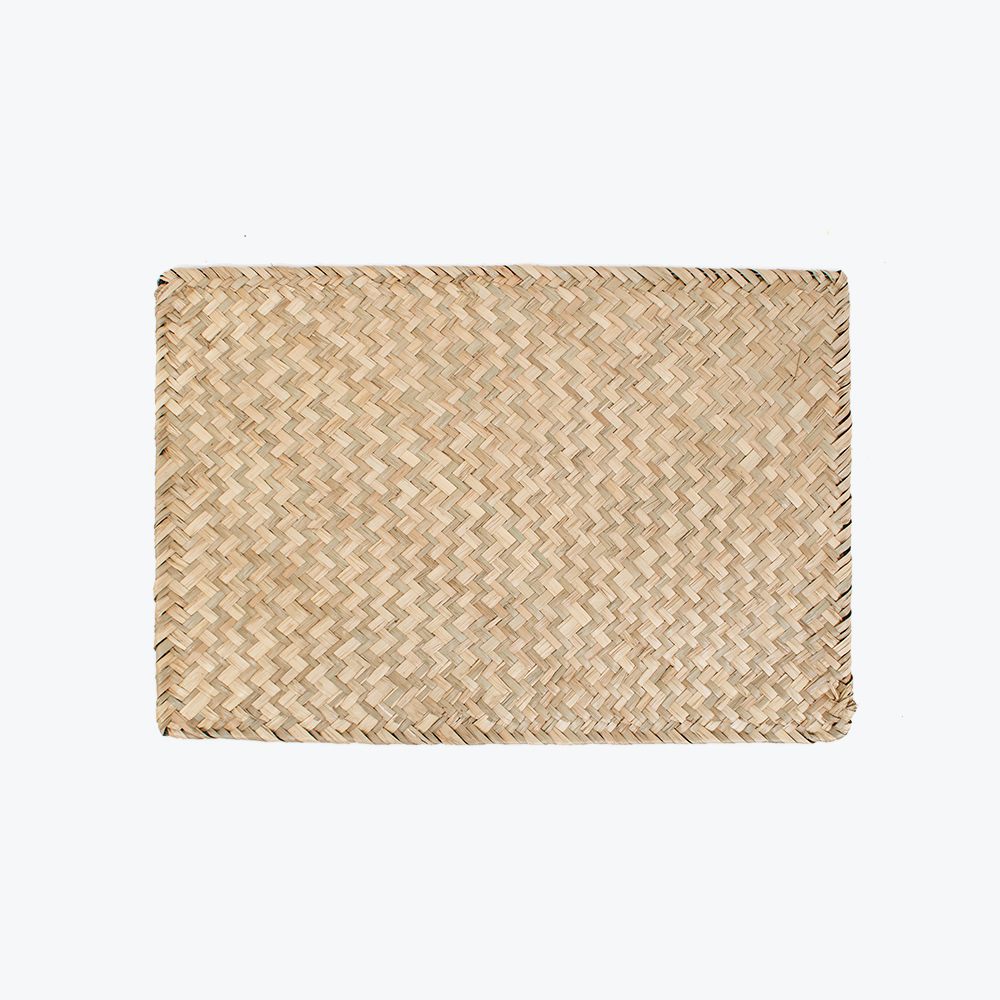
Natural rectangular woven seagrass table placemat
Edge finishing comes second, and it is where handmade work usually gives itself away. A raw edge frays within a month. Bind fabric mats with a bias strip, fold and stitch woven ends back into the body, and never rely on glue, because glue goes brittle and yellows. Third is thickness. A mat much over eight millimetres makes a plate feel unstable and stops a set stacking flat in a drawer, which is a surprisingly common reason a set stops being used.
Materials and How They Age
Natural Fibres
Seagrass, rattan, water hyacinth, and paper rope all bring texture and a warmth that printed fabric cannot match, and they suit the current preference for tactile, low gloss table settings. They wipe clean but do not machine wash, and they will mark if left wet. The historical and regional variety of the form is covered under placemat if you want to see how differently the same object is solved elsewhere.
Cotton and Linen
Washable, softer underfoot for cutlery, and easy to coordinate with napkins. The tradeoff is that they stain, need pressing, and offer no heat protection unless quilted with a proper insulating layer. For a household that eats messily, washability usually wins over texture.
Cork, Felt, and Composites
Excellent heat resistance and very flat, but visually plain and prone to permanent marks from oil. Best used as a hidden underlayer beneath a decorative top rather than as the visible surface.
Produce at Scale
Making a set of six is a pleasant weekend. Producing them at scale is a completely different exercise, and the difference is almost entirely about tolerance. A restaurant ordering for forty covers needs every mat within a few millimetres of the same size, because a table set with mats that vary visibly looks careless no matter how good each individual mat is.
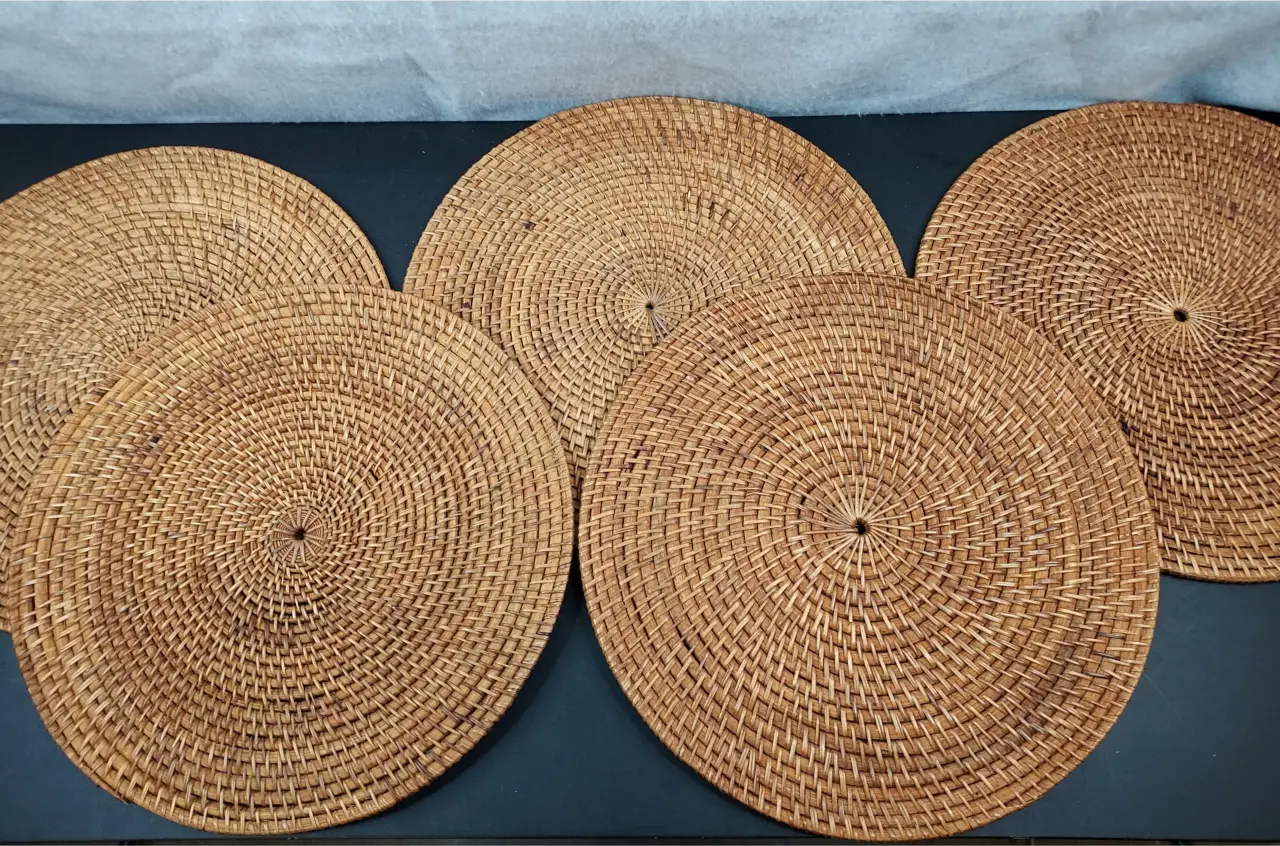
Woven Placemats in Bulk
Volume buyers also care about things a home maker never encounters: colourfastness testing so a set does not fade unevenly under window light, moisture content on natural fibre so mats do not warp in a dry heated room after shipping from a humid country, and packing that stops mats taking a curve in transit. None of that is craft knowledge, which is why it usually sits with a handicraft manufacturer rather than with the weaver. Those requirements are also why hospitality procurement teams sourcing woven placemats bulk specify far more than dimensions.
Conclusion
Knowing how to make table placemats well comes down to four decisions made before any weaving or sewing starts. Size them to the table rather than to a plate. Choose the method by how it will age, not by how it looks on day one. Build for flatness, which means working on a flat surface and binding edges under tension. And finish the edges properly, because that is the single detail that separates handmade from homemade. Everything decorative sits on top of those four.
If you are past the sample stage and need a few thousand that match, Artex Nam An weaves placemats in rattan, seagrass, water hyacinth, and paper rope to export standards for retail and hospitality buyers. Have a look at the current range in woven placemats wholesale and at how we work on our quality assurance page, then send us your dimensions and target quantity for a costed quotation.
You may also be interested in
Rattan Garden Furniture Wholesale: The Complete Sourcing Guide for Retailers and Wholesalers
Read more...Jul
Discover Premium Rattan Garden Furniture Wholesale Deals for Your Business
Read more...May
Serving Trays Bulk: A Material and Sourcing Guide for Retail Buyers
Read more...Aug
Overwhelmed by the Many Global Fairs? Navigating the 2026 Handicraft Trade Show Calendar
Exploring the Intricacies of a Modern Handicraft Factory
Read more...May
Find Trusted Woven Basket Wholesale Suppliers for Long-Term Success
Read more...Jun